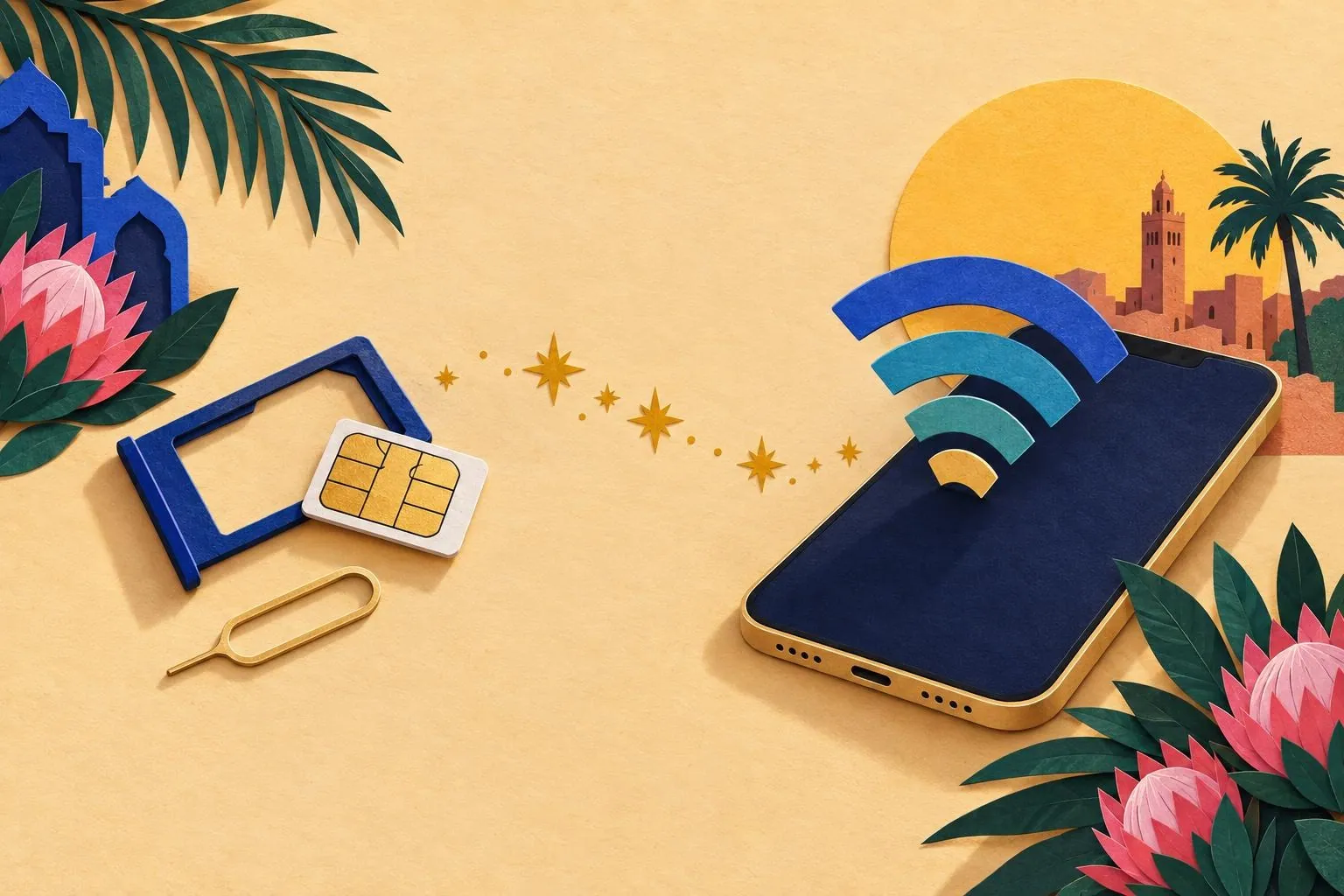
The SIM has one job: it lets a mobile network check that a device may use it. An eSIM keeps that job and changes the delivery. Instead of a card sold at a counter or sent by post, the network’s details arrive over the internet and are written to a chip that stays inside the phone.
What eSIM means
eSIM stands for embedded SIM, the name Google and Samsung use on their help pages. The standard comes from the GSMA (GSM Association), and it describes the change simply: the role of the SIM stays the same, and what changes is how it gets into the device. The SIM is downloaded into a secure element built permanently into the phone, and the GSMA says it is as secure as a removable card.
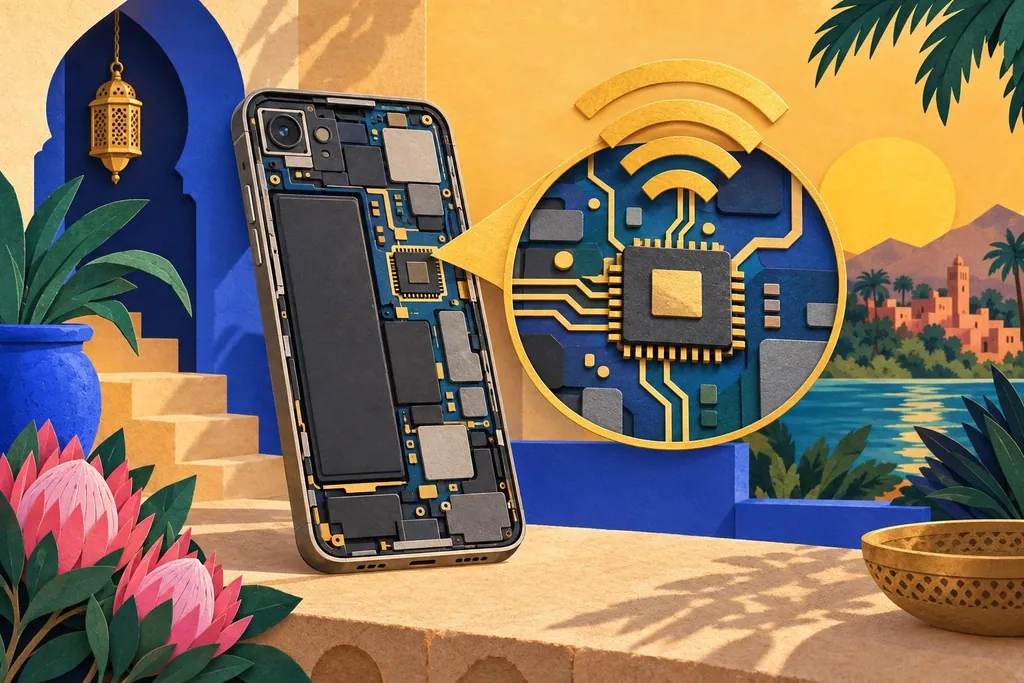
In the GSMA’s documents that chip is called an eUICC, from embedded UICC, the standards name for the SIM card. What gets downloaded onto it is a profile: the data and applications a network needs to give you service on one line. The chip also carries an identity number of its own, the EID, which a network may ask for when it sets up your eSIM. An iPhone shows it under Settings, General, About, and a Pixel under About phone, SIM status.
How an eSIM works, from code to connected line
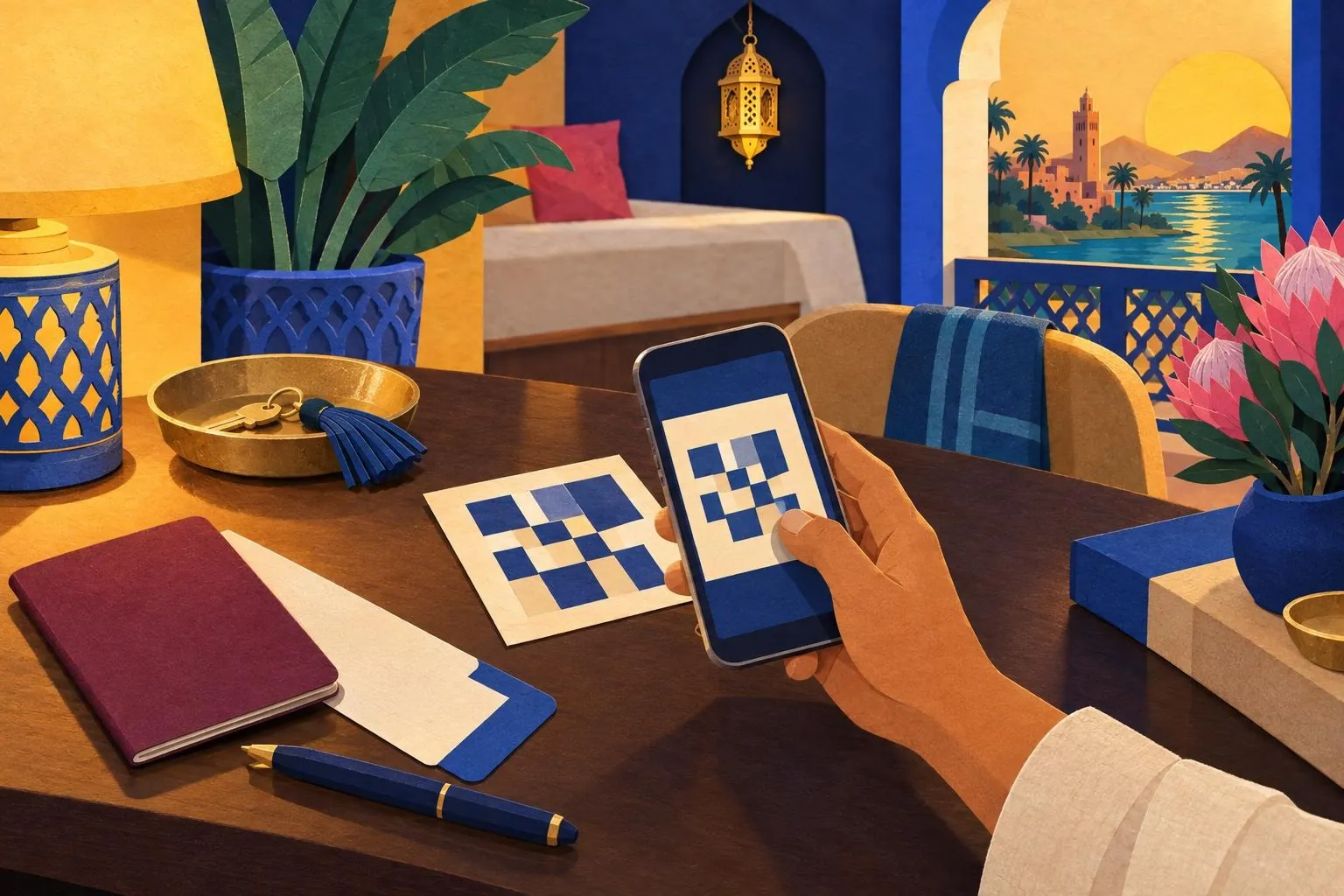
Four parts meet when you install an eSIM. The chip holds the profiles. Software in the phone, which the GSMA calls the Local Profile Assistant, does the installing. A server called the SM-DP+ prepares the profile and sends it. And an activation code, the text inside the QR code you are given, tells the phone which server to contact and which order to collect.
When you scan the code or type it in, the phone opens a secure connection to that server. The server and the chip check each other’s certificates, and the server checks that your phone is eligible for the profile. It then encrypts the profile for your chip alone, so the copy it sends cannot be installed on any other phone. The profile arrives switched off, and the phone can then offer to turn it on. The GSMA sets out the whole exchange in its architecture specification, SGP.21.
A QR code is one way in among several. Apple lists eSIM Quick Transfer from a previous iPhone, activation by the carrier, a carrier link, a carrier app and typing the details by hand. Whatever the route, keep the result. Apple advises against deleting an eSIM to fix a problem unless the carrier asks, because a deleted eSIM has to be replaced by a new one. What an eSIM QR code holds takes the code itself apart.
How many eSIMs a phone can hold
The standard sets no fixed number. The GSMA’s technical specification, SGP.22, says a chip may hold several profiles, limited by its memory. In version 2 of the architecture, only one profile on a chip can be switched on at any moment; version 3.1, published in December 2023, allows a built-in chip to run more than one at once, which the GSMA calls Multiple Enabled Profiles. Each phone maker then sets its own limits.
| Phone | eSIMs it can store | Lines working at once |
|---|---|---|
| iPhone XS, XR and later | Eight or more | Two: a nano-SIM and an eSIM, or two eSIMs on iPhone 13 and later |
| Google Pixel | Several | A SIM card and an eSIM from Pixel 3a; two eSIMs from Pixel 7, if the network allows it |
| Samsung Galaxy | Up to 20, fewer if the profiles are large | Two, including two eSIMs on some models |
Two lines at once does not mean two data connections. Apple says an iPhone uses one cellular data network at a time, and on a Pixel only one SIM can be the default for data. The other line stays ready for calls and texts.
Which phones take an eSIM
On Apple’s list, every iPhone from the XS, XS Max and XR onwards takes an eSIM, except in mainland China, where only iPhone 18 Pro, 18 Pro Max, 17e and iPhone Air do. Every Google Pixel from the Pixel 4 works with eSIM, while the Pixel 3 and 3a depend on where and with which network they were bought. Samsung lists the Galaxy S20 and every later S series, its foldables back to the first Galaxy Fold and Z Flip, the FE models from the S23 FE and some A models, and notes that the country where a phone was bought can rule eSIM out.
Some phones now take nothing else. iPhone Air has no SIM tray wherever it is bought. Apple also leaves the tray out of the iPhone 17 family and the iPhone 18 Pro models bought in the United States (with Guam and the US Virgin Islands), Canada, Mexico, Japan and six Gulf countries, and out of iPhone 14, 15 and 16 models bought in the US. In the US, Google’s Pixel 10, 10 Pro and 10 Pro XL take only eSIM too.
One condition applies to all of them: a phone locked to a carrier cannot use another company’s eSIM. Our phone page lists the models and has a quick check for both points.
A short history of the eSIM
Từ nano-SIM tới điện thoại không có khe SIM
1 June 2012
Nano-SIM
ETSI phê duyệt kích thước SIM thứ tư: 12,3 x 8,8 mm, nhỏ hơn 40% so với thẻ SIM nhỏ nhất trước đó.
January 2016
Chuẩn eSIM cho người dùng
GSMA ban hành bản SGP.22 phiên bản 1.0, tiêu chuẩn kỹ thuật cho eSIM cá nhân, sau tài liệu kiến trúc tháng 12/2015. Bản đầu tiên áp dụng cho thiết bị phụ, cài eSIM nhờ thiết bị khác.
12 September 2017
Apple Watch Series 3
Apple giới thiệu đồng hồ kết nối mạng với eSIM tích hợp, kích hoạt từ xa.
4 October 2017
Google Pixel 2
Google gọi đây là điện thoại đầu tiên tích hợp eSIM. eSIM trên máy chỉ dùng được với dịch vụ điện thoại riêng của Google.
12 September 2018
iPhone XR
Apple công bố iPhone XR hỗ trợ cả nano-SIM lẫn eSIM. XS và XS Max cũng thuộc nhóm iPhone đời đầu hỗ trợ eSIM. Tính năng 2 SIM có trong bản cập nhật phần mềm cuối năm đó.
14 September 2021
iPhone 13
iPhone đầu tiên hỗ trợ cùng lúc hai eSIM, ngoài ra còn có thể dùng 1 nano-SIM và 1 eSIM.
7 September 2022
iPhone 14
Apple bỏ khe SIM trên các mẫu iPhone 14 bán tại Mỹ.
20 August 2025
Google Pixel 10
Google ra mắt dòng Pixel 10. Tại Mỹ, Pixel 10, 10 Pro và 10 Pro XL chỉ hỗ trợ eSIM.
9 September 2025
iPhone Air
Apple công bố iPhone Air, chỉ dùng eSIM bất kể mua ở đâu, đồng thời cho biết đã có hơn 500 nhà mạng hỗ trợ eSIM.
9 September 2026
iPhone Duo
Apple ra mắt iPhone màn hình gập đầu tiên, chỉ hỗ trợ eSIM trên toàn cầu, bán từ 23/10/2026 tại hơn 70 quốc gia và vùng lãnh thổ.
According to GSMA Intelligence, two events in late 2025 sped adoption up: Apple took its eSIM-only design to markets worldwide, and Chinese operators launched eSIM for smartphones. Its forecast has eSIM connections outnumbering removable cards among smartphones by 2030.
- Kết nối smartphone dùng eSIM, cuối năm 2025
- 5%
- Dự kiến đến cuối năm 2026
- 10%
- Mạng di động hỗ trợ eSIM cho smartphone
- 73%
What an eSIM changes when you travel
The practical gain is timing. Because the profile downloads over the internet, you can buy and install a travel eSIM at home before you leave, on the Wi-Fi or hotspot connection that Apple asks for. There is nothing to collect on arrival and no card to swap.
Your own line stays where it is. A travel eSIM is added as a second line: Apple’s example is one eSIM for your home number and another for the place you are visiting, and if you use only the travel line, iMessage and FaceTime stay on your home number. Since iOS 26, an iPhone may ask whether a new eSIM is for home or for travel, and can switch the travel line off when you get back.
What a second line does not stop is roaming on the first. Apple warns that with both lines on you may still pay roaming fees on your home line. The EU’s roam-like-at-home rules end at the EU, Iceland, Liechtenstein, Norway, Moldova and Ukraine, so they do not cover the three countries we sell plans for. How data roaming works explains the charges.
BaobabSIM’s plans follow the same pattern. Our Morocco eSIM is a line on Orange Maroc’s own network, so the phone connects as a Moroccan line, not as a roaming visitor. For Egypt and South Africa the plans are Africa regional plans that roam on a partner network, so you turn Data Roaming on for the eSIM line only. Every plan is data only: calls and texts stay on your usual SIM, and WhatsApp works over the data.