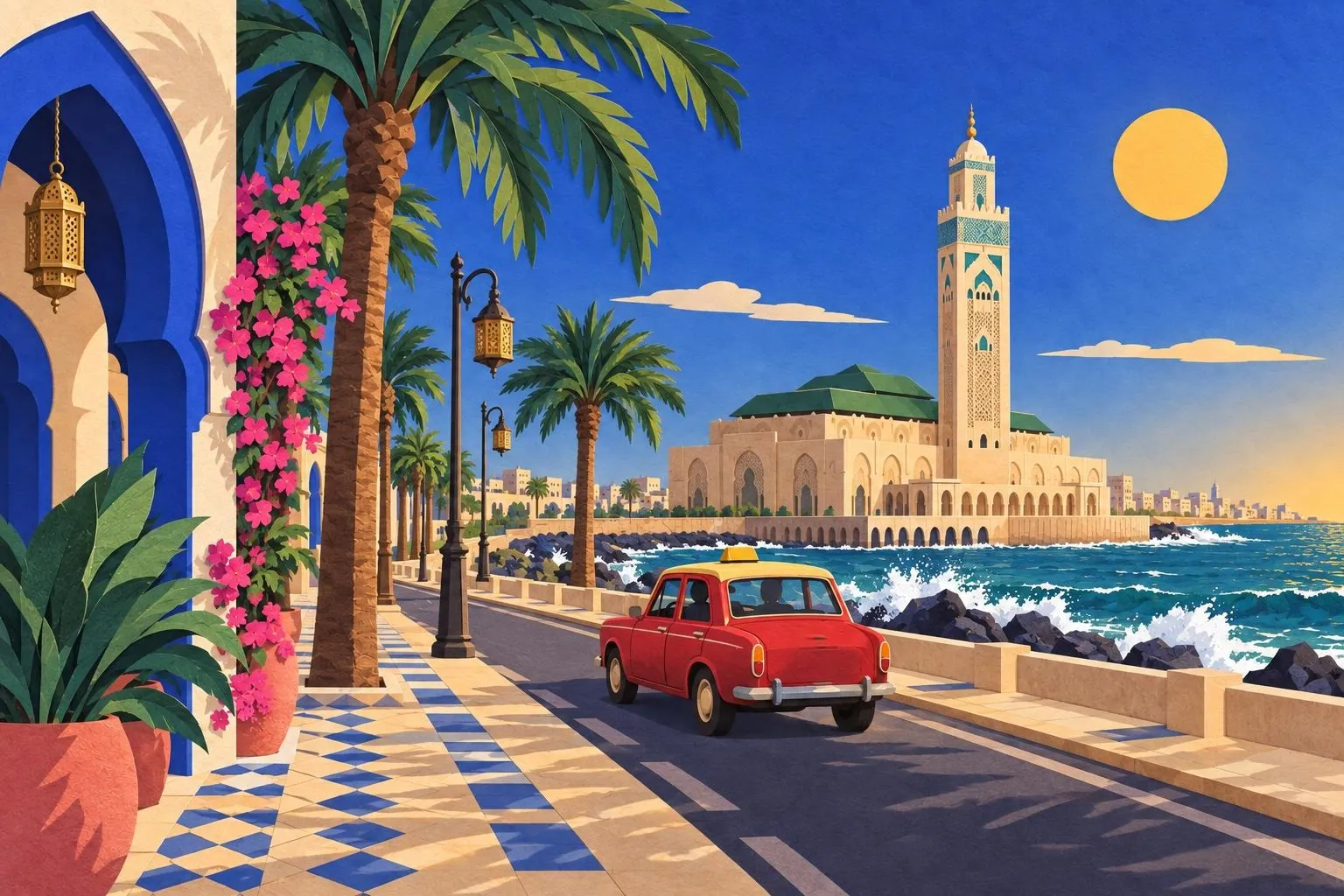
Morocco has two ways of moving around, and they overlap without replacing each other. The taxi system is older, cheaper on some routes and present everywhere. The apps are newer, fixed in price and present in the cities.
Understanding both is what keeps a trip cheap and calm, because the moment you need a ride is usually the moment you have least patience for working out the rules.
- Khách trên một petit taxi
- 3
- Cách grand taxi vận hành
- Chung
- Cách thanh toán taxi
- Tiền mặt
The taxi system
Petit taxis are the small cars, usually painted a distinctive colour that varies by city, and they work within one city. They take up to three passengers, they have meters, and in many cities the meters are now used properly.
Grand taxis are the larger cars, classically a big Mercedes, and they run between towns on fixed routes. They are shared: the car leaves when it is full, and if you do not want to wait you buy the empty seats. This is the local way to make a short intercity trip, and it costs a fraction of a private car.
One detail that surprises visitors: in some cities a petit taxi will pick up another passenger going the same way. It is normal, it is legal, and the fare is shared.

What the apps do well
Ride-hailing works in Morocco, and Uber runs its own Moroccan service with a country site and a list of cities. Coverage varies by city and changes over time, which is why the honest advice is to check the app where you are rather than trust a list, including this one.
What the app buys you is certainty. The price is shown before you accept, the driver comes to you, and there is no conversation about money at either end. In a city where you do not yet know what a fair fare is, that is worth more than the small difference in price.
What it costs you is a dependency on data and a battery. An app with no connection is a taxi rank with extra steps.
Fares, meters and the negotiation
In a petit taxi the meter exists and should be used. In practice a driver may propose a flat fare, particularly for a visitor, a hotel trip or a late night. Neither the meter nor the flat fare is automatically wrong, but the flat fare quoted first is usually the highest number anyone will say.
The rule that prevents everything: agree before you get in. Say the destination, hear the price, accept it or suggest another, and settle it while everyone is still standing outside the car. Doing the negotiation afterwards is where trips go wrong.
Taxi drivers take cash and rarely carry change. Small notes are the practical currency of getting around, and what the dirham does explains why a 200 dirham note is awkward first thing in the morning.
Ứng dụng hay taxi?
Bạn đã có dữ liệu di động trên điện thoại chưa?
Bạn di chuyển trong cùng một thành phố hay giữa các thị trấn?
Dùng ứng dụng
Biết giá cố định trước khi chọn, xe đến tận nơi, không cần mặc cả. Hữu ích vào buổi tối và khi bạn chưa biết giá hợp lý.
Đi petit taxi và thỏa thuận giá
Không có dữ liệu thì ứng dụng vô dụng, điểm đỗ taxi cũng ở ngay gần đó. Nói điểm đến, hỏi giá và chốt giá trước khi gọi xe đi.
Grand taxi cho đoạn đường liên tỉnh
Di chuyển liên tỉnh, grand taxi đi chung là giải pháp địa phương và rẻ hơn nhiều so với xe riêng. Muốn đi ngay thì mua luôn toàn bộ chỗ trống.
Airports, and the trip that sets the tone
An airport is where a visitor forms a view of a country’s taxis, and Morocco is no exception. Marrakech and Casablanca both have official ranks outside arrivals, and both have people inside the terminal offering a car for a price well above what the rank will charge.
The safe habits are simple. Ignore anyone who approaches you inside the building offering a taxi. Walk to the rank, or open the app while you are still collecting your bag so a car is on its way by the time you reach the pavement. If you take a taxi from the rank, agree the fare first, and expect it to be higher than the same trip later in the week from a street.
One practical note about ride-hailing and airports. Pickup points are usually in a specific car park or lane rather than at the terminal door, because the taxi rank holds the front position and the app operators were given somewhere else. Read the pickup instruction in the app properly, and be ready to walk two minutes.
What you need on the phone
Three things make the whole system work, and all three are decided before you fly.
An app, installed and with a card attached. Data, working the moment you land, because an app that cannot connect cannot help you. And your destination saved in a form a driver can read, which means a screenshot of the address in Arabic script is worth more than a map pin.
That first item is the one worth being deliberate about. An eSIM for Morocco gives you data on arrival without a trip to a shop, and what a local SIM costs covers the alternative if you would rather buy there.
Where the apps stop being useful
Two situations, and both are outside the cities.
The first is the mountains, the desert and the coast roads, where there may be no cars to hail at all and a driver for the day is the only sensible arrangement.
The second is a long intercity leg where the shared grand taxi is the local answer and costs a fraction of anything an app would quote. For those, ask at your accommodation, because the arrangements are informal and locally known rather than published.
Đi lại nhẹ nhàng hơn
0/8
The last thing worth saying is the local one. Marrakech, Fes and the medinas of every city are places you walk, and the distances inside the old walls are shorter than they look on a map. Save the car for arriving, leaving and the trips that cross the new town, and you will spend less and see more.