The two formats do the same job, and choosing between them is not really a technical decision. It is a decision about when you want to do the work, and what you want to be able to do with the plan afterwards.
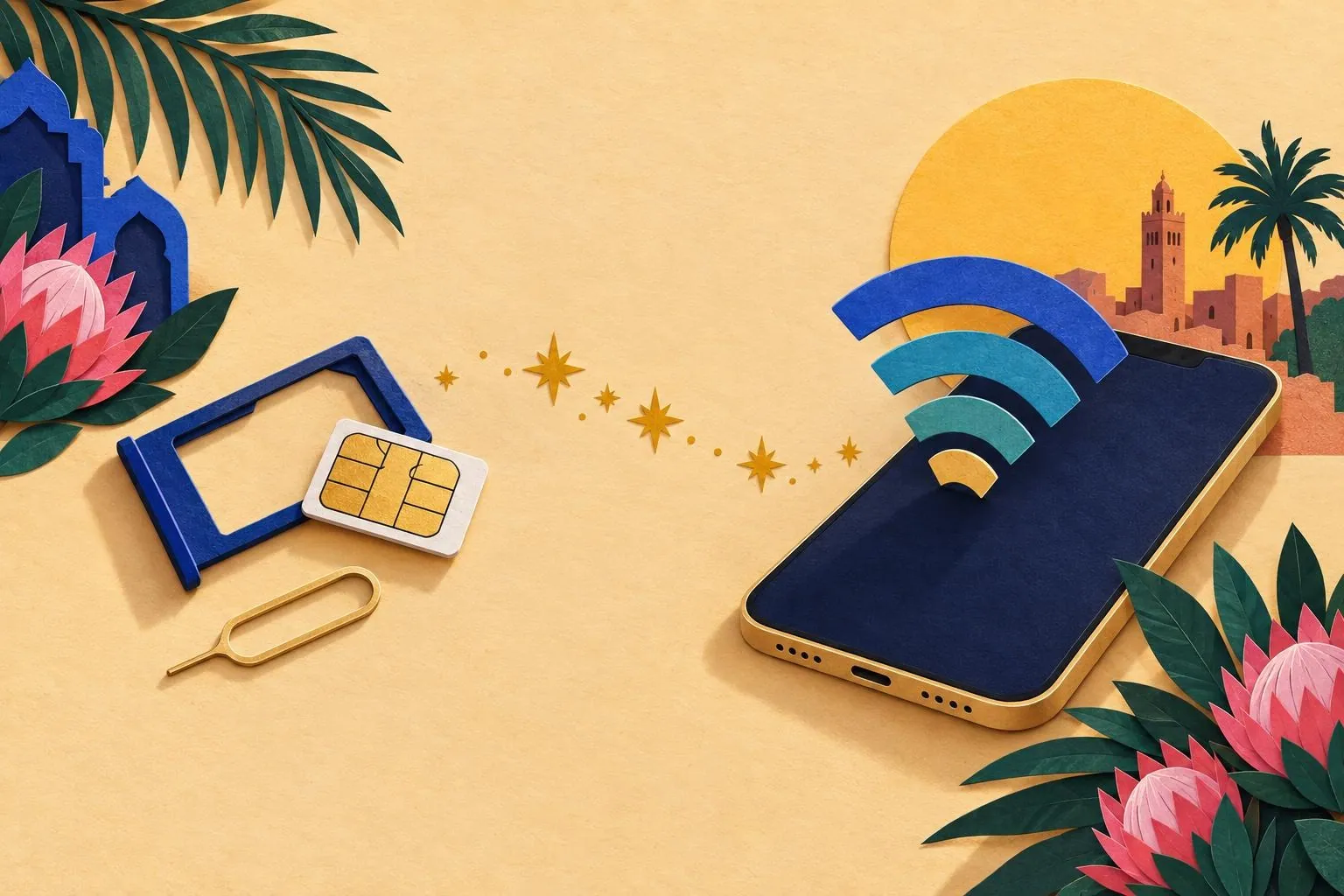
A physical SIM is a card. An eSIM is a profile downloaded onto a chip that is already inside the phone. Everything else follows from that.
- The embedded chip
- 6 × 5 mm
- Profiles a phone can store
- 20 or more
- Active at the same time
- 1 or 2
Where the physical card still wins
Three situations, and they are worth taking seriously rather than treating as legacy.
The first is a phone without eSIM support. Plenty of phones still in daily use have no eSIM hardware, particularly older Android models and anything made before 2018. On those, the question does not arise.
The second is moving the plan between phones. A card moves from one phone to another in seconds, and it moves back just as easily. An eSIM profile is tied to the device it was installed on, so moving it means asking the operator to release and reissue it, which not every operator will do.
The third is a phone bought locked to a network. Locked phones often refuse eSIMs from anyone else, even after the handset is unlocked, and that restriction can make a travel eSIM impossible rather than merely awkward.
Where the eSIM wins
The eSIM is better at almost everything a traveller cares about.
You can buy it at home, at midnight, on a Sunday, and have it installed before you finish packing. There is no shop to find, no queue, no passport to hand over and no risk of arriving after closing time with no way to get online.
Nothing is posted, so nothing gets lost. There is no tray to open, which matters on phones where the tray needs a pin you have left in a drawer, and no tiny card to drop on a plane floor.
And it leaves your own line alone. Your usual SIM keeps its place, and the two run side by side while you are away.
What happens to your own number
This is where people expect a problem and usually find none. A phone that supports eSIM holds your own line and the travel plan at the same time. You choose which one carries mobile data, and you choose which one handles calls and messages.
Leave data on the travel eSIM and your home operator charges nothing for it, because your own line is not using data at all. Turn data roaming off on your own line before you fly, and a phone that cannot find its home network has no way to run up a bill.
The one thing a travel eSIM usually does not give you is a phone number of your own. Most are data only, which means incoming calls cannot reach you, and calls you make go through an app. If you need to receive calls and text messages, keep your own line switched on for them.
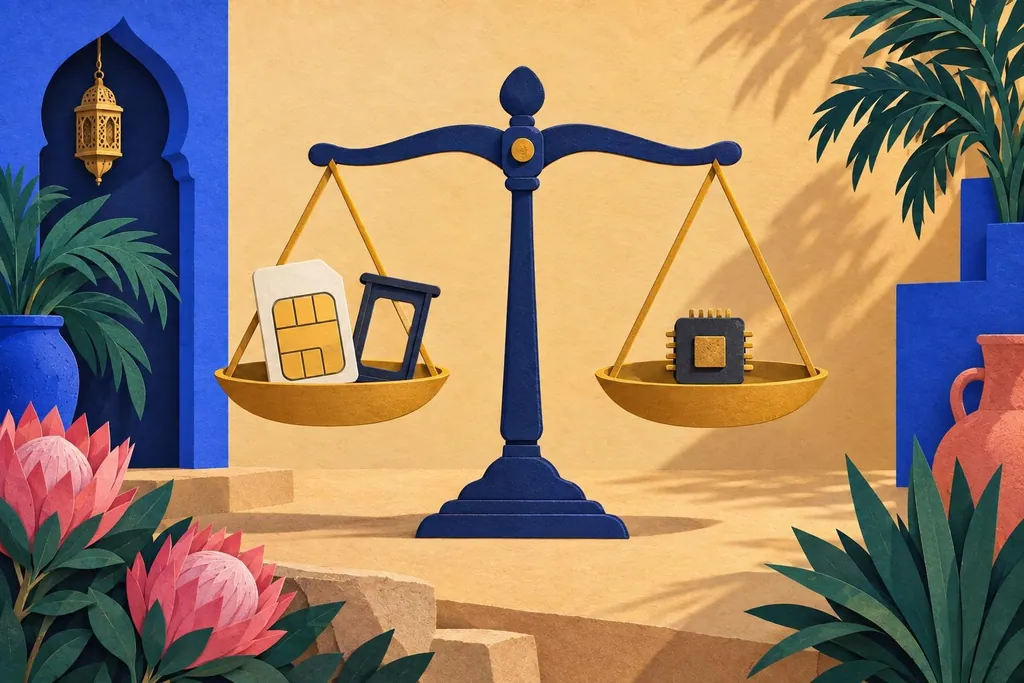
Choosing between them
Two questions settle it for most people.
Which one suits your trip?
Does your phone support eSIM?
Do you want to install the plan before you travel?
A travel eSIM
Buy it at home, install it on your own wifi, and switch the line on when you land. Nothing to collect and nothing to lose.
A physical SIM card
Either your phone has no eSIM support, or you would rather deal with it on arrival. Bring your passport, and remember that shops close.
If the phone supports eSIM and you would rather do the setup at home, the eSIM is the simpler path. If the phone does not, or you prefer to deal with it after landing, a card from a shop is a perfectly good trip.
The cost question, honestly
People ask which format is cheaper, and the honest answer is that the format does not set the price. The same network access costs whatever the company selling it decides to charge, and you can buy an expensive eSIM and a cheap card on the same street.
Two comparisons are worth making instead, because those are the ones where the difference is real.
The first is against your own operator’s roaming. If your home plan charges a daily fee for using your allowance abroad, that fee across a week is usually the largest number in the trip’s data budget. A travel eSIM for the same week is a single separate purchase, and comparing those two is the comparison that changes the decision.
The second is against a card bought on arrival. A local SIM from a shop in Marrakech, Cairo or Cape Town can be inexpensive for a generous amount of data. What it costs instead is time and paperwork: a shop that is open when you land, a passport, a registration step, and a queue behind people doing the same thing. Whether that trade is worth it depends on what your first afternoon is worth to you.
What you give up either way
An eSIM gives up the ability to move the plan between phones, and it usually gives up a phone number of your own. Neither matters much on a two week trip and both matter if you break a phone in the middle of one.
A physical card gives up the convenience of doing the setup at home, and it gives up the freedom to arrive at any hour. Cards are bought from people, and people keep shop hours.
Neither list is long, which is why the choice is usually settled by the phone rather than by preference.
Before you decide
Check these before you choose
0/8
One habit that saves trouble. Find out the answer about your own phone before you buy anything, because both routes depend on it. The setting takes ten seconds to find, and it is the difference between a plan you can use and a plan you cannot install.
If the eSIM route is the one you want, how it works in practice walks through it, and what arrives when you buy one explains the code you will be given.