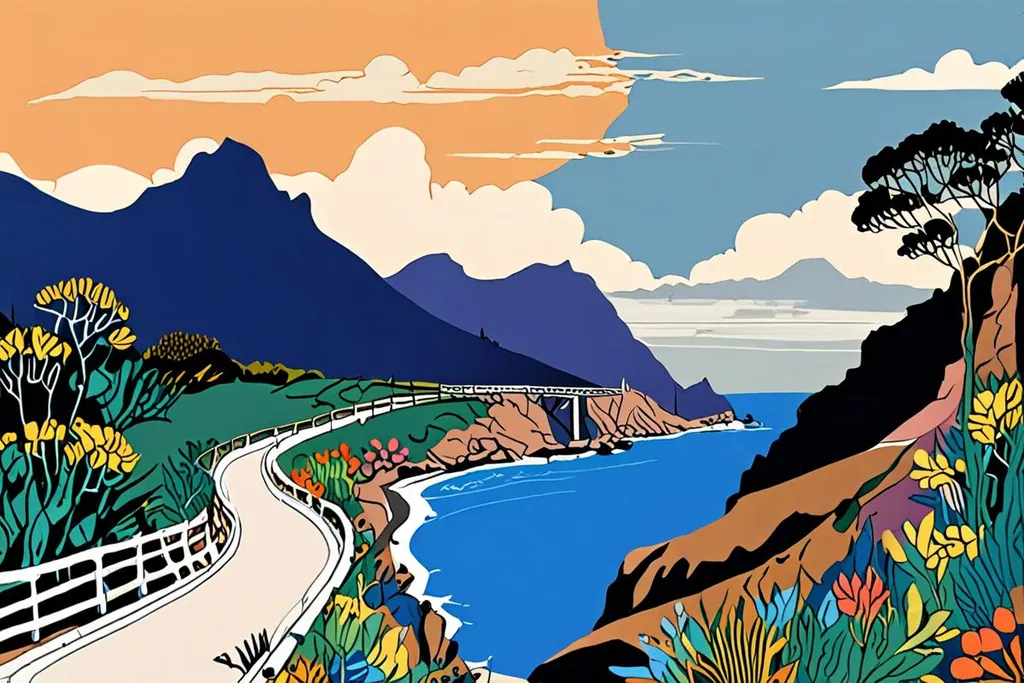
The Garden Route is a 300 kilometre stretch of the south eastern coast, running from Witsand in the Western Cape to the Tsitsikamma and Storms River area on the border with the Eastern Cape. The name comes from what you see out of the window: this is the greenest part of South Africa, with indigenous forest, estuaries, lakes and fynbos, and a warm current offshore that keeps it mild when the rest of the country is either freezing or baking.
It is a route rather than a destination, which is the thing to understand before planning it. The towns along it, Mossel Bay, George, Wilderness, Sedgefield, Knysna, Plettenberg Bay and Nature’s Valley, are all pleasant and none of them is the point on its own. The point is the drive, the walks and the water, and the days you spend not moving.
- Chiều dài tuyến đường
- 300 km
- Năm được thêm vào danh sách sinh quyển UNESCO
- 2017
- Thị trấn lớn nhất trên tuyến
- George
- Thời gian nên dành
- 4 đến 7 ngày
The drive, and the stops that matter
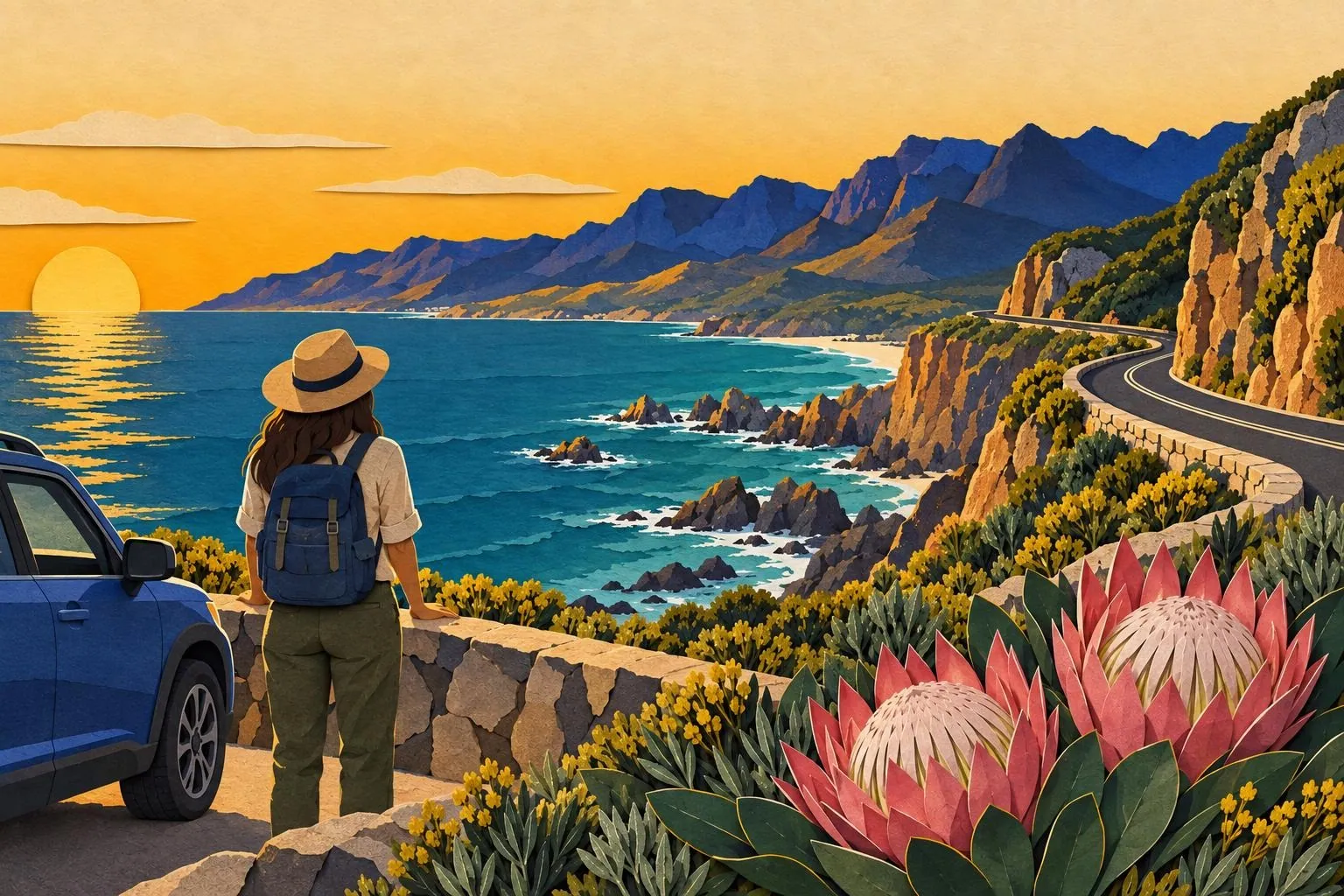
Most people drive it from Cape Town, which is four to five hours from Mossel Bay on the N2, and the spine of the route is that road. The towns go past in order: Mossel Bay, where Bartolomeu Dias landed in 1488 and where the museum explains it; George, the largest town and the airport; Wilderness and Sedgefield, beside the lakes; Knysna, on its lagoon behind two cliffs called the Heads; Plettenberg Bay, with the Robberg peninsula and the beaches; and then Nature’s Valley and the Tsitsikamma section, where the road runs through forest above the sea.
The scenic alternatives are worth taking if you are not in a hurry. The Seven Passes road between George and Knysna runs inland of the N2 through forest and old bridges; the Outeniqua Pass takes you over the mountains to Oudtshoorn and the Cango Caves; and Route 62 through the Klein Karoo is the way back to Cape Town for anybody who would rather not drive the same road twice.
Walks, water and the things people come for
The Garden Route is a walking destination disguised as a driving one. The Otter Trail is the famous five-day coastal hike between Nature’s Valley and Storms River, with permits that sell out the day they are released, and the Dolphin Trail is the guided version with your luggage carried. For everyone else there are half-day walks: the Robberg peninsula at Plettenberg Bay, which is a three to four hour circuit with seals, dolphins and sometimes whales below you; the Storms River mouth and its suspension bridge; the lakeside trails at Wilderness; and the forest walks around Knysna.
On the water the options are the lagoon at Knysna, boat trips to the Heads and out to sea, kayaking on the lakes, and whale watching in season, from about June to November, when the southern right whales come close inshore to calve. Plettenberg Bay, Mossel Bay and the Wilderness coast all see them, and Hermanus further west is the famous place for it.
Weather, seasons and what to expect
The climate here is maritime, which means mild and changeable in every season rather than hot in one and cold in another. Rain falls at any time of year, the area is genuinely a temperate rainforest in places, and the wind can arrive suddenly. Summer, from December to February, is the busy season and the one to book ahead for. Winter is quieter, greener, cheaper and the better time for whales.
The practical consequences are simple. Take a rain jacket whatever the forecast says. Plan the walk in the morning and the drive in the afternoon, because the weather often improves as the day goes on. And do not judge the day from your breakfast table: fifty kilometres along this coast is a different weather system.
Nên đi bao lâu, và bạn muốn gì ở tuyến đường này?
Bạn có muốn đi bộ một phần thay vì lái xe toàn bộ không?
Bạn có sẵn sàng đặt trước phép đi bộ vài tháng không?
Otter Trail, cùng các tuyến lái xe phụ cận
Otter là cung đi bộ ven biển nổi tiếng ở Nam Phi: kéo dài năm ngày từ Nature’s Valley đến Storms River, nghỉ trong chòi, giấy phép thường hết ngay khi vừa mở bán. Lên kế hoạch lái xe quanh cung này, xuất phát từ Cape Town, kết thúc ở Port Elizabeth hoặc quay lại George và nhớ đặt giấy phép trước khi đặt các dịch vụ khác.
Các tuyến đi bộ nửa ngày, có xe đi cùng
Bán đảo Robberg ở Plettenberg Bay, cửa sông Storms và cầu treo, cung Kingfisher và Half Collared Kingfisher ở Wilderness, các tuyến đi bộ trong rừng quanh Knysna đều chỉ mất 2-4 giờ, không cần giấy phép. Phù hợp cho lịch trình 5-6 ngày tự lái, sáng đi bộ, chiều di chuyển.
Ba hoặc bốn ngày, kết hợp lái xe và dừng chân
Ngày 1 từ Cape Town đến Mossel Bay hoặc Wilderness, ngày 2-3 ở Knysna và Plettenberg Bay, ngày 4 đi Tsitsikamma rồi quay đầu, với các điểm cố định như The Heads, Robberg, cầu Storms River. Lịch trình này nhanh gọn, đủ trải nghiệm cơ bản, sau đó bạn sẽ biết thích phần nào nhất để sau này trở lại lâu hơn.
Driving it, and the details that catch people out
Hire a car, either in Cape Town or at George, and drive the route in one direction rather than out and back. Book the accommodation before you book the flights for December and January, and be aware that the N2 is a working road with trucks on it, not a scenic byway.
Then the local rules. Animals, including baboons, cross the road, especially at dawn and dusk, so be off the road before dark. Tolls apply on parts of the N2, fuel stations are frequent but not continuous, and the gravel passes inland are sometimes excluded from hire car agreements, so check before you take one. And if you are flying out of George, that airport is small and easy, which is the reason so many people drive one way and fly back.
Những việc cần làm trước khi khởi hành
0/8
The Garden Route works when you give it time to be slow: stop in the small places, walk in the morning, eat fish by the water in the evening, and accept that the drive itself is the attraction. Four days is a taste; a week is a holiday.