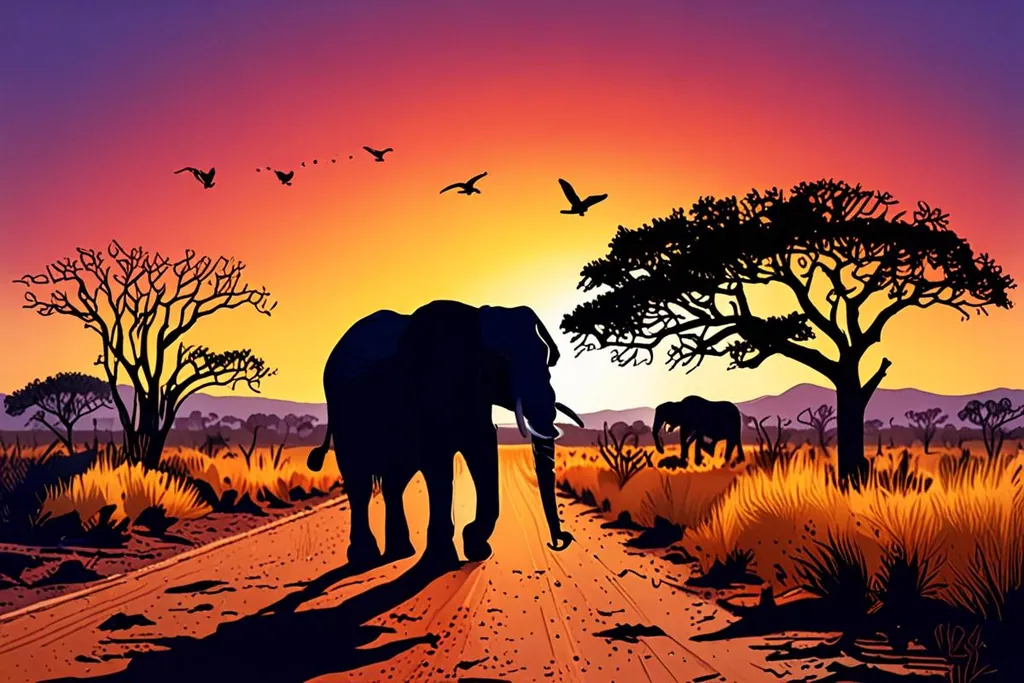
Kruger is the largest and the most famous of South Africa’s national parks, 19,623 square kilometres of bushveld running 360 kilometres from north to south along the border with Mozambique, in the provinces of Limpopo and Mpumalanga. Parts of it were protected as a game reserve from 1898, largely on the initiative of President Paul Kruger, and it became the country’s first national park on 31 May 1926. Close to two million people visited in 2024, which is both the park’s success and its central practical problem.
What makes Kruger different from most of Africa’s big parks is that you can drive it yourself. There are gates, tarred and gravel roads, a network of rest camps with shops and fuel, and a rule book that assumes a private car. That is why a South African family can do a safari here for the price of fuel and a conservation fee, and why the park is busy in a way that the Serengeti is not.
- Diện tích vườn
- 19,623 km²
- Chiều dài bắc-nam
- 360 km
- Vườn quốc gia đầu tiên Nam Phi
- 1926
- Lượng khách năm 2024
- 2 million
The gates and the shape of a visit
The park is entered through a ring of gates, with Malelane, Crocodile Bridge, Numbi and Phabeni in the south, Orpen and Phalaborwa in the middle, and Punda Maria and Pafuri in the far north, plus the Giriyondo crossing to Mozambique. Gates open at dawn and close at sunset, and the closing time is absolute: the fine for being late is real, and the last ten kilometres of a game drive are always the ones that matter, which is how people end up running for the barrier.
Inside, the rest camps are the accommodation: Skukuza, the administrative headquarters and the largest camp, Lower Sabie on the river, Berg-en-Dal and Pretoriuskop in the south, Satara in the middle of the open plains, Olifants on its cliff above the river, Letaba, Mopani, Shingwedzi and Punda Maria heading north. They are run by South African National Parks, they range from camping to air-conditioned bungalows, and they sell out months ahead for the winter school holidays.
Self drive against guided
Driving yourself means you set the pace, you sit in the viewpoint you chose, and you stop for forty minutes to watch a leopard because nobody is telling you to move on. You also have to find the animals, which is a skill, and you have to be back inside a camp by sunset, which is the hard limit.
Guided drives buy you the two things you cannot have: a ranger who knows where the cats were that morning and what the tracks in the road are telling them, and access to the park after dark, when the gates are closed and only the organised night drives are out. The private reserves along the western boundary, and the private concessions inside the park itself, go further: off-road driving, a tracker on the bonnet, all meals included, and no queue at a gate. It costs many times a rest camp, and for a first safari it is worth at least one night.
The seasons, and what they change
Winter, from May to September, is the season to come if you want to see animals. The bush thins, the grass is short and dry, the waterholes draw everything in, and the mosquitoes are at their least annoying. The price is the cold: early mornings on an open vehicle can be five degrees, and a jacket, a hat and a blanket are not optional.
Summer, from November to March, is green, hot and dramatic, with afternoon thunderstorms and a landscape full of young animals and birds, which is why the birders come now. The vegetation is thick, the animals spread out, and the middle of the day is genuinely hot. If you come in summer, drive at dawn and in the late afternoon and spend the middle of the day in the pool.
Malaria, rules and staying in touch
Kruger lies in a malaria risk area, with the risk higher in the north and in the wet season, and the decision about prophylaxis belongs to a travel clinic and to your own health rather than to a website. Take it seriously, and take the non-medical precautions as well: long sleeves at dusk, repellent, and a room with air conditioning or a net.
Malaria matters more because the rest of Africa’s safari rules matter here too, and because it is a shame to spoil a trip through carelessness. Stay in the vehicle except in designated areas. Do not feed anything. Keep to 50 km/h on tar and 40 on gravel, which is a rule about animals standing in the road as much as about accidents. And understand that connectivity is patchy: some camps have signal and some have none, which is one of the reasons to have data sorted before you arrive rather than hunting for it at a gate.
Bạn sẽ trải nghiệm vườn như thế nào?
Bạn có sẵn sàng tự lái xe không?
Bạn có ba ngày trở lên không?
Hai ngày ở phía nam
Chọn trại nghỉ phía nam quanh Skukuza, Lower Sabie hoặc Berg-en-Dal, lái các đường ven sông vào bình minh và hoàng hôn, nơi tập trung động vật và đông xe cộ. Thêm một tour bình minh có hướng dẫn viên để họ giúp bạn quan sát, thời gian giữa ngày nghỉ ngơi hoặc bơi trong trại.
Một tuần đi dần lên phía bắc
Mỗi hai đêm chuyển trại, bắt đầu từ nam qua Satara, Olifants, Letaba, rồi đến Shingwedzi và Punda Maria, nhận thấy càng lên bắc càng vắng. Xa nhất phía bắc là nơi bạn trải nghiệm vườn gần như một mình: các loài chim khác biệt, sông Luvuvhu, đàn voi lớn và các cây bao báp đặc trưng.
Ở lodge có hướng dẫn viên bên trong hoặc cạnh vườn
Các khu bảo tồn tư ở biên phía tây và các khu concession tư trong vườn tổ chức tour sáng/tối có hướng dẫn viên, tracker, bao trọn bữa, không phải xếp hàng ở cổng. Giá cao hơn trại nghỉ nhiều lần; bạn trả cho kiến thức địa bàn, khả năng chạy off-road và đi ra ngoài sau hoàng hôn mà tự lái không được.
Trước cổng vào
0/8
Kruger rewards patience and punishes impatience: the people who see the most are the ones who drive slowly, stop when the vehicle in front has stopped, and go out again in the afternoon. Book the camp early, go in the winter, and give it at least three days if you can.