South Africa is the easiest country in Africa to go on safari, and the reason is variety. Within one country you can drive yourself through a national park the size of a small country for the price of fuel and a conservation fee, or fly into a private reserve where a ranger and a tracker find a leopard for you before breakfast and everything is included. Both are proper safaris, and the animals are not better in one than the other.
What decides your choice is a short list of things: how much you want to be driven, whether malaria matters to you, whether you have children with you, and how many nights you have. Everything else follows from the reserve that fits.
- Cho safari đầu tiên đúng nghĩa
- 3 đêm
- Trong một ngày ở lodge thông thường
- 2 chuyến đi
- Chỉ riêng Kruger
- 19,623 km²
- Madikwe, Addo, Eastern Cape
- Không sốt rét
The four ways to do this
Self drive in a national park is the South African family holiday: Kruger, Addo in the Eastern Cape, or Hluhluwe-Imfolozi in KwaZulu-Natal, with a bungalow in a rest camp, your own car, and the animals exactly where you find them. It is cheap, it is flexible, and it requires a willingness to be the one who spots things.
A rest camp with organised drives sits between the two ends: your own bed, but a ranger driving you out at dawn and again in the evening, which is the soundest value in the country for a first safari.
A private reserve next to Kruger, such as the Sabi Sand or the Timbavati, gives you off-road driving, radio-shared sightings, night drives and all meals, on land that shares an unfenced boundary with the park. And a malaria-free reserve, whether Madikwe in the north west or one of the Eastern Cape properties, trades a little of the Lowveld’s density for the removal of a medical question, which for families is worth a great deal.
The shape of a safari day
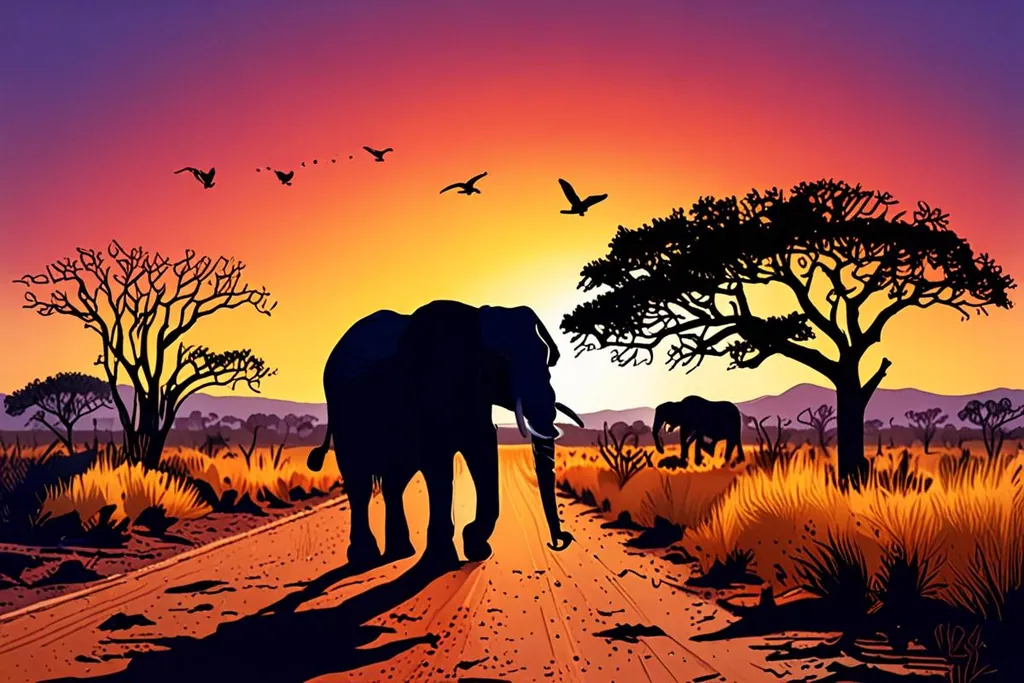
Almost every reserve runs the same rhythm, and it is built around the animals rather than the guests. You are woken before dawn, because the first two hours of light are when the predators are still moving and the birds are awake. Coffee, then two to three hours out, back for a large breakfast. The middle of the day is for sleeping, swimming and eating, because very little happens in the heat. Then out again in the late afternoon, stopping somewhere for drinks as the sun goes down, with a spotlight for the drive back and dinner waiting.
Two drives a day sounds gentle and is tiring, particularly with children, and it is why three nights is the sensible minimum: the first day you are learning to look, and by the third you are seeing things the vehicle ahead of you drives past.
What drives the cost
The cost of a safari has almost nothing to do with the animals and almost everything to do with what is included and how exclusive it is. A national park bed, your own car and your own food is the cheap end. An all-inclusive lodge with two guided drives a day, a ranger, a tracker, a chef and a bar sits in the middle. An exclusive-use camp with four rooms and a private vehicle is at the top, and it can be many times the price per night of a rest camp for the same landscape.
The other cost driver is the season. Winter, from May to September, is when the bush thins out and the animals gather at water, and it is also when everyone wants to be there, so the private reserves charge their highest rates and the rest camps sell out months ahead. Late summer is cheaper, greener and harder to see through, which is a fair trade if your priority is birds, babies and budget.
Malaria, children and the practical rules
Kruger, the private reserves around it, Zululand and the far north east are malaria areas, with the risk highest in the wet season. Madikwe, Pilensberg, Addo, the Eastern Cape reserves and the Western Cape reserves are not. If you are pregnant, or travelling with a small child, or simply prefer not to take tablets, plan from the malaria-free list and the rest of the decision becomes easy.
Then the ordinary safari rules, which are there to keep you and the animals alive: stay in the vehicle unless your ranger tells you otherwise, keep quiet, no flash photography at night, no feeding anything ever, and do what the ranger says the first time they say it. Tipping is by the day rather than by the bill, shared between the team, and it is a normal question to ask at the lodge.
Phong cách safari nào hợp với bạn?
Giữ chi phí thấp là ưu tiên quan trọng nhất?
Bạn đi với trẻ nhỏ?
Tự lái trong vườn quốc gia
Kruger, Addo hoặc Hluhluwe-Imfolozi: mua vé bảo tồn, đặt nhà trong trại nghỉ, thuê xe tự lái sáng sớm và hoàng hôn. Thêm chuyến đi săn bình minh do trại tổ chức nếu bạn muốn học cách kiểm lâm tìm dấu vết, còn ban ngày thư giãn bên hồ bơi khi động vật ngủ.
Khu bảo tồn tư nhân không sốt rét
Madikwe, Pilanesberg, Addo và các khu ở Eastern Cape loại bỏ vấn đề thuốc men, nên các gia đình có trẻ nhỏ thường chọn. Bạn sẽ được dẫn tour chuẩn cùng các bữa ăn, kiểm lâm am hiểu địa hình, đổi lại mật độ động vật thường dày hơn ở Lowveld và Kruger.
Khu bảo tồn tư nhân cạnh vườn quốc gia
Sabi Sand và Timbavati tiếp giáp Kruger không rào, động vật di chuyển tự do, lodge có thể lái vào đường cấm, theo dấu báo suốt 2 giờ và đi ban đêm. Cách này có giá cao nhất, và khả năng thấy động vật thú vị được đảm bảo hơn nhờ kiểm lâm chia sẻ thông tin.
Những điều cần kiểm tra trước khi đặt safari
0/8
A safari is the most expensive thing most people do in South Africa and the one they remember longest, and the two decisions that matter are made before booking: which reserve, and how many nights. Get those right, with three nights and a malaria-free reserve if you have children, and the rest is patience and a pair of binoculars.