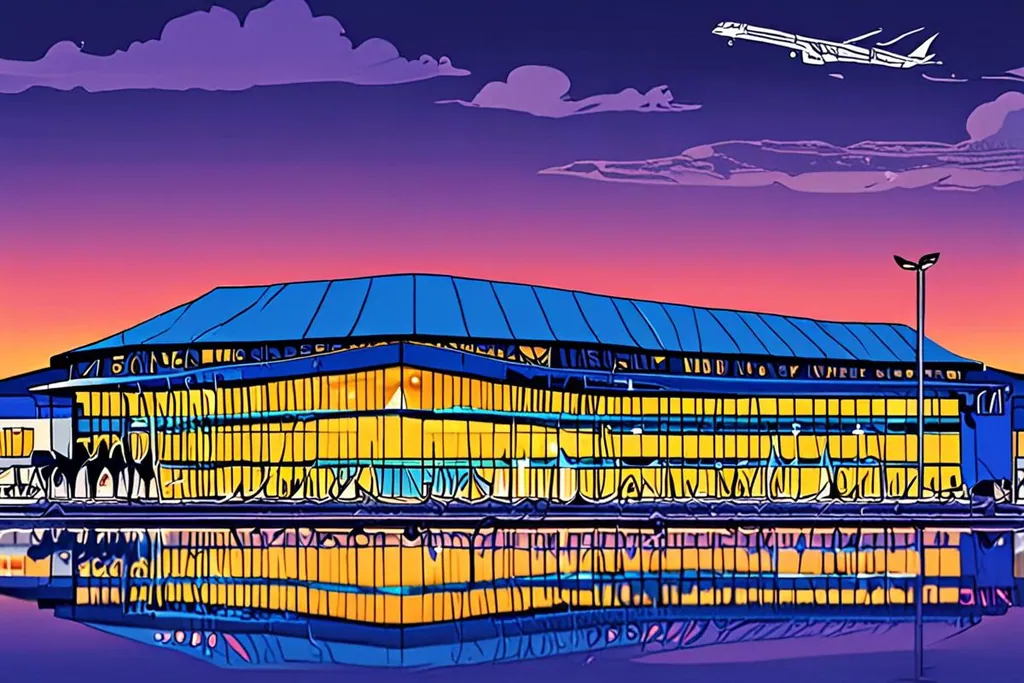
Cape Town International is the second-busiest airport in South Africa and the fourth-busiest in Africa, and it has the shape most travellers want from an airport: one central building with a domestic wing on one side and an international wing on the other, twenty kilometres from the city, and a road into town that is quick outside the rush hours. It opened in 1954, replacing an aerodrome closer to the city, and the Cape Town to Johannesburg route it serves is one of the busiest air routes in the world.
The practical questions on landing are two. How are you getting to your accommodation, and how are you getting online. Both are easy and both are worth deciding before you arrive rather than in the arrivals hall with a suitcase and a queue.
- Mã sân bay
- CPT
- Từ trung tâm thành phố
- 20 km
- Năm khai trương
- 1954
- Ở Nam Phi, thứ 4 ở châu Phi
- Bận rộn thứ 2
Arrivals, and getting into the city
Immigration is usually quick for a mid-sized international airport, but December and January are the South African holiday peak and a queue of an hour is possible. Baggage is efficient and the hall is small enough to see the whole of it.
Then four options. The MyCiTi bus runs a dedicated airport service into the Civic Centre station and on to the Waterfront, with luggage space and a fixed fare, and it is the least expensive sensible option if your accommodation is on that line. Ride-hailing is the flexible choice and covers everywhere, with a designated pickup area outside the terminal that you should walk to rather than accept a lift from somebody who approaches you inside. Metered taxis and pre-booked transfers cost more and are less stressful after a long flight. And car hire is the right answer if you are going straight on to the Winelands or the Garden Route, because both are a long way from the city in the wrong direction.
Getting online: the eSIM or the airport SIM
South Africa has four mobile networks and good coverage in cities, along the main roads and in most of the places visitors go, with the usual gaps in the Karoo, the deep bushveld and some rural areas. The choice of how to connect is the same as anywhere: buy a local SIM, roam on your own, or install an eSIM before you fly.
A local SIM is bought at a counter in the arrivals hall, needs your passport because registration is compulsory, and gives you a South African number and a generous data allowance. The eSIM needs no queue, works as soon as you land, and keeps your own number active for calls and messages, which is why most people with a recent phone now do it this way. Roaming on a European or American contract works and is expensive.
Departures, and the connections that matter
A lot of South African itineraries involve a domestic hop from Cape Town to Johannesburg, to Durban, or to one of the airports serving the Kruger area, and the airport handles that well: the terminals are connected by the central block, so a transfer is a short walk. Allow ninety minutes between domestic flights and two hours for an international departure, and more in the December peak.
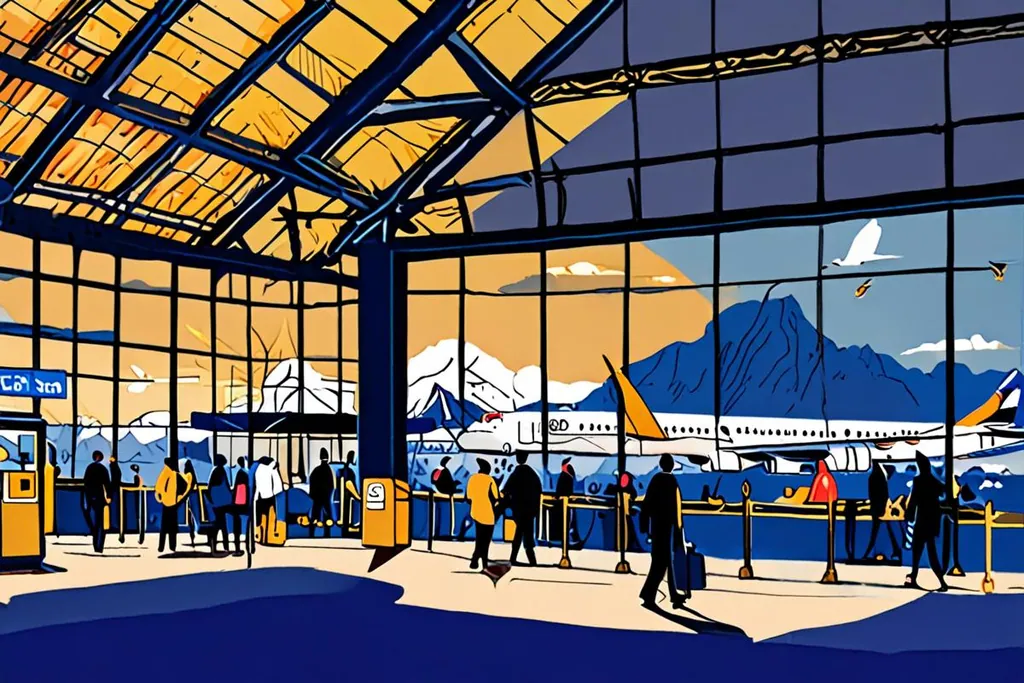
The airport is also where a lot of people do their wine buying. The shops at departures sell the estates you visited at prices that are not much worse than the farms, which is a reasonable way to spend the last of your rand if you have the baggage allowance. And if you have time to kill, the viewing area looks out towards the mountain, which is the correct way to end a trip.
Bạn sẽ rời sân bay bằng cách nào?
Bạn có định lái xe tới Winelands hoặc Garden Route không?
Nơi bạn lưu trú có ở City Bowl hoặc Waterfront không?
Nhận xe và đi thẳng
Nếu điểm đến đầu tiên là Stellenbosch, Franschhoek hoặc Garden Route, thuê ô tô ngay tại sân bay sẽ tiết kiệm thời gian và tránh lái xe trong thành phố. Nhận xe ở nhà ga, kiểm tra bảo hiểm và phí cầu đường, rời đường sân bay trước giờ cao điểm chiều vì cả N2 và N1 đều gần sân bay và dễ tắc vào giờ đó.
Xe buýt MyCiTi
Xe buýt sân bay chạy tới trạm Civic Centre và Waterfront với chỗ để hành lý và giá vé cố định, phù hợp cho City Bowl và Waterfront. Bạn mua thẻ tại sân bay, quét thẻ lên xe, ngắm thành phố thay vì mặc cả giá sau chuyến bay dài.
Gọi xe ứng dụng, đúng điểm đón
Gọi xe qua ứng dụng giá hợp lý so với châu Âu và ứng dụng sẽ chỉ cho bạn khu vực đón đúng, bạn nên đi bộ tới đó thay vì nhận lời ngay trong sảnh. Cách này phù hợp cho Sea Point, Camps Bay, Green Point và những nơi không nằm trên tuyến xe buýt, và có thể đón ở bất kỳ giờ nào.
The drive on, and what is nearby
The airport sits on the eastern edge of the city, which is convenient for the places that are awkward from the centre. Stellenbosch and the Winelands are about forty minutes from the terminal, which makes collecting a car and driving straight there a sensible plan; the Garden Route is four to five hours, so it is a day of driving rather than a morning; and the Cape peninsula with Cape Point is on the far side of the city altogether, an hour and a half from the airport and better done as a separate day.
If you are staying in the city, the drive in passes the industrial edge and then the mountain appears, usually on the left, quite suddenly and much larger than people expect. The two motorways that pass the airport, the N2 heading east towards the Garden Route and the N1 north towards Johannesburg, are the routes most people use on the way out of Cape Town, and both fill up with commuters between about half past six and half past eight in the morning and again from four in the afternoon.
A hire car collected at the airport avoids the city entirely for anyone going inland or east, and ride-hailing covers everyone else. Whichever you choose, do it from the terminal rather than from a kerbside conversation, and the arrivals process is as uneventful as an airport gets.
Two local notes
Wind affects this airport more than most. Cape Town sits in a windy corner of the country, and the south easter can delay or divert flights, particularly in the summer months, so build a little slack into a tight connection or a same-day cruise departure.
And the drive from the airport to the city passes through the area where most of the city’s industrial traffic moves. It is a normal road at normal times, and there is no reason to fear it, but it is not a place to stop for directions or to leave a bag visible in a parked car. Take the route your driver takes, and keep your luggage with you.
Trước khi hạ cánh
0/8
Cape Town International is small, calm and close to the city, which makes it one of the easier long-haul arrivals in the world. Decide the transfer, sort the data, allow time in December, and the rest is a twenty-five minute drive with a mountain at the end of it.