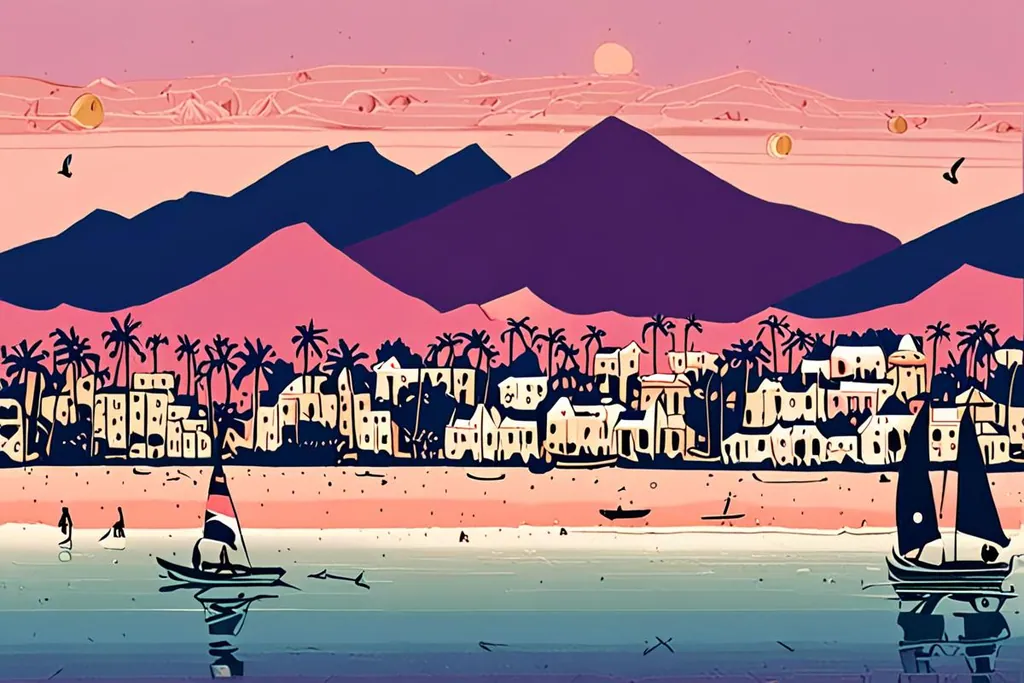
Dahab is a small town on the south eastern coast of Sinai, about eighty kilometres north east of Sharm El Sheikh, and it is the least resort-shaped place on that coast. There are no large hotels along a private beach: the town is three small districts along a bay, with the beach road at Masbat as the centre, Mashraba south of it and Medina behind, and the diving happens at the end of the road. The population is around 3,200, which is roughly the number of people you will see at dinner on a busy evening.
The name means gold, and the bay is where the Sinai mountains meet the Gulf of Aqaba: steep, bare and pink in the evening, with the reef running along the shore beneath them. It has been a Bedouin fishing area for a very long time and a travellers’ town for about forty years, and the mix shows in the way it is laid out: cushions and palm shelters rather than sunbeds and waiters.
- People in the town
- 3,169
- From Sharm El Sheikh
- 80 km
- Area of the district
- 1,083 km²
- Rain in an average year
- ~9 mm
The diving, from the beach outwards
The reason people come is that the reef is at the end of the beach road. Lighthouse reef, the Eel Garden, the Islands and the Bells are all shore dives within a few minutes of the guesthouses, which means no boat, no early departure and no queue: you carry your kit to the water, get in, and swim out. For a beginner that is close to ideal, and for anyone who has dived from a boat in a crowd it is a small revelation.
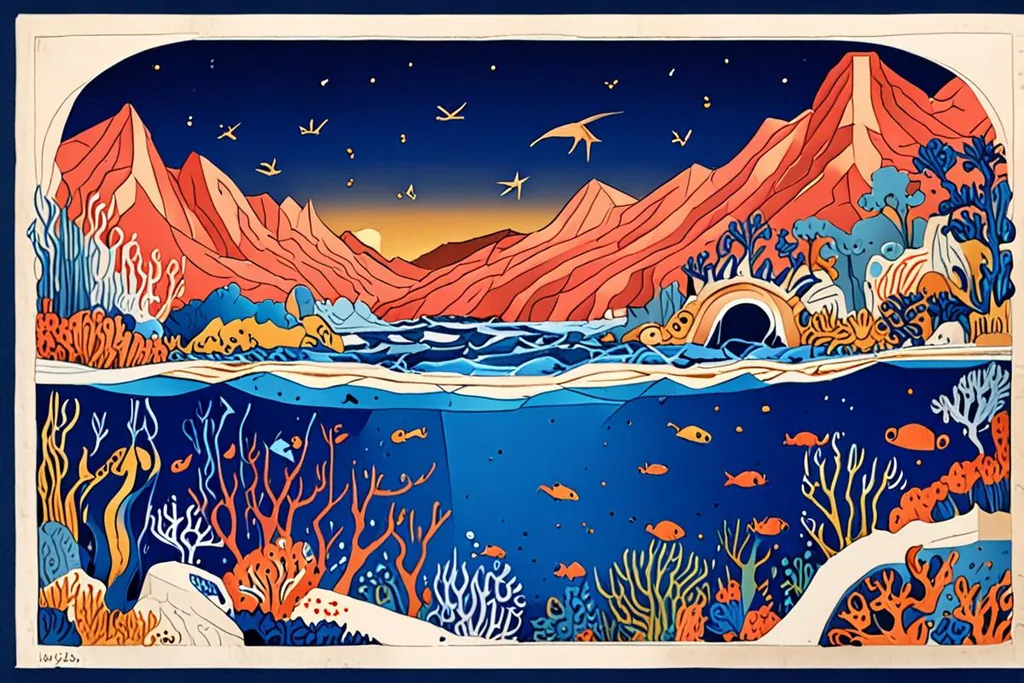
Further north the sites get serious. The Canyon is a fissure cut into the reef, entered from the seaward side and dropping to about thirty metres, with the light coming down through it. The Blue Hole is a sinkhole in the reef with a shallow coral rim and a shaft that falls well over a hundred metres, joined to the open sea by an arch at around fifty-five metres. The rim is a snorkelling and open water site; the arch is a deep technical dive with a long history of accidents, because it looks easier than it is. Dive it with the training it requires or leave it, and no dive shop there will tell you otherwise.
The coast north, and the rest of the town
The coast north of Dahab towards Ras Abu Galum is a protected area of reef, sand and mangroves, reached by boat or along the shore by camel or on foot, and it is the day out that everyone takes: quieter water, healthier coral and a Bedouin camp to eat lunch in. It is also the route of a longer trek for people who want to walk the Sinai rather than dive it.
The other half of Dahab is wind. The lagoon at the north end of town is a windsurfing and kitesurfing spot with a long, flat, shallow bay, and the wind that fills the sails is the same wind that can flatten the sea for snorkelling and make a diving day choppy. It is worth planning around, and worth checking the forecast if you have one water day and one ambition.
Getting there, and the shape of the stay
Dahab is reached by road from Sharm El Sheikh in about an hour, which is where most visitors arrive from after landing at the airport, and by bus from Cairo on a long overnight or daytime run. Travellers have been coming this way for decades, so the taxi and pick-up arrangements at the beach road are informal, cheap and well understood. Expect checkpoints on the road: they are routine.
Accommodation runs from cheap guesthouses behind the beach to small hotels with pools, and the town is cheap enough that people stay for weeks. Stay near the beach road if you are diving, because the dive centres are there and the walk home in wet kit is short.
What are you here to do in the water?
Do you already dive?
Do you want to bring a qualification home?
Take the course
Dahab is built for it: shore entries, calm mornings, warm water, and a choice of schools that keeps prices down and standards high. The open water course takes three or four days, the confined sessions happen off the beach, and you finish with a licence that works anywhere. Freediving courses run the same way, and the Blue Hole is the place people take them.
Work north through the sites
Start with the shore reefs in town, Lighthouse and the Eel Garden, which are easy and full of life. Then a day at the Canyon, a 30 metre deep fissure in the reef that you enter from the seaward side, and a day at the Blue Hole, diving the rim rather than the arch unless you are trained for it. Finish with Abu Galum, reached by boat or by camel along the coast.
Snorkel the rim and the lagoons
The Blue Hole is a shallow coral garden around a hole, and the snorkelling from the rim shows you most of what the divers see. Lighthouse reef is a swim from the beach road, and the lagoon at the north end of town is the calm, shallow option. Add a boat trip north to Abu Galum for the healthiest reef and the quietest beach.
A note on safety and history
Sinai has a security history that is part of why the south eastern coast looks the way it does. There were bomb attacks in the peninsula in 2004, 2005 and 2006, including one in Dahab in April 2006, and the insurgency that followed has been concentrated in North Sinai, far from here, which is why the travel advice tells you to avoid that region and not this one. Read the current guidance rather than anything written at the time, and take the ordinary care you would take anywhere far from home and far from a hospital.
Before the Sinai coast road
0/8
Dahab is the cheap, slow, diving end of the Egyptian Red Sea: shore reefs at the end of the beach road, the Blue Hole and the Canyon a short drive north, Abu Galum along the coast, and a town small enough to know in a day. Come for a course, stay for the weeks that follow it.