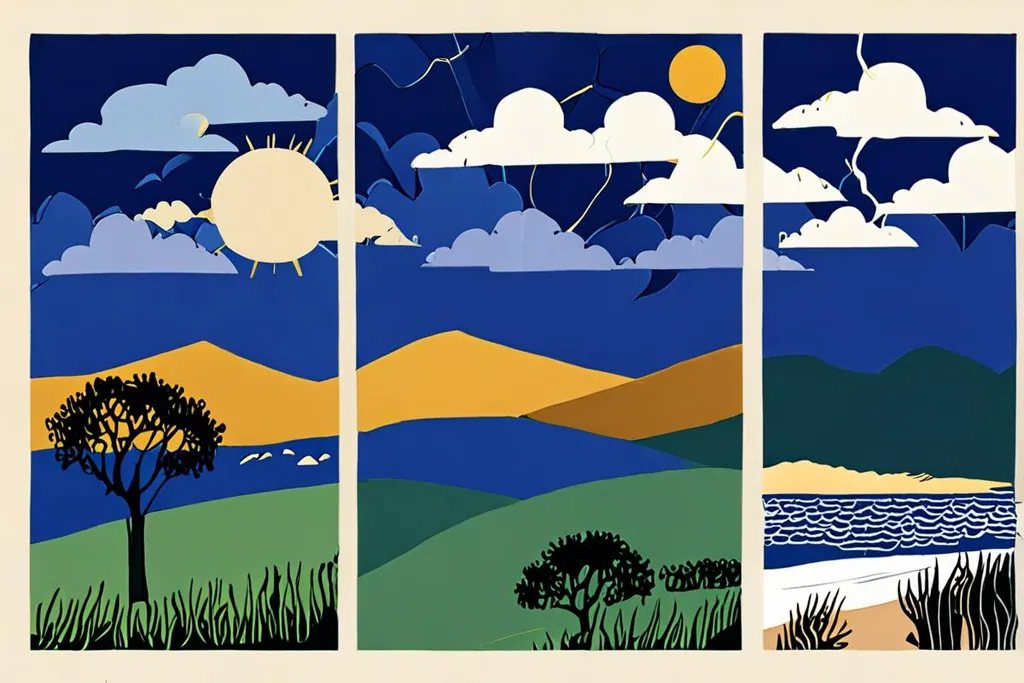
South Africa’s weather is easier to understand once you know that the country has two rainfall regimes rather than one. The Western Cape, in the south west, is a Mediterranean climate: the rain arrives with the winter cold fronts from May to August, and the summer is dry, hot and windy. Everything else, from the Highveld to the Lowveld to the interior, gets its rain in the summer, in thunderstorms that build through the afternoon and clear by evening.
Cape Town takes about 493 millimetres of rain a year, most of it in the winter. Johannesburg takes around 720 millimetres, almost all of it between October and April, and hardly any in July. Those are the same country, on the same days, which is why a trip that starts in Cape Town and ends in the bushveld has to pack for two different holidays.
- Cape Town rain a year
- 493 mm
- Johannesburg rain a year
- 720 mm
- The Cape’s wet months
- May to Aug
- The Highveld’s rainy season
- Oct to Apr
The Cape: a Mediterranean year
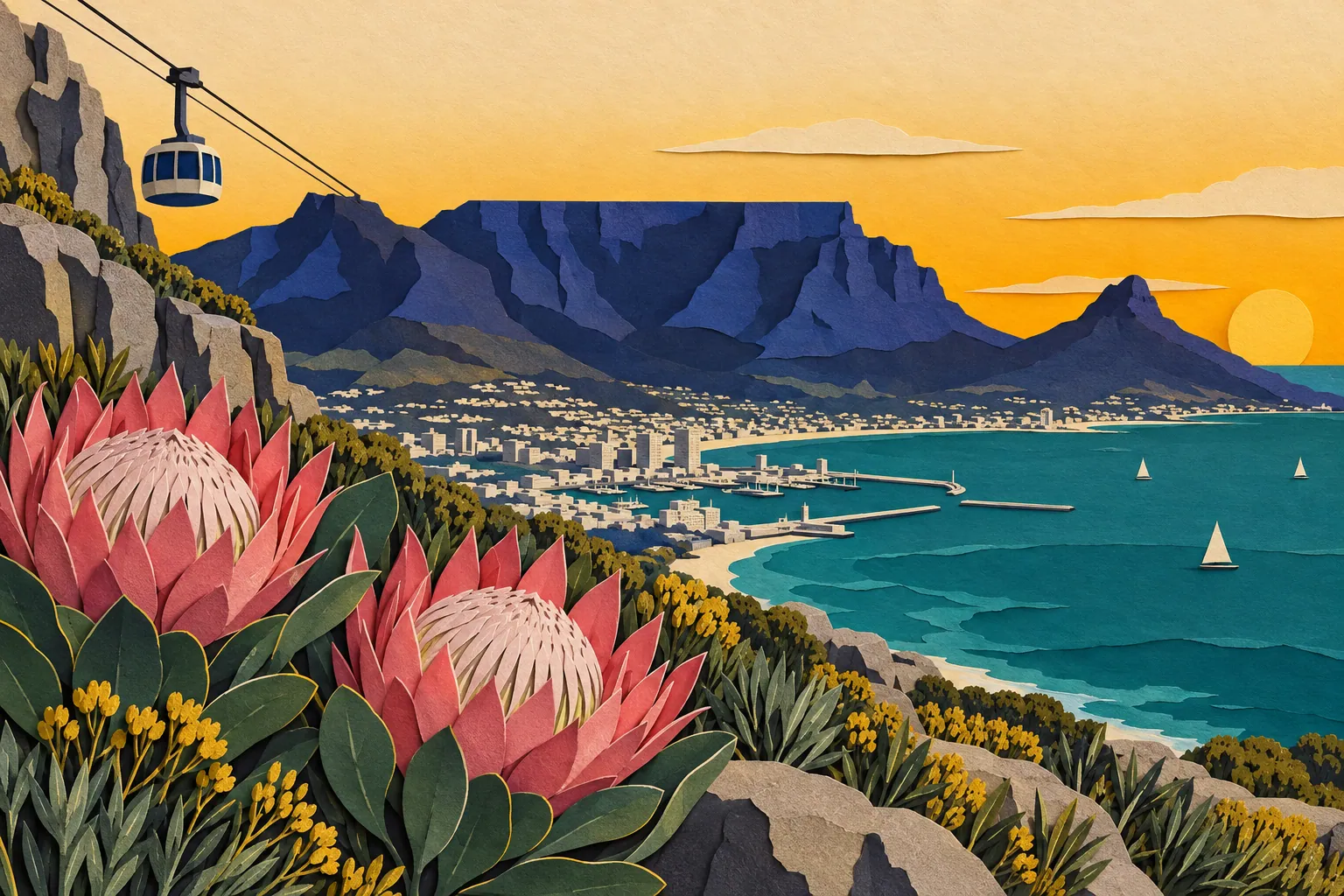
Cape Town’s summer, from November to March, is dry and hot with a wind that decides everything: the south easter, known locally as the Cape Doctor, blows hard enough to close the cableway, flatten a beach day and pick which side of the peninsula is pleasant. Winter, from May to August, is cool, wet and green, with rain measured in tens of millimetres a month and long spells of beautiful, clear, cold weather between the fronts.
The practical consequences are simple. Summer needs a windproof layer and sun protection that survives wind. Winter needs a rain jacket, and it repays the visitor with green vineyards, empty restaurants and prices that are half of what they were a month earlier.
The Highveld and the interior
Johannesburg sits at about 1,750 metres, and altitude explains most of what the weather does there. The days are mild all year, the sun is much stronger than the temperature suggests, and the rain arrives in summer as brief, violent afternoon thunderstorms with lightning that people take seriously. Winter is dry and sunny with cold nights and frost in the low-lying suburbs.
Further west and north the interior becomes arid: the Karoo, the Northern Cape and the Kalahari fringe take little rain in any month, with hot days and cold nights and a huge diurnal range. The one exception is the Namaqualand coast in August and September, when the winter rain brings the wildflowers up and the semi-desert turns orange for a few weeks.
Wind, storms and what changes your plans
Two things in South African weather have more influence on a holiday than the temperature does. The first is wind, and it is a Cape speciality: the south easter that blows in summer can close the Table Mountain cableway, cancel a boat trip to Robben Island, flatten a beach day and pick which side of the peninsula you should be on. In the Eastern Cape and along the Garden Route the wind is also a regular feature, and on the Highveld a summer storm is often preceded by a sudden gust that lifts dust off the ground.
The second is the summer thunderstorm, which is a Highveld and interior institution: the morning starts clear, clouds build through the early afternoon, the storm arrives between two and five, and by six the roads are steaming and the sky is clean again. It is dramatic, it is brief, and it drops a lot of water in a short time. Lightning kills people in South Africa every year, so do not stand on a golf course, a koppie or an open plain while it is happening.
The practical response to both is the same: plan the fixed things, like the cableway, the boat and the game drive, into the morning, and leave the afternoon able to move.
The coasts, and what the sea does
Durban and the KwaZulu-Natal coast are humid and subtropical: hot and wet in summer, mild and dry in winter, and only about six degrees between the two, which is why the swimming season there runs all year and why the same coast is the answer to a beach holiday in July. The Garden Route on the south eastern coast is maritime, with rain in every month, a great deal of wind and famously changeable conditions: a morning that looks ruined can be perfect fifty kilometres further east.
The Lowveld, where Kruger is, is hot and dry in the winter and hot and wet in the summer, with cold early mornings in the dry season that catch out people who packed for Africa as a single idea.
Which weather are you dressing for?
Is the Western Cape the first stop on the trip?
Is it between November and March?
Cape summer: heat, wind and no rain
Dry, hot and windy, with the south easter that closes the cableway and decides which beach is usable. Take a windproof layer even for a beach day, sun protection that stays on in wind, and a light jacket for the evenings, which can be surprisingly cool on the Atlantic side.
Cape winter: rain, green hills and cheap rooms
Wet, cool and beautiful, with the Winelands at their greenest and the crowds gone. Take a proper rain jacket, waterproof shoes and a plan that includes indoor days: estates, restaurants, museums and the long lunch that this season was invented for. Between the fronts there are still perfect days.
Bushveld: cold mornings, hot middays, storms
Winter in the Lowveld means five degrees at dawn on an open vehicle and twenty-five by lunchtime, so take layers, a scarf and a blanket. Summer means heat, humidity and afternoon thunderstorms that arrive fast, so take a light rain shell and plan the day around the early morning and the late afternoon, when the animals move.
What to pack, and what to check
Layers beat outfits in this country. A winter game drive needs a warm hat, gloves and a blanket at dawn and a T-shirt by eleven. A Cape summer day needs a windproof jacket and a hat that will not blow away, and a Cape winter day needs waterproof shoes. Everywhere inland, water and sun protection matter more than you expect, because the air is dry and the altitude raises the ultraviolet.
Then check the specific thing you have booked rather than the country as a whole: the wind decides the cableway and the boats, the thunderstorms decide the Highveld afternoon, and the rain decides the Garden Route. South Africa does not have weather that ruins a holiday. It has weather that changes the order of it, which is a different problem with an easy answer.
Before you pack
0/8
The short version: the Cape is Mediterranean with winter rain and summer wind, the rest of the country has summer storms and dry winters, Durban is warm all year and the interior is arid and extreme. Pack layers, check the wind, and never assume the other side of the country is having the same day.