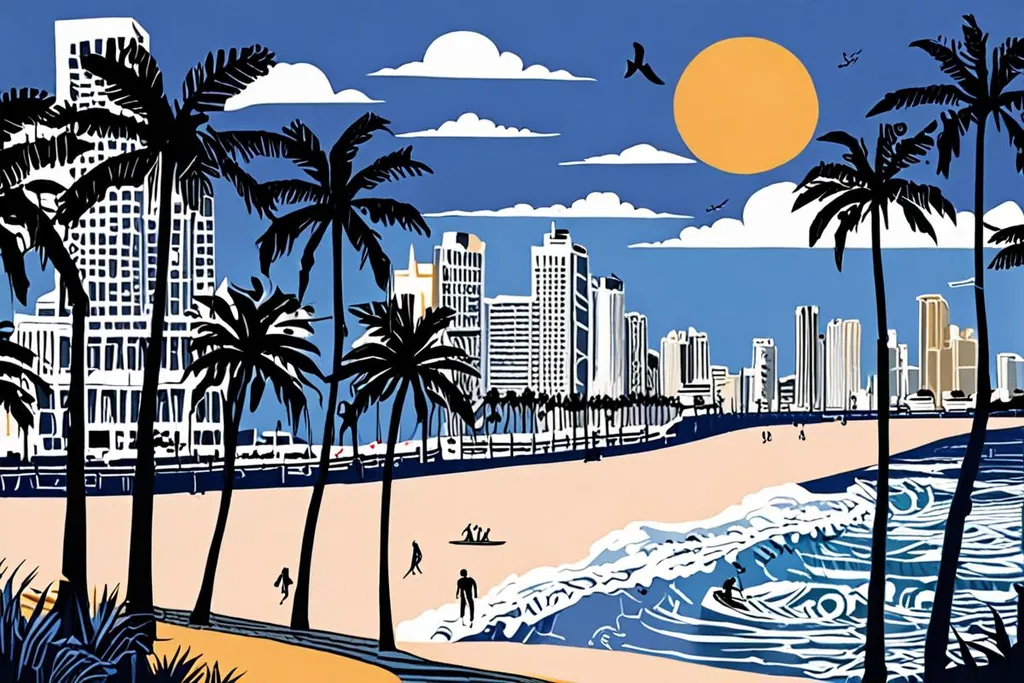
Durban sits on a bay on the Indian Ocean, in the province of KwaZulu-Natal, and it is the third-largest city in South Africa and the largest in the province. The Zulu name for the place is eThekwini, from the word for bay or lagoon, and the harbour that fills it is the busiest port in sub-Saharan Africa: the ships at the anchorage are the first thing you see from the air. The metropolitan municipality around the city holds around 4.2 million people, which makes it one of the largest urban areas on the Indian Ocean seaboard.
The Portuguese navigator Vasco da Gama saw this coast at Christmas in 1497 and named it Natal, the Portuguese word for Christmas, and the name stuck to the region. European settlement began with a trading post in 1824, and the city that grew from it became the port for the interior: sugar, coal, and the labour that came with both, including the indentured workers from India whose descendants are the reason the food here is what it is.
- Population of the municipality, 2022
- 4.2 million
- The metropolitan area
- 2,556 km²
- City population, 2011 census
- 595,061
- In sub-Saharan Africa
- Busiest port
The beachfront, and the sea
The Golden Mile is the city’s front room: a beachfront promenade that runs along the ocean with piers, lifeguard stations, gardens, cafés and hotels behind it, and a harbour mouth at one end. The beaches are sandy and patrolled, the ocean is warm enough to swim in almost every month, and the surf is good enough that there are usually people out on boards before breakfast.
North of the centre the coast runs up to Umhlanga, which is where the modern hotels and the upmarket beachfront are, and south of it the Bluff is the headland that shelters the harbour. Inland from the sea, the city climbs the Berea ridge, which is where the older suburbs and the university sit.
The Indian quarter, and what to eat
Behind the beachfront, around Victoria Street and the Grey Street area, is the historic Indian quarter: markets with spices and produce, sari shops, the Juma Masjid mosque with its lanes full of traders, and restaurants that have been cooking the same dishes for four generations. It is the reason people talk about Durban food before they talk about the beach.
The dish to start with is bunny chow: half a loaf of bread hollowed out and filled with curry, invented here as a way to serve workers a takeaway meal with no container, and still eaten with your hands. The curry itself is Durban curry, hotter and more complex than most of what you will eat in the rest of the country, and the vegetarian versions are as good as the meat ones. Beyond that, the local cooking runs to seafood, grilled meat and the same braai culture as the rest of South Africa.
Getting there and around
King Shaka International Airport is at La Mercy, about 35 kilometres north of the centre, built for the 2010 football World Cup and much easier to use than the old airport it replaced. Ride-hailing covers the airport, the beachfront and the suburbs reliably and cheaply, and it is what most visitors use. The minibus taxis move most of the city’s commuters and are not a system to learn on holiday; the suburban rail network is limited and not aimed at visitors.
The city is not walkable end to end, but the beachfront is: the promenade runs for kilometres along the sea, and the flat grid of the central districts is fine in daylight. The harbour is a working port rather than a tourist attraction, though the uShaka Marine World at its edge combines an aquarium with a water park and is the family day out.
Weather, water and the seasons
Durban has a humid subtropical climate: hot and wet in summer, mild and dry in winter, and a difference of only about six degrees between the two. That is the attraction: while the Highveld freezes at night in July and Cape Town waits out its rain, Durban is sitting on a beach in the sun with the sea still warm.
Summer, from October to March, brings heat, humidity and heavy afternoon storms, which can be dramatic and short. It is also the cyclone and flood season on this coast, and the city has had two catastrophic floods in recent years, in 2021 and 2022, which killed hundreds of people and damaged the port and the roads. The city rebuilt, the beachfront reopened, and the practical consequence for a visitor is to check the weather warnings before travelling on this coast in the rainy months.
Beach, city or inland?
Is the sea the point of your visit?
Do you want to understand the city as well as swim in it?
A beach day, done properly
The Golden Mile has lifeguards, piers, a promenade that runs for kilometres and water that is warm enough without a wetsuit for most of the year. Swim between the flags, keep your belongings with somebody rather than on the sand, and walk the promenade at sunset, which is when the city takes it seriously.
The Indian quarter and a bunny chow
Victoria Street Market for spices and the old quarter around it, the Juma Masjid mosque in its lane, and then a bunny chow from a shop that has been making curry for generations: half a loaf of bread hollowed out and filled, eaten with your hands and a napkin. It is the introduction to a city that has been Indian for a hundred and sixty years.
The Drakensberg
Two to three hours inland is the uKhahlamba Drakensberg, a World Heritage Site for both its mountain scenery and its San rock art: day walks, waterfalls, and the biggest and quietest landscape in the country. Go for a night rather than a day, because the drive is the least interesting part of it, and the light at both ends of the day is the reason to be there.
Inland, and the Zulu country
The interior behind Durban is the other half of the province. The Drakensberg mountains run two to three hours inland and are a World Heritage Site twice over: for the scenery and for the San rock paintings in their caves, which are among the largest collections in Africa. The Midlands between the city and the mountains is a route of farms, breweries, craft workshops and small hotels. Further north is Zululand, with game reserves, battlefields from the Zulu and Boer wars, and cultural sites that tell the history of the kingdom that gave the province its name.
Before the beachfront
0/8
Durban is the warm, cheap, Indian, surfable end of South Africa, and it is the one city in the country where a beach holiday and a food city break are the same trip. Go in winter for the comfort, go hungry whatever the month, and get out of town for at least one day.