Morocco divides into two kinds of payment: the price, which is written down somewhere, and the small note, which is not. Almost every bad experience a visitor has with money here comes from confusing the two, and almost none of it involves a waiter.
The tip itself is easy. The fares and the free offers are where a week’s spending gets away from you, so it is worth knowing the numbers before you land rather than negotiating them from behind a taxi window.
What the rule actually is
A tip is voluntary by definition, and Morocco does not publish a percentage to replace that with. What visitors arrive at instead is the habit that works across most of southern Europe: leave the coins from the change in a café, round a taxi fare up, and hand a note to anyone who did something for you beyond the transaction.
The difference here is the scale. Moroccan prices are low, so these amounts are not tokens. A tagine costs 25 to 60 dirham and couscous the same, mint tea is 6 to 8, a glass of orange juice is 4, and a round of bread is under 2. Put beside those numbers, a 10 dirham note is a sixth of a lunch, which is why nobody in Morocco is insulted by one, and why handing over 50 dirham for a 30 dirham meal reads as a mistake rather than generosity.
- Where the taxi meter starts, before 8pm
- 1.70 dh
- The minimum taxi fare by day
- 7 dh
- Enough for the porter who takes your bag
- 5 dh
- The ceiling for showing you out of the medina
- 20 dh
The taxi, where the money actually goes
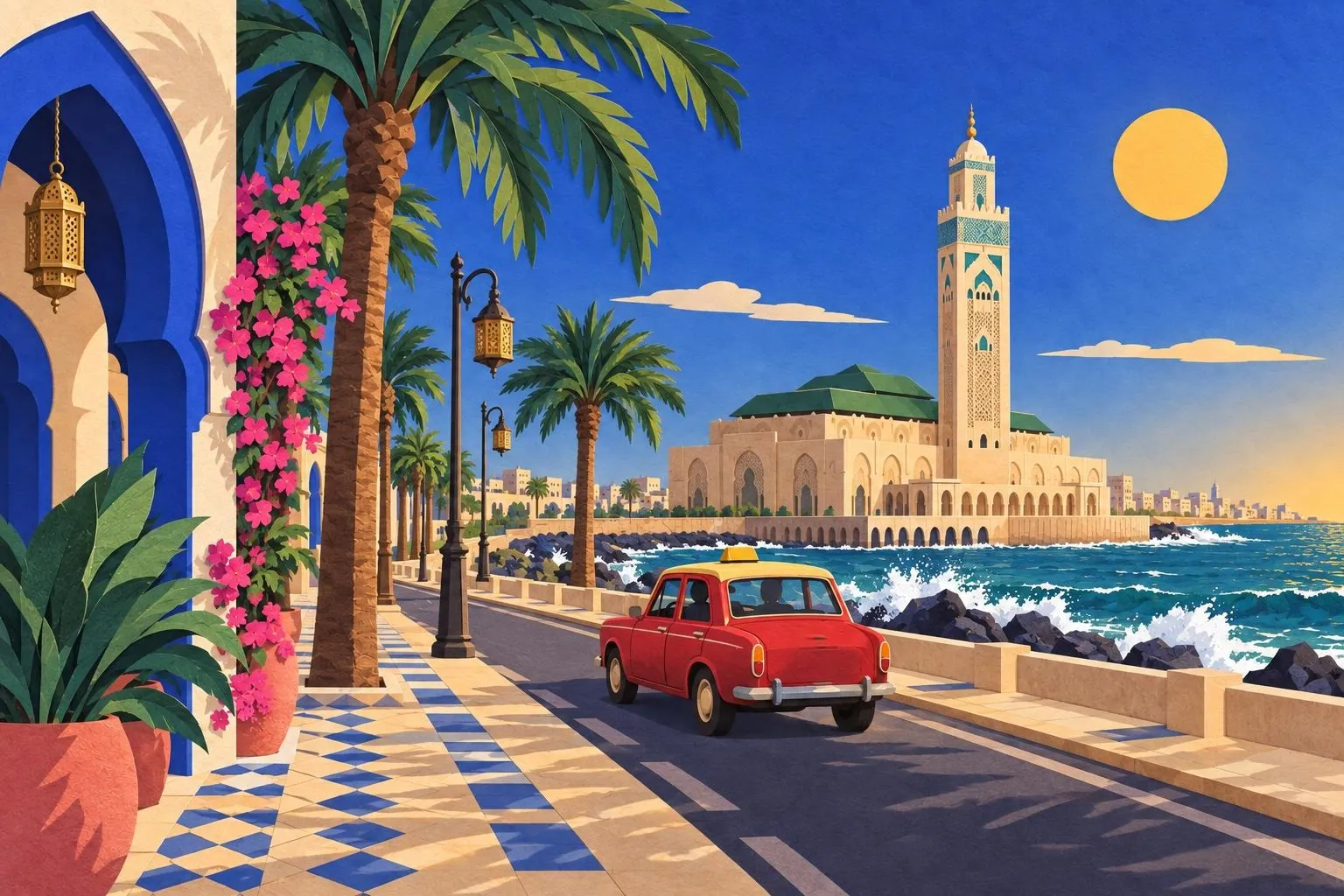
This is a fare problem rather than a tipping problem, and it is where a week of tips disappears in a single ride. The law says a petit taxi in town must run its meter: it starts at 1.70 dirham before 8pm and 2.40 after, and there is a minimum fare of 7 dirham by day and 10 at night. A ten minute ride comes to about 20 dirham on the meter. The run from Marrakesh train station to the main square is 12 to 13.
Drivers waiting at the station, at the airports and around the square often decline the meter and ask 50 to 70 for that same ride. Marrakesh airport sells a fixed fare from a machine at 200 dirham, while a taxi hailed on the road 200 metres away costs about 60, and a grand taxi into the medina is around 150. Walking a hundred metres away from any rank before you raise your arm is the single most valuable habit in this guide.
Once the meter is running, the tip is the rounding and nothing more: 13 becomes 15, and the coins go in the driver’s hand rather than staying in yours.
Who is asking, and is it owed?
Did you ask for the service, or did it arrive unrequested?
Was a price agreed before it started?
Did it come with a bill or a demand?
Pay what was agreed, and round it up
A bag carried to the bus hold, a hammam scrub, a taxi that used its meter, a person who walked you out of the medina: you agreed the amount, so pay it and add the loose coins. Five dirham for the bag, twenty for the medina.
Leave something small anyway
You asked, they did it well, and nobody named a price. Five or ten dirham settles it and costs you less than the argument. Say the number as you hand it over rather than leaving notes on a table where nobody knows who they are for.
Read the bill before you pay it
This is the food stall and the henna tattoo: plates of fries and salad that arrived unasked at 5 dirham each, or a design offered as a gift and then priced at ten times what a local pays. Pay for what you ordered and hand back the rest.
Nothing, and no need to be rude about it
A stranger who announces that a street is closed, a shopkeeper who tells you a tanner only comes once a fortnight, a guide who attaches himself to your walk: none of it is a service and none of it is owed. A polite la shokran and a continued walk ends it.
The places a note is expected
Baggage first, because it is the one that is genuinely unclear. On a Supratours coach, whoever carries your bag to the hold will ask for up to 20 dirham and expect it; 5 is the right answer, and CTM is the only one of the companies that charges for luggage officially and gives you a receipt for it. Do not pay anything for a bag you are keeping at your feet.
A public hammam is cheap and the scrub is the paid part: 10 to 15 dirham to enter a neighbourhood one, around 30 to 50 for the scrub, and you bring your own soap, glove and towel. A tourist hammam starts around 150 dirham and includes the service, so the tip is smaller and optional. The attendant who scrubs and rinses you is the person the money is for.
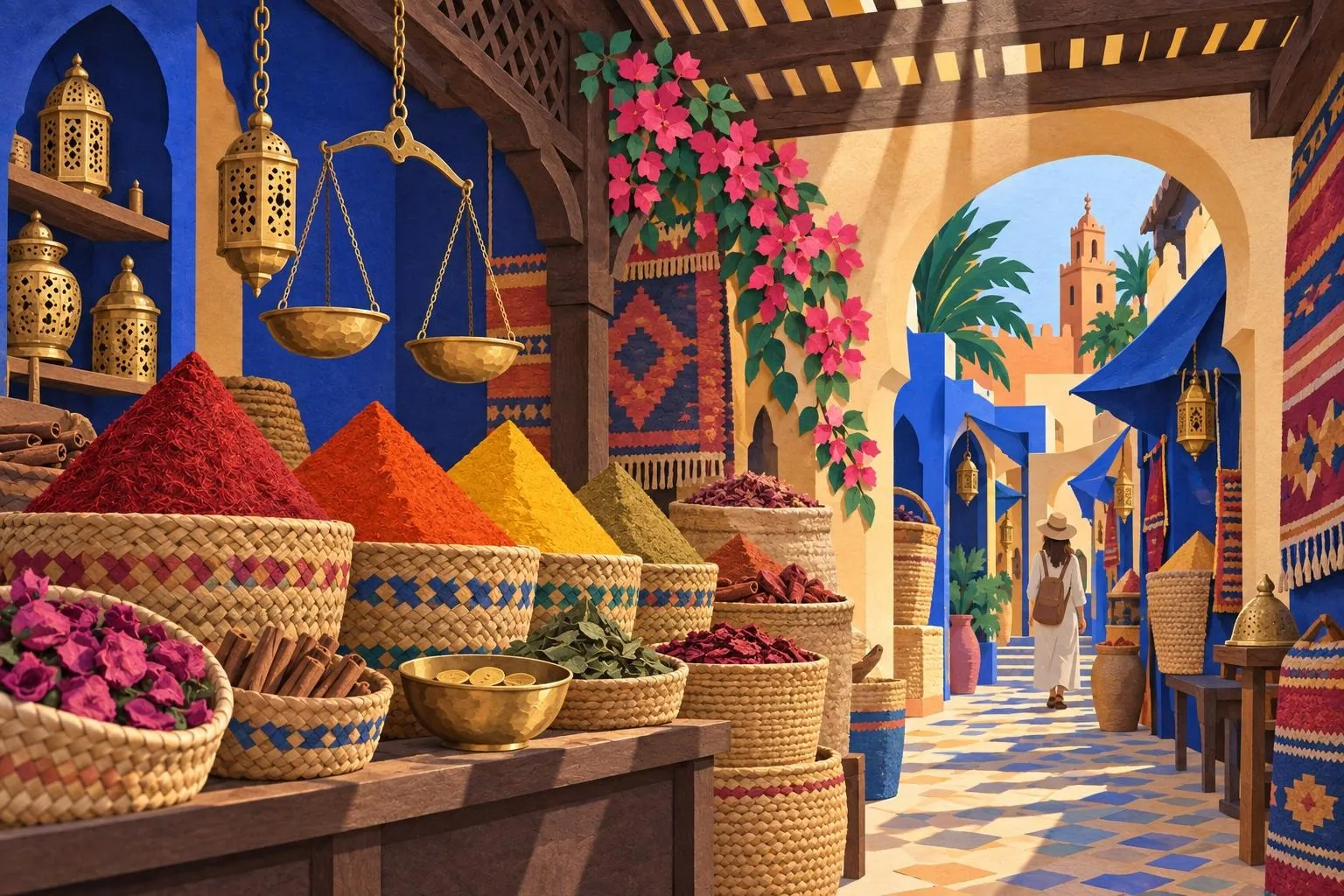
Then the medina, where the amounts are small and the etiquette is everything. If you are lost and someone walks you out to a road where a taxi will stop, 20 dirham is the ceiling rather than the opening, agreed before you set off and handed over in coins. A hotel housekeeper will wash a bag of laundry for 50 to 100 dirham and will answer your question about the price with "up to you", which is an invitation to say a number rather than to leave it open. At a fish market, gutting what you bought is a 1 or 2 dirham affair.
The offers that are not free
The most expensive things in Morocco are the ones described as free. Henna offered at no charge in the square ends in a demand, sometimes ten times what a local pays, and the darker the design the more likely it is to have been mixed with something you do not want on your skin. A photograph with a snake is about 20 dirham, which is reasonable if you wanted the photograph. At the food stalls on Djemaa el-Fna, plates of fries and salad arrive while you are eating and appear on the bill at 5 dirham each.
The other family of them is directional. A stranger who tells you a street is closed, a shopkeeper who explains that a group of craftsmen only comes once a fortnight, a man with a laminated badge who attaches himself to your walk and calls himself a guide: none of these is a service and none is owed anything. The phrase that ends all of it is la shokran, no thank you, said once and followed by walking on.
Small change is the whole system
The coins are half, 1, 2, 5 and 10 dirham and the notes are 20, 50, 100 and 200, and nothing below 20 turns up in practice. Nobody has change: not the taxi driver, not the café, and not the hotel desk that needs cash for the tourist tax. So break a large note at the first opportunity, keep a pocket of coins and 20 dirham notes, and treat a 100 dirham note as something that should never be offered for a 7 dirham fare.
Cards are accepted in restaurants and hotels and little else. Taxis, market stalls, tips and the tourist tax all want cash, and an ATM withdrawal at most Moroccan banks costs about 30 dirham on top of what your own bank charges, which is an argument for taking out more money less often. Al Barid was the exception, charging nothing of its own as of March 2024.
Before you leave the hotel in the morning
0/8
Getting the money right in Morocco is less about generosity than about knowing which number is negotiable and which is not. The meter is not, the price of a tagine is not, and the small note you hand to a porter or a hammam attendant is a courtesy rather than a fee. Everything else in between is a conversation, and a short one if you have the change ready.