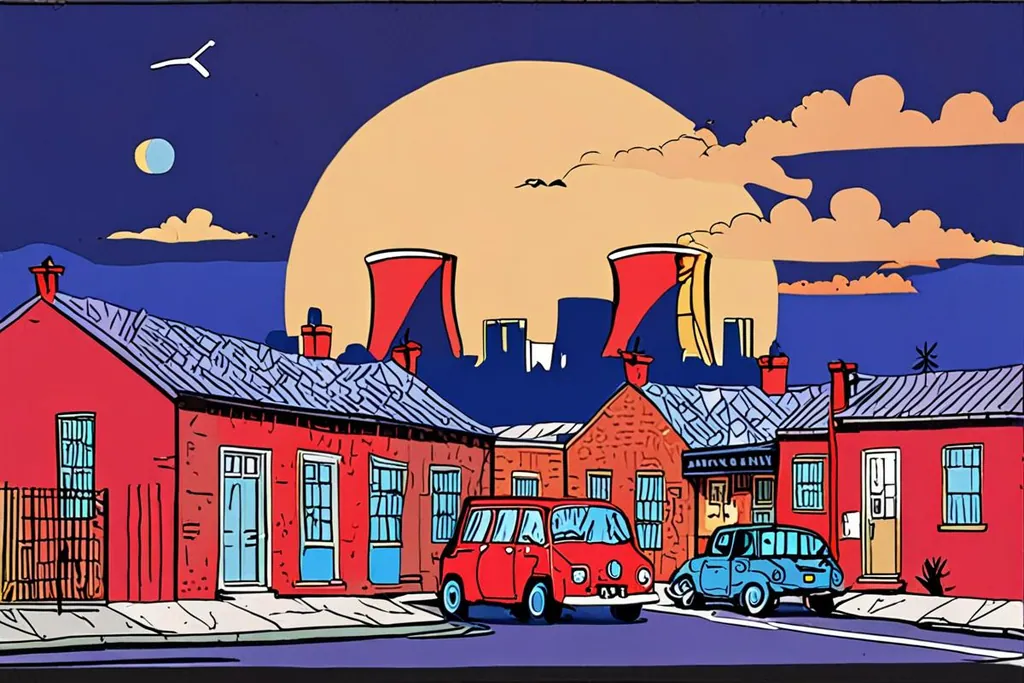
Soweto is short for South Western Townships, and the name is a description of a decision: when Johannesburg wanted the black population out of the areas it had earmarked for others, it built a place for them on the south western edge of the city, next to the mining belt. It was a separate municipality until 2002 and is now part of the City of Johannesburg. Well over a million people live there.
What makes it the place every visitor ends up going is the density of modern history in a few square kilometres. The student uprising of 16 June 1976 started here, and the photograph of Hector Pieterson carried through the crowd became one of the defining images of the struggle against apartheid. Nelson Mandela lived here before prison and returned here after it, on the same street as Desmond Tutu.
- Townships: tên gọi
- South Western
- Thời điểm hình thành
- 1930s
- Cuộc nổi dậy của học sinh
- 1976
- Nhập vào Johannesburg
- 2002
Vilakazi Street, and what is on it
Vilakazi Street, in Orlando West, is the only street in the world where two Nobel Peace Prize winners have lived, and it is now the centre of a small tourism economy: the Mandela House museum, restaurants, craft stalls, tour groups and a great deal of traffic. It is not subtle, and it is worth doing anyway, because the house itself is small, modest and much more affecting than the status of the man who lived in it.
Opposite the spot where Hector Pieterson was shot is the museum named for him, which uses photographs, testimony and film to tell the story of the uprising and the years around it. Nearby, the Regina Mundi church is the place where much of the political organising happened, and its walls still carry the damage from the period: it is a working church, which is the point, and it was used for both mass and mass meetings.
Seeing it with somebody who lives there
Almost everyone visits Soweto on a guided tour, and the choice of operator is the whole trip. A minibus that drives down Vilakazi Street and back is a wasted day. An operator with local guides who walk you through a neighbourhood, take you into a home or a business, and end at a shisanyama for lunch is a different experience entirely, and it usually costs about the same.
There are bicycle tours, walking tours and small-group minibus tours, and all of them work, as long as the guide is from the area and the itinerary goes beyond the monuments. Ask what the fee covers and where it goes before you book, and choose an operator that employs people who live in the township rather than one that buses in its staff from Sandton.
Eating, and the etiquette of being a visitor
The meal to have in Soweto is at a shisanyama, a township braai restaurant where you choose meat from a counter, watch it grilled over coals, and eat it with pap, a stiff maize porridge, and a relish. It is one of the great and least expensive meals in South Africa, and it is where a good guide comes into their own, because the good ones are not on the main road.
Then the etiquette, which is simple and matters. Soweto is a residential city and the people who live in it are not exhibits: ask before photographing anyone, do not photograph homes as though they were part of a museum, buy something from the people selling it rather than photographing their stalls, and keep your camera out of sight between stops. Tour operators who describe themselves as showing you poverty are selling something other than a tour, and it is worth avoiding them.
Lịch sử khu dân cư trở thành câu chuyện trung tâm
1930s
Orlando, và các cuộc di dời bắt đầu
Soweto phát triển từ những năm 1930 khi thành phố di dời người da đen khỏi các khu vực mà họ muốn giữ lại, các khu dân cư đầu tiên ở Orlando và Pimville nằm ở rìa tây nam của Johannesburg, sát vành đai mỏ. Tên gọi chỉ là viết tắt cho mô tả: South Western Townships.
1950s
Thành phố do apartheid tạo nên
Đạo luật Phân vùng Nhóm và việc phá hủy các khu sở hữu như Sophiatown đã buộc hàng chục ngàn gia đình chuyển về Soweto, nơi được quy hoạch như nguồn lao động: có nhà ở, ký túc xá, bệnh viện và rất ít thứ khác, chỉ một con đường lớn để xe buýt đi lại. Vài thập kỷ liền Soweto là một đô thị tách biệt.
16 June 1976
Cuộc nổi dậy
Học sinh biểu tình chống lại việc học bằng tiếng Afrikaans và cảnh sát đã nổ súng vào đám đông, khiến Hector Pieterson và hàng trăm người khác thiệt mạng trong các tuần tiếp sau. Bức ảnh thi thể cậu bé được chuyển qua đám đông trở thành biểu tượng đấu tranh, ngày này nay là Youth Day, quốc lễ cho thanh thiếu niên.
1990s
Mandela trở về nhà
Nelson Mandela trở về căn nhà của mình trên phố Vilakazi sau khi được trả tự do năm 1990, và con phố này trở thành biểu tượng cho Nam Phi mới: Desmond Tutu cũng từng sống ở đây, khiến đây là con phố duy nhất trên thế giới từng có hai chủ nhân đoạt giải Nobel Hòa Bình.
2002
Thành phố hợp nhất trở lại
Soweto được sáp nhập vào Thành phố Johannesburg, chấm dứt thời gian là một địa phương quản lý riêng. Nay Soweto là thành phố hơn một triệu dân với các khu ở, trung tâm thương mại, trường đại học và sân bóng đá; tuyến du lịch chỉ là phần nhỏ của một nơi rất rộng lớn.
Music, football and the ordinary city
Soweto is a music city before it is anything else in the national imagination. Kwaito, the South African house-and-rap hybrid, was born here in the 1990s, mbaqanga and jazz have deep roots in the township, and the clubs and the small venues are still where new music gets tried out. If you have a free evening, a night out in Soweto is a better use of it than a hotel bar in Sandton.
The other civic facts are not small. Chris Hani Baragwanath Academic Hospital, on the edge of the township, is one of the largest hospitals in the world, and it was built, as so much of the place was, because the people who lived here were not allowed to use the facilities in the city. The football stadium that hosted the 2010 World Cup final sits beside it, and the Orlando Towers, two painted cooling towers, are now a bungee jump and a landmark.
That is the Soweto that a tour does not show you: a working city of more than a million people with schools, malls, a university and a commuter rail line, and the tourist route is the smallest part of it.
Getting there, and safety
Soweto is about twenty kilometres south west of central Johannesburg and easily reached by road; the safest and most sensible arrangement is a booked tour with transport, which every operator provides. Driving yourself is possible in daylight, and there is little reason to do it: the place is large, the addresses are confusing, and the guide is the point.
The safety advice is not exotic. Go with a local operator. Do not wander alone at night. Keep your phone and camera out of sight. If you are taking public transport, take the Rea Vaya bus or a minibus taxi with somebody who knows the route, and carry small change. That is the whole of it, and it applies to every city on this site.
Bạn sẽ tham quan thế nào?
Bạn có muốn dành cả ngày thay vì nửa ngày không?
Bạn có sẵn lòng ăn cùng nơi với hướng dẫn viên không?
Trọn một ngày, kết thúc tại shisanyama
Buổi sáng ghé phố Vilakazi và hai bảo tàng, buổi chiều tham quan nhà thờ Regina Mundi và đi dạo một khu dân cư, sau đó ăn trưa hoặc tối sớm tại shisanyama, nơi bạn tự chọn thịt tại quầy để nướng. Hãy đi cùng hướng dẫn viên địa phương và để họ quyết định lịch trình, vì món ăn và câu chuyện là điều không thể đặt trước.
Nửa ngày các bảo tàng
Tham quan phố Vilakazi, Nhà Mandela, Bảo tàng Hector Pieterson và nhà thờ cùng hướng dẫn viên giải thích, thường mất 3-4 tiếng, cách mà phần lớn khách chọn. Nên cân nhắc ghé thêm Bảo tàng Apartheid ở Johannesburg trong ngày trước hoặc sau, vì cả hai nối kết câu chuyện đầy đủ.
Dù thế nào, hãy chọn tour của người địa phương
Dù bạn đi với ai, nên chọn tour sử dụng hướng dẫn viên khu dân cư, ghé thăm nhà và cơ sở kinh doanh thay vì chỉ các di tích, và nói rõ về những gì bạn sẽ và không được thấy. Cả tour đi bộ, xe đạp lẫn xe minibus đều có, ưu điểm là đưa bạn trực tiếp vào phố chứ không chỉ ngắm sau cửa kính.
Chuẩn bị trước tour khu dân cư
0/8
Soweto is the day to give your time to in Johannesburg and the one nobody forgets, and it works when you give it a day, eat where you are taken, and treat the people who live there as the point of the visit rather than the backdrop. Book a local guide, leave the afternoon open, and take the shisanyama seriously.