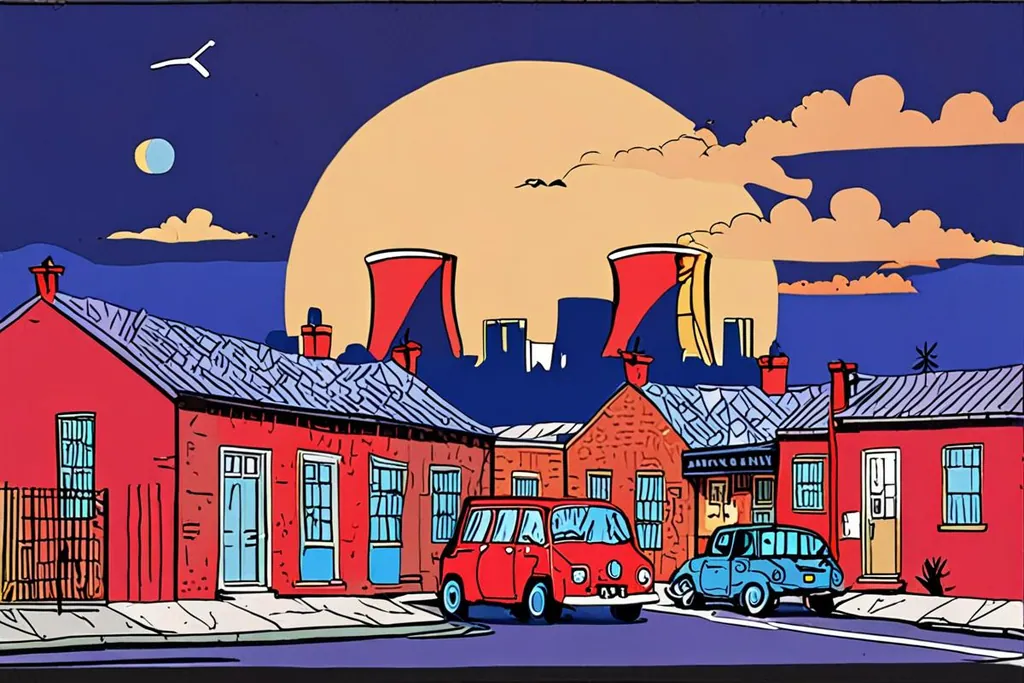
Soweto is short for South Western Townships, and the name is a description of a decision: when Johannesburg wanted the black population out of the areas it had earmarked for others, it built a place for them on the south western edge of the city, next to the mining belt. It was a separate municipality until 2002 and is now part of the City of Johannesburg. Well over a million people live there.
What makes it the place every visitor ends up going is the density of modern history in a few square kilometres. The student uprising of 16 June 1976 started here, and the photograph of Hector Pieterson carried through the crowd became one of the defining images of the struggle against apartheid. Nelson Mandela lived here before prison and returned here after it, on the same street as Desmond Tutu.
- Townships: the name
- South Western
- When it was built up
- 1930s
- The student uprising
- 1976
- Incorporated into Johannesburg
- 2002
Vilakazi Street, and what is on it
Vilakazi Street, in Orlando West, is the only street in the world where two Nobel Peace Prize winners have lived, and it is now the centre of a small tourism economy: the Mandela House museum, restaurants, craft stalls, tour groups and a great deal of traffic. It is not subtle, and it is worth doing anyway, because the house itself is small, modest and much more affecting than the status of the man who lived in it.
Opposite the spot where Hector Pieterson was shot is the museum named for him, which uses photographs, testimony and film to tell the story of the uprising and the years around it. Nearby, the Regina Mundi church is the place where much of the political organising happened, and its walls still carry the damage from the period: it is a working church, which is the point, and it was used for both mass and mass meetings.
Seeing it with somebody who lives there
Almost everyone visits Soweto on a guided tour, and the choice of operator is the whole trip. A minibus that drives down Vilakazi Street and back is a wasted day. An operator with local guides who walk you through a neighbourhood, take you into a home or a business, and end at a shisanyama for lunch is a different experience entirely, and it usually costs about the same.
There are bicycle tours, walking tours and small-group minibus tours, and all of them work, as long as the guide is from the area and the itinerary goes beyond the monuments. Ask what the fee covers and where it goes before you book, and choose an operator that employs people who live in the township rather than one that buses in its staff from Sandton.
Eating, and the etiquette of being a visitor
The meal to have in Soweto is at a shisanyama, a township braai restaurant where you choose meat from a counter, watch it grilled over coals, and eat it with pap, a stiff maize porridge, and a relish. It is one of the great and least expensive meals in South Africa, and it is where a good guide comes into their own, because the good ones are not on the main road.
Then the etiquette, which is simple and matters. Soweto is a residential city and the people who live in it are not exhibits: ask before photographing anyone, do not photograph homes as though they were part of a museum, buy something from the people selling it rather than photographing their stalls, and keep your camera out of sight between stops. Tour operators who describe themselves as showing you poverty are selling something other than a tour, and it is worth avoiding them.
How the township became the story
1930s
Orlando, and the removals begin
Soweto grew from the 1930s as the city pushed black residents out of areas it wanted, and the first townships at Orlando and Pimville were laid out on the south western edge of Johannesburg, next to the mining belt. The name simply abbreviates the description: South Western Townships.
1950s
A city built by apartheid
The Group Areas Act and the destruction of freehold areas such as Sophiatown forced tens of thousands of families into Soweto, which was planned as a labour reservoir: houses, hostels, a hospital and very little else, with one road out for the buses. It was a separate municipality for decades.
16 June 1976
The uprising
Students marched against being taught in Afrikaans and the police fired on them, killing Hector Pieterson and hundreds of others over the following weeks. The photograph of his body carried through the crowd became an icon of the struggle, and the date is now Youth Day, a national holiday.
1990s
Mandela comes home
Nelson Mandela returned to his house on Vilakazi Street after his release in 1990, and the street became the address of the new South Africa: Desmond Tutu lived there too, which makes it the only street in the world to have housed two Nobel Peace Prize winners.
2002
One city again
Soweto was incorporated into the City of Johannesburg Metropolitan Municipality, ending its life as a separate administration. It is now a city of well over a million people with suburbs, malls, a university and a football stadium, and the tourist route through it is a small part of a very large place.
Music, football and the ordinary city
Soweto is a music city before it is anything else in the national imagination. Kwaito, the South African house-and-rap hybrid, was born here in the 1990s, mbaqanga and jazz have deep roots in the township, and the clubs and the small venues are still where new music gets tried out. If you have a free evening, a night out in Soweto is a better use of it than a hotel bar in Sandton.
The other civic facts are not small. Chris Hani Baragwanath Academic Hospital, on the edge of the township, is one of the largest hospitals in the world, and it was built, as so much of the place was, because the people who lived here were not allowed to use the facilities in the city. The football stadium that hosted the 2010 World Cup final sits beside it, and the Orlando Towers, two painted cooling towers, are now a bungee jump and a landmark.
That is the Soweto that a tour does not show you: a working city of more than a million people with schools, malls, a university and a commuter rail line, and the tourist route is the smallest part of it.
Getting there, and safety
Soweto is about twenty kilometres south west of central Johannesburg and easily reached by road; the safest and most sensible arrangement is a booked tour with transport, which every operator provides. Driving yourself is possible in daylight, and there is little reason to do it: the place is large, the addresses are confusing, and the guide is the point.
The safety advice is not exotic. Go with a local operator. Do not wander alone at night. Keep your phone and camera out of sight. If you are taking public transport, take the Rea Vaya bus or a minibus taxi with somebody who knows the route, and carry small change. That is the whole of it, and it applies to every city on this site.
How will you see it?
Do you want to spend a full day rather than a half?
Are you willing to eat where your guide eats?
A full day, ending at a shisanyama
Vilakazi Street and the two museums in the morning, the Regina Mundi church and a walk in a neighbourhood in the afternoon, and lunch or an early dinner at a shisanyama where the meat is chosen from a counter and grilled over coals. Go with a guide who lives there and let them set the order, because the food and the conversation are the part you cannot book.
A half day of museums
Vilakazi Street, the Mandela House, the Hector Pieterson Museum and the church, with a guide doing the explaining, which is three to four hours and the version most people do. It is worth adding the Apartheid Museum in Johannesburg either the day before or after, because the two together tell the story properly.
Book a local operator, either way
Whoever you go with, choose an operator that employs people from the township, that visits homes and businesses rather than only monuments, and that is honest about what you will and will not see. Bicycle and walking tours exist alongside the minibus tours, and both put you on the street rather than behind a window.
Before the township tour
0/8
Soweto is the day to give your time to in Johannesburg and the one nobody forgets, and it works when you give it a day, eat where you are taken, and treat the people who live there as the point of the visit rather than the backdrop. Book a local guide, leave the afternoon open, and take the shisanyama seriously.