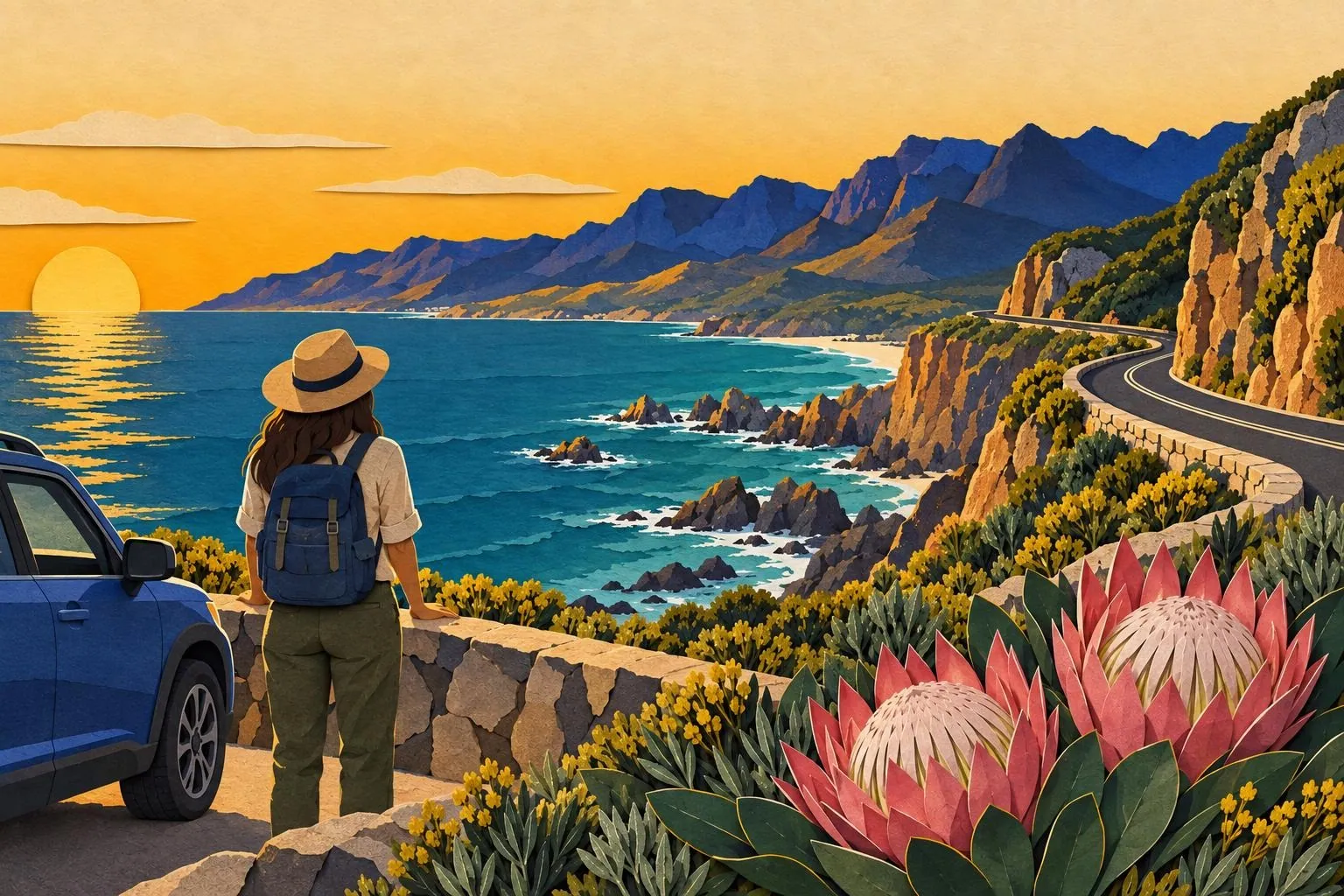
South Africa gets a bad reputation that it does not entirely deserve and a casual attitude that it has not entirely earned. The country is large, beautiful, mostly easy to travel in, and has a crime problem that is real, geographically uneven and largely avoidable with habits that cost nothing.
The visitors who have a bad time are usually the ones who treated it like Europe.
- Official languages
- 12
- The side you drive on
- Left
- The restaurant tip
- 10 to 15%
Safety, in plain terms
Start with what is true rather than what is frightening. South Africa has a high rate of violent crime compared with Western Europe, and it is concentrated in specific places and situations. The tourist routes, the national parks, the wine lands and the coastal towns are not dangerous in the way the statistics suggest, and the parts of a trip where people get into trouble are predictable.
The rules locals follow:
Do not walk alone after dark in a city, and not in an unfamiliar area at any hour. Drive, or take a ride-hailing car.
Keep phones and cameras out of your hands in busy streets. A phone in the hand is the most commonly taken object there is.
Use a ride-hailing app rather than a taxi you flag down, particularly at night and particularly at an airport, where unofficial drivers approach arrivals.
In a car, keep the doors locked and the windows up, especially in slow traffic and at junctions.
If you are robbed, hand over what is asked for. Nothing you are carrying is worth a fight.
None of this is exotic, and all of it is what an ordinary South African does without thinking.
Driving, and why it decides the trip
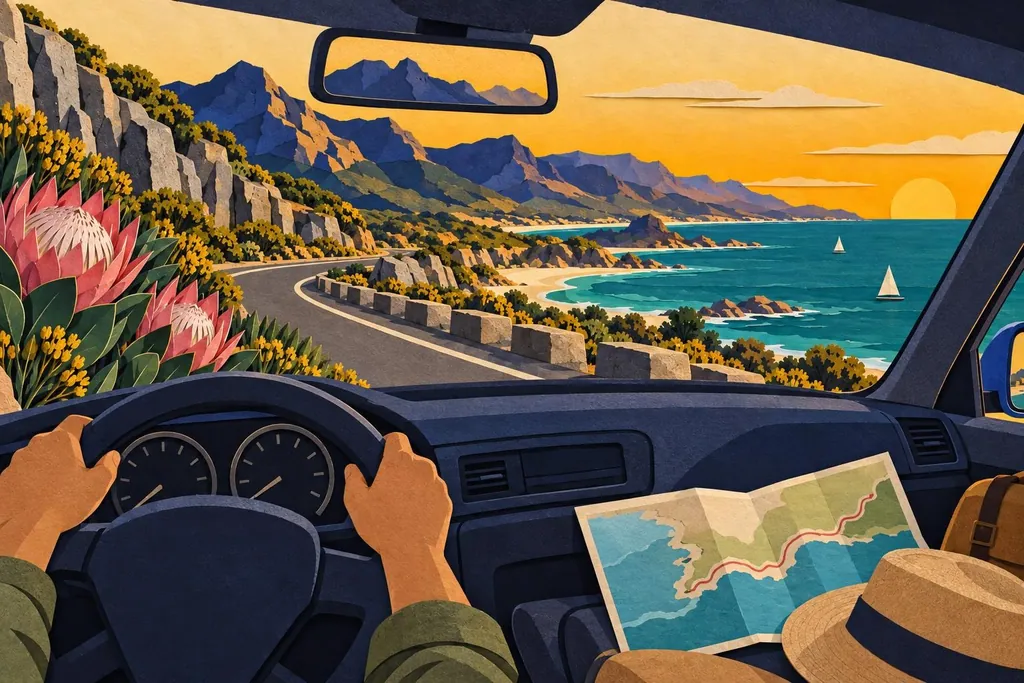
Driving is on the left. Roads are good, fuel is cheap, and most fuel stations are attended, which means someone fills the tank, checks the tyres and washes the windscreen while you sit there. A few rand for that person is the custom.
Toll roads exist on the main routes and take cards. Speed limits are enforced, sometimes by cameras in unmarked cars. Long distances are normal: a scenic drive that looks like two hours on a map is often four.
The decision that shapes an itinerary is whether you drive at all.
Self-drive or a guided trip?
Are you willing to drive on the left on open roads?
Is the trip mainly a route, such as the Garden Route or a self-drive safari?
Hire a car
On a route, a car is freedom. Fuel is cheap, stations are attended, and you stop where you like. Book an automatic if you are not used to a manual on the left.
Stay in one city and use ride-hailing
Cape Town and Johannesburg both reward several days without a car. Parking, traffic and one-way systems are the parts of a city trip a car makes worse.
Join a guided trip
If you would rather not drive on the left, a small group tour or a driver-guide removes the whole question and costs less than people expect on a shared basis.
Health, and the malaria question
The one health item that changes plans is malaria. There is a risk in the lowveld of Mpumalanga and Limpopo, which includes the Kruger National Park and the towns around it, and it is seasonal. Cape Town, the Garden Route, Johannesburg and the Drakensberg are not malaria areas.
Talk to a travel clinic before you book, not after. The answer can turn a safari park into a different park, or add tablets to a packing list.
Beyond that, the usual applies. Tap water is safe in the cities. The sun is strong. Altitude on the Highveld takes a day to get used to. And travel insurance matters more here than in most destinations, because a road accident in a remote area is a long way from a good hospital.
Money, tipping and the shape of a day
Cards work almost everywhere, including market stalls, and contactless is normal. Cash survives for tips, car guards and a few informal traders. What the rand does covers the detail, including the car guards, who are the one local institution visitors find confusing.
Tipping runs at ten to fifteen percent in restaurants, a few rand for a car guard or a fuel attendant, and something for a guide at the end of a day.
What the country does well, and what surprises people
Two things consistently surprise first time visitors, both in a good way.
The first is the food. South Africa eats extremely well, from a braai in a back garden to Cape Malay cooking in the Bo-Kaap, and a wine list in Stellenbosch that would cost several times as much in Europe. The Winelands are an hour from Cape Town and are a destination in their own right rather than a day trip bolted on.
The second is the infrastructure. In the cities and along the tourist routes it is genuinely good: highways, hospitals, malls, coffee, mobile coverage and card payments all sit at the level of a European country, and the days when a visitor had to carry everything with them are long gone. What is less even is how that is distributed. The same country with a world class private hospital in Cape Town has rural clinics that struggle, and seeing both in one trip is part of understanding the place.
The third surprise is the weather, which catches people out because the country is so large. Cape Town in winter is wet and cold enough for a proper coat. Johannesburg in winter is dry and warm by day and close to freezing at night. Durban is humid all year. Packing for South Africa means packing for a country rather than a climate.
Distances, and the mistake everyone makes
Practical kit for South Africa
0/12
South Africa is roughly twice the size of France, with a fraction of the roads. Cape Town to Johannesburg is a two hour flight or a fourteen hour drive. The Garden Route is a comfortable few days rather than an afternoon.
The result is that almost every first itinerary is too ambitious. Cutting one destination and staying two nights longer in each of the others is the change that turns a good trip into a great one.
If the phone side of the trip is still open, an eSIM for South Africa covers getting online, and what the networks reach explains where signal is thin.