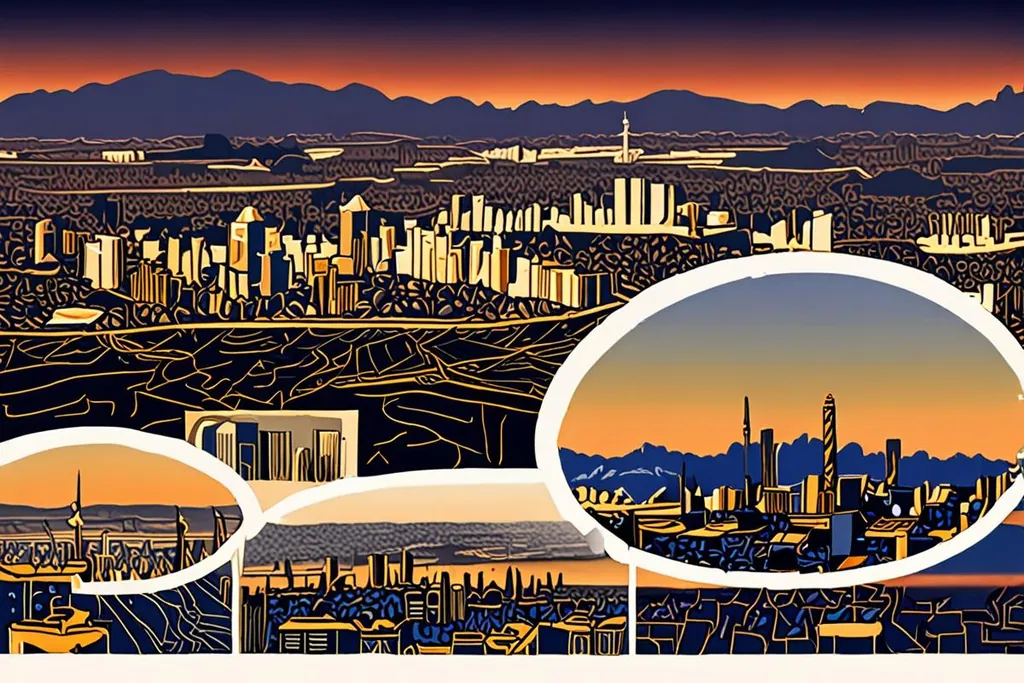
Johannesburg is the largest city in South Africa, the economic capital of the country and the richest city in Africa by output and private wealth, and it exists because of a reef of gold. The city was founded in 1886 on farmland after the discovery of gold on the Witwatersrand, and within a decade its population had passed a hundred thousand. The mine dumps that still ring the city are the residue of that, and they are visible from almost everywhere as pale yellow ridges against the sky.
Modern Johannesburg is a merger of places that were once separate and deliberately unequal: the city, the suburbs, and the townships, including Soweto, which was designated for black residents until 1994. Driving across the city is therefore a drive through a political history, and the country’s most important museums are here for the same reason.
- Founded after the gold discovery
- 1886
- Population, city, 2022
- 4,803,262
- Population, wider urban area
- 15,099,422
- Altitude, which explains the weather
- 1,753 m
What to see
Constitution Hill, on the site of a fort and the prisons that held Gandhi and Mandela, now holds the Constitutional Court and a museum that is much better than it sounds. The Apartheid Museum, south of the centre, is the one people remember: three hours of photographs, documents and film, arranged so that you cannot walk through it without understanding what you are being told. For the older story, the Origins Centre at Wits tells the human history of the region, and the Cradle of Humankind, an hour west, holds the fossil sites that rewrote it.
Soweto is the fourth thing and the largest. Vilakazi Street is the only street in the world where two Nobel laureates lived, the Hector Pieterson Museum commemorates the 1976 uprising, and the ordinary life of the township, its shisanyama restaurants, its churches and its markets, is worth more of your day than the drive-through version allows.
The shape of the city, and where to stay
Sandton is the business district and the easiest base: high-rise, walkable in the middle, and on the Gautrain. Rosebank is calmer and still convenient. The inner city and Braamfontein have the art, the coffee and the edge, and they are interesting by day and not the place to wander at night. Melville and Parkhurst are suburban streets full of restaurants. The distances are large and the city is not walkable between districts, so the choice of base decides how your days are shaped.
Getting around
OR Tambo International Airport is the gateway to the region, and the Gautrain is the civilised way out of it: about fifteen minutes to Sandton and on to Rosebank, Marlboro and Pretoria. Ride-hailing is abundant and cheap, and it is what most visitors use for everything else. The ordinary metered taxis are not hailed in the street, and the minibus taxis are a functioning but closed system that a visitor should learn about rather than experiment with.
Weather, altitude and the afternoon storm
Johannesburg sits at about 1,750 metres, which is why the weather is mild all year and why the sun feels stronger than the temperature suggests. Summer, from October to March, is warm with rain in short, dramatic afternoon thunderstorms that clear within an hour: the city takes around 720 millimetres in a year, almost all of it between October and April. Winter, from May to August, is dry and sunny by day and genuinely cold at night, with the temperature dropping to a few degrees, frost in the low-lying suburbs and almost no rain at all for weeks.
The dry air and the altitude are worth taking seriously in the first day or two: drink more water than usual, wear sun protection even when it is cool, and do not plan a long walk for the hour after lunch in summer, when the storm arrives.
Eating, art and where the city actually happens
Johannesburg is a city of districts rather than a centre, and the districts that matter have changed hands several times in thirty years. Maboneng, east of the inner city, is warehouses turned into studios, restaurants and apartments. Braamfontein, next to the university, is where the students and the Saturday markets are. Rosebank and Sandton are the polished, convenient version, with galleries and rooftop bars. Melville and Parkhurst are suburban streets lined with restaurants that people drive to.
The food follows the population: Portuguese and Mozambican grills, Ethiopian, Indian, Chinese, West African, and a serious coffee culture that arrived with the coffee shops. For a visitor, the practical advice is to treat dinner as a destination rather than something to find nearby: pick a district, book, and take a car there and back.
How much time do you have?
Do you have a full day or more?
Do you want to spend the day outside the city?
The museums, and the inner city
Constitution Hill in the morning, on the site of the old fort and prison, then the Apartheid Museum, which needs three hours and a strong stomach. Eat in Maboneng or Braamfontein, walk what is walkable, and finish in Melville or Parkhurst for dinner. This is the day that explains the country.
Soweto as a day, not a drive-by
Vilakazi Street, where two Nobel laureates lived, the Hector Pieterson Museum and the Mandela House, then lunch at a shisanyama, the township braai restaurants where the meat is the point. Go with a guide who grew up there rather than on a big bus, and leave time to sit and eat rather than photographing the streets and leaving.
Out of town: the Cradle of Humankind
An hour west of the city, the fossil sites at Sterkfontein and the Maropeng visitor centre tell the story of human origins from the ground the fossils came out of, and the drive is pleasant. Pair it with a night in the Magaliesberg or a game reserve, and you have turned a city stopover into a small trip.
A few hours between flights
Take the Gautrain to Sandton, which is fifteen minutes and gives you a foreign city with coffee, malls and a hotel lobby within walking distance of the station. Do not attempt the inner city or Soweto on a short connection: Johannesburg traffic is not a thing to guess with, and OR Tambo security takes longer than you think.
Safety, honestly
Johannesburg has a high crime rate, and pretending otherwise would be useless. What matters is that it is concentrated: in particular areas, at particular times, and in particular situations, mostly involving cars, phones and people who are on foot in the wrong place after dark. The practical measures are simple and everyone who lives there follows them: ride-hailing after dark, nothing visible in a car, phone away on the street, no walking in quiet areas at night, and a hotel or a local whose judgement you can borrow for the first day.
Follow those and the city is no more alarming than any large one. Ignore them and the reputation has teeth.
Before the city
0/8
Johannesburg is not a pretty city and does not try to be: it is a working metropolis built on gold, with the country’s most important museums, a township that changed the world, and an airport that puts the whole region within reach. Give it two days rather than a night, and it will be the city you talk about afterwards.