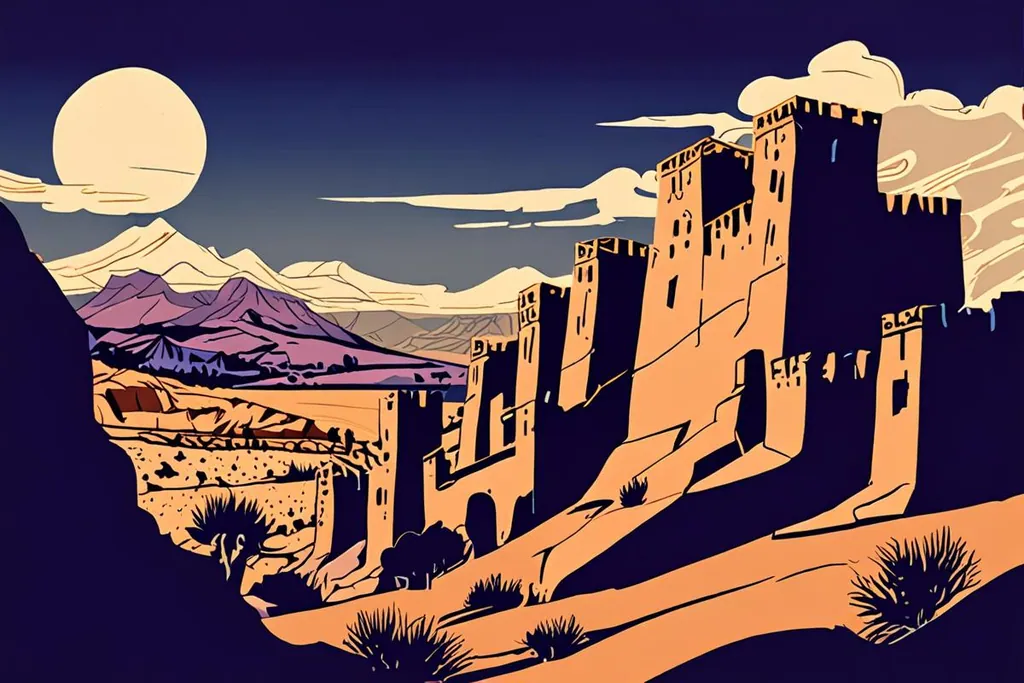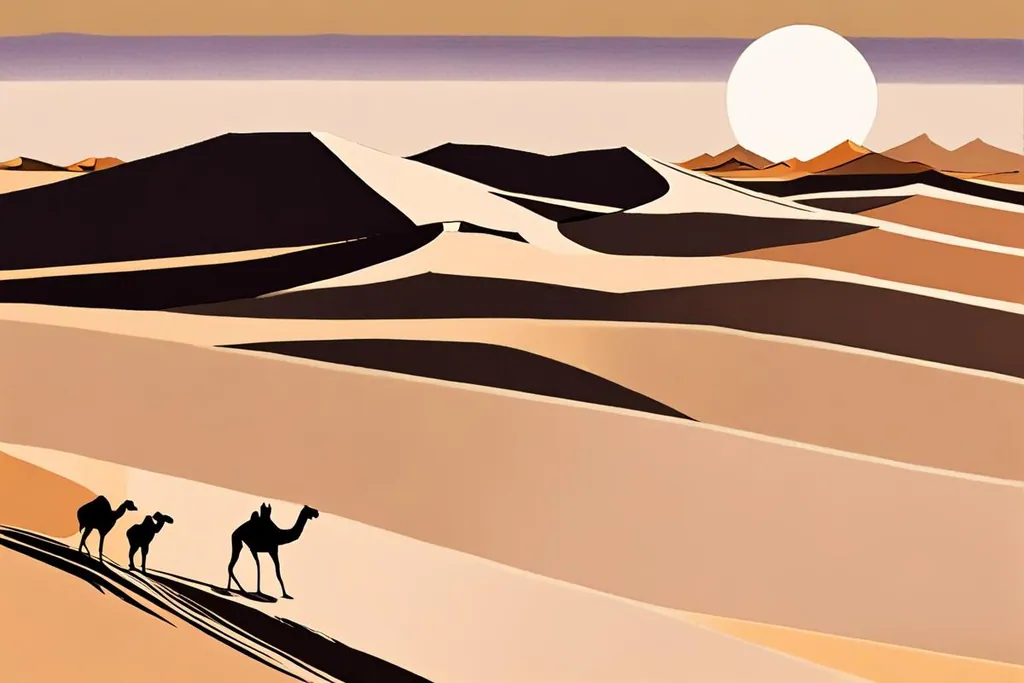
The road from Erfoud runs south through the Tafilalt, past date palms and the last hotels and petrol stations before the desert, and then the land goes flat and pale. The dunes appear as a line of ochre on the horizon and grow slowly for half an hour, and then you are in Merzouga, where the tarmac stops and the sand starts.
Those dunes are the Erg Chebbi, a sand sea about 28 kilometres long and five to seven wide, pressed against the Algerian border. They rise as much as 150 metres above the stony plain around them, which is why they look like a wave rather than a landscape, and the village sits on their western lee where the wind is gentler and the water is nearer the surface.
- Chiều cao đụn cát
- 150 m
- Chiều dài Erg Chebbi
- 28 km
- Từ Rissani đến Merzouga
- 35 km
- Độ cao của biển cát
- 730 m
How a night in the dunes works
Almost every visitor does the same thing, and it is a good thing: leave the village in the late afternoon, either on a camel or in a 4x4, reach a camp in the outer part of the erg, climb a ridge for the sunset, eat, listen to drums, and sleep in a tent. You wake before the sun, walk up the nearest dune in the dark, and watch the light come across the sand in bands.
The choice that matters is what you sleep in. A camp inside the erg means no walls, no signal and no light but the fire and the stars, and it is cold at night for much of the year. A guesthouse in the village means a hot shower, electricity and a short walk to the sand, which is the sensible answer with children, in July, or if you have driven a long way that day. The camps themselves range from a ring of simple tents with a shared bathroom block to outfits with private bathrooms and rugs on the floor, and the difference in price is large.
Trải nghiệm một đêm giữa sa mạc?
Bạn muốn ngủ giữa đụn cát thay vì ở làng chứ?
Bạn có ngại ngồi lạc đà khoảng một tiếng rưỡi?
Cưỡi lạc đà đến trại bên trong erg
Bạn lên đường lúc xế chiều, dừng lại trên đỉnh đụn để ngắm hoàng hôn rồi tới vòng lều trên cát. Ăn tối bằng tagine, nghe trống, và sự tĩnh lặng sau đó là điều nhiều người nhớ nhất.
Đi xe 4x4 đến cùng những trại đó
Hai mươi hoặc ba mươi phút trên đường cát, cửa kính hạ xuống và có người biết điểm dừng ngắm cảnh. Bạn tới trại với lưng còn khoẻ và vẫn kịp xem trời đầy sao giữa erg.
Nhà khách tại Merzouga
Có giường thật, tắm nước nóng, tường ngăn gió và đụn cát cách cửa vài bước. Đây là lựa chọn hợp lý cho gia đình, mùa hè hoặc ai muốn dậy ấm áp và tự đi bộ vào erg.
Camels, 4x4s and what the sand does
The camel is the slow, quiet way in: about ninety minutes at a walk, with a guide who is usually a member of one of the families that has kept animals here for generations. It is not a fairground ride, and the first twenty minutes are the ones that people complain about afterwards. The 4x4 covers the same ground in half an hour over the tracks, which is better for backs, knees and anyone with a schedule to keep.
Whichever you take, the day has a shape that the heat decides. In spring and autumn you can walk the dunes most of the day. In summer the sand is too hot to cross barefoot by mid-morning, and everything moves to the two hours after sunrise and the two before sunset. A sandstorm can arrive with almost no warning, which is unpleasant rather than dangerous if you have a scarf and something to shelter behind, and the camp staff have seen it all before.
Năm dấu mốc bên rìa sa mạc
Thế kỷ 8
Sijilmassa thịnh vượng
Vương quốc Sijilmassa, cạnh nơi nay là Rissani cách đó chỉ một đoạn xe, phát triển nhờ các tuyến caravan xuyên sa mạc và giao thương với Sudan suốt tám trăm năm, cho đến khi bị phá hủy vào thế kỷ 14.
1916 đến 1932
Quân đoàn Lê dương xây pháo đài
Quân đội Pháp xây dựng pháo đài ở ốc đảo trong các trận chiến Taflalet, giao tranh với người Ait Atta và các tộc khác suốt thập niên 1910-1920, và chính khi đó ngôi làng có hình thức như hiện tại.
2006
Trận lũ
Đêm 26 tháng 5, nước tràn qua lòng sông khô, phá hủy 140 ngôi nhà và khách sạn, khiến 1.200 người phải di dời và làm ba người thiệt mạng. Ngay cả ở sa mạc, đây là rủi ro cần chú ý.
2019
Đóng cửa trại không phép
Chính quyền đóng cửa những trại sa mạc không kiểm soát được rác, nước và hạ tầng, nên việc kiểm tra kỹ nơi bạn định chọn là cần thiết.
2024
Hồ nước trở lại
Mưa lớn tháng 10 đã lấp đầy các lòng chảo khô nhiều thập kỷ, hồ mùa bên Merzouga lại xuất hiện. Điều này hiếm gặp và thay đổi diện mạo cả vùng đồng bằng trong một mùa.
When to go
October to April is the comfortable window: warm days, cold nights, and sand that holds the light the way the photographs promise. December and January mornings can be close to freezing, and the tents come with more blankets than you think you need for a reason. From May to September the days are punishing, with excursions squeezed to the cool ends of them, and the desert is at its least hospitable.
Rain is rare in the extreme, but it is not unknown, and when it comes it can come hard. In May 2006 a flash flood through the village destroyed 140 houses and hotels and displaced 1,200 people. In October 2024 the same kind of event filled basins that had been dry for decades. It is worth knowing that the dry river beds beside the village are dry most of the year and not always.
Getting there, and the signal on the way
There is no railway and no airport of any size nearby. The two ways in are from Marrakech, over the Tizi n’Tichka and through Ouarzazate, or from Fes and Meknes across the Middle Atlas and down through Errachidia and Erfoud, and both are long days of driving. Many people take an organised tour from Marrakech or Fes precisely because the driving is the hard part, and the shared minibuses that run the route are a reasonable middle way.
Signal is not a problem until it is. Erfoud, Rissani and Merzouga village all have good coverage and 4G, which is where you should buy any data you need and download the offline map. Once you are a few kilometres into the erg, the network thins and the camps sit outside it, so the map, the camp’s pin and the phone number of whoever is meeting you should all be on the device before you leave the last town. Treat the camp as the one place on the trip where being unreachable is the point.
Trước khi rời đường nhựa
0/8
The Erg Chebbi is not the emptiest desert in Morocco, and Merzouga is not a secret. It is, however, the most convenient place to see a real sand sea, with camps that make it easy, and the two hours either side of the low sun are as good as anything in the country. Go for one night, take the camel, and be awake for the sunrise.