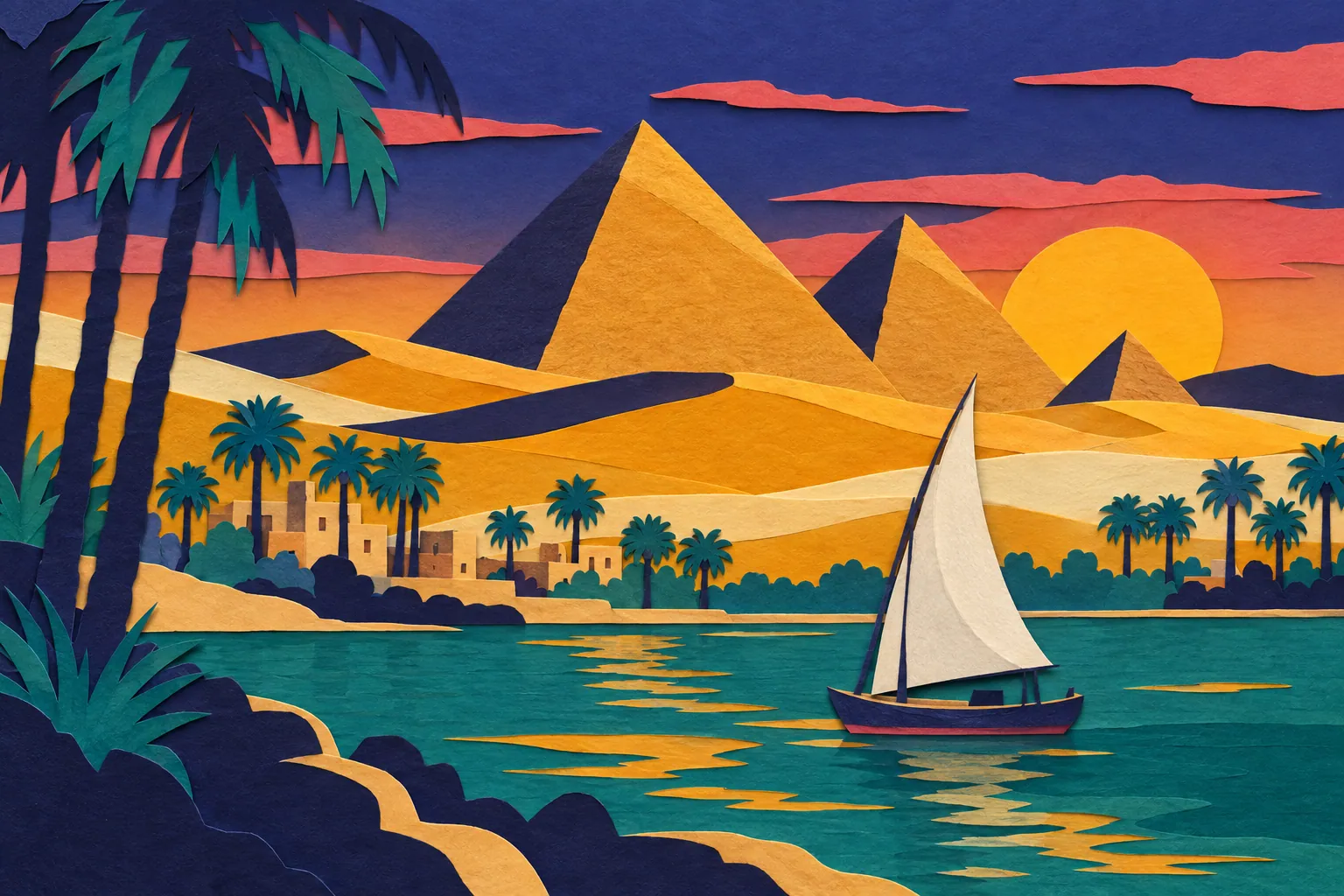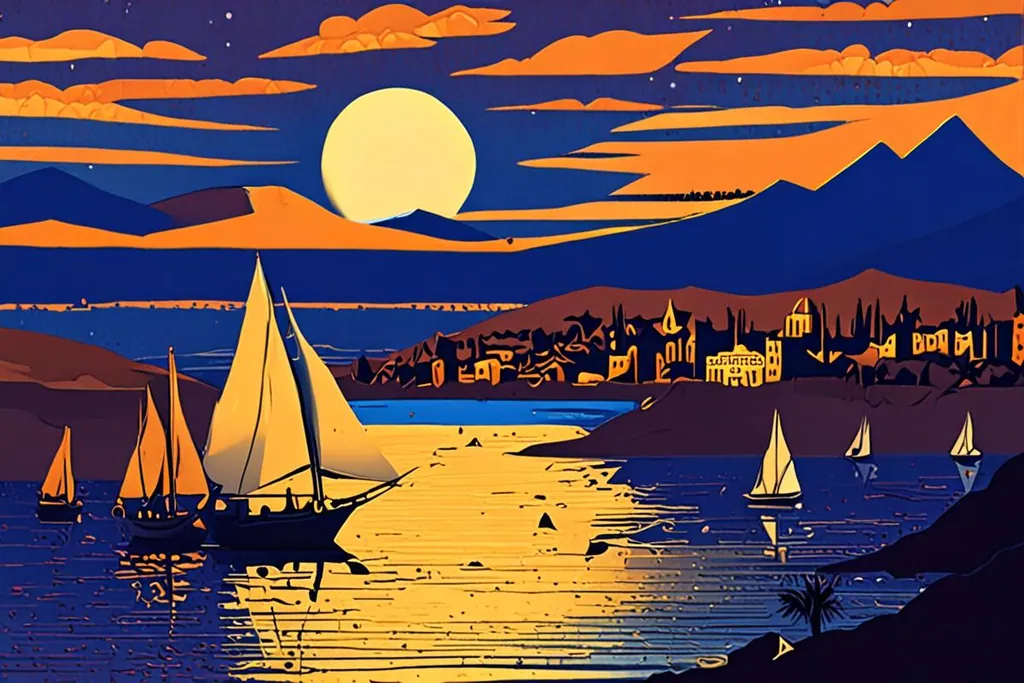
Aswan is the southern gate of Egypt, and it has been for a very long time. The city sits on the east bank of the Nile at the first cataract, where a band of granite crosses the river and makes a natural boundary: north of it the river is Egypt, south of it is Nubia, and Aswan was the frontier post and the trading town for both. It has about 370,000 people, more than 2,600 years of recorded history, and quarries that supplied the granite for monuments all the way downriver, some of which still operate.
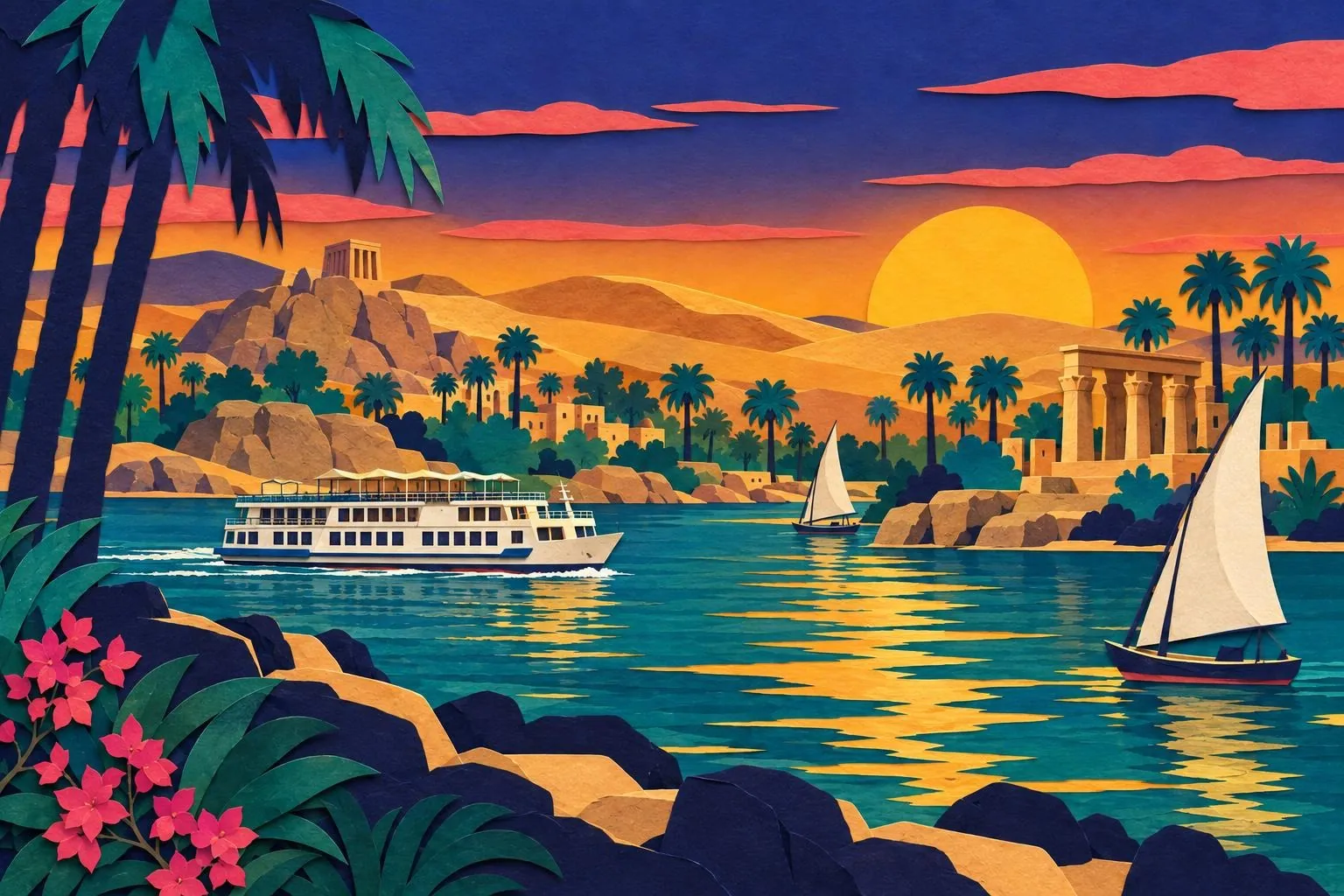
What makes it unlike any other Egyptian city is the water. The Nile here is wide, quick and studded with granite islands; feluccas still sail it under sail alone; and the west bank is Nubian, painted in blues and ochres. Aswan is also where the great Egyptian engineering projects happened: the old dam, the high dam, and the lake behind it that drowned the villages the Nubian Museum now explains.
- People in the city, 2024
- 370,000
- Of recorded history
- 2,600 years
- Average high in July and August
- 41.9 °C
- Rain in an average year
- 2 mm
The monuments, and what they cost the Nubians
Five monuments in or beside the city are part of the UNESCO listing that runs from Abu Simbel to Philae: the Old and Middle Kingdom tombs at Qubbet el-Hawa, the ancient town on Elephantine Island, the granite quarries with the Unfinished Obelisk, the Monastery of St Simeon, and the Fatimid Cemetery. Philae, on its island nearby, carries the temple of Isis and was itself moved stone by stone to keep it out of the rising water.
The Unfinished Obelisk is the one to see if you see only one. It lies in its quarry, still attached to the bedrock at both ends, larger than any obelisk ever raised, abandoned when a crack appeared in the granite. It is the clearest explanation there is of how these things were made: a trench, a lot of pounding stone, and an optimism that did not survive the flaws.
The dam, the lake and the people
The Aswan High Dam, finished in 1970, controls the flood that the Nile had delivered every year since the beginning of Egyptian history, and holds back Lake Nasser, one of the largest reservoirs in the world. It is a genuinely impressive piece of engineering and a contested one: it made year-round irrigation and hydroelectricity possible, and it ended the annual silt that had renewed the farmland for millennia.
The human cost lands in the Nubian Museum, and it is the reason to go. Entire communities were moved out of the valley before the water rose, some to new villages around Aswan, others far from the river. Their music, jewellery, architecture and language are in the museum, and the culture itself is still very much alive on the west bank.
The west bank, and the evening
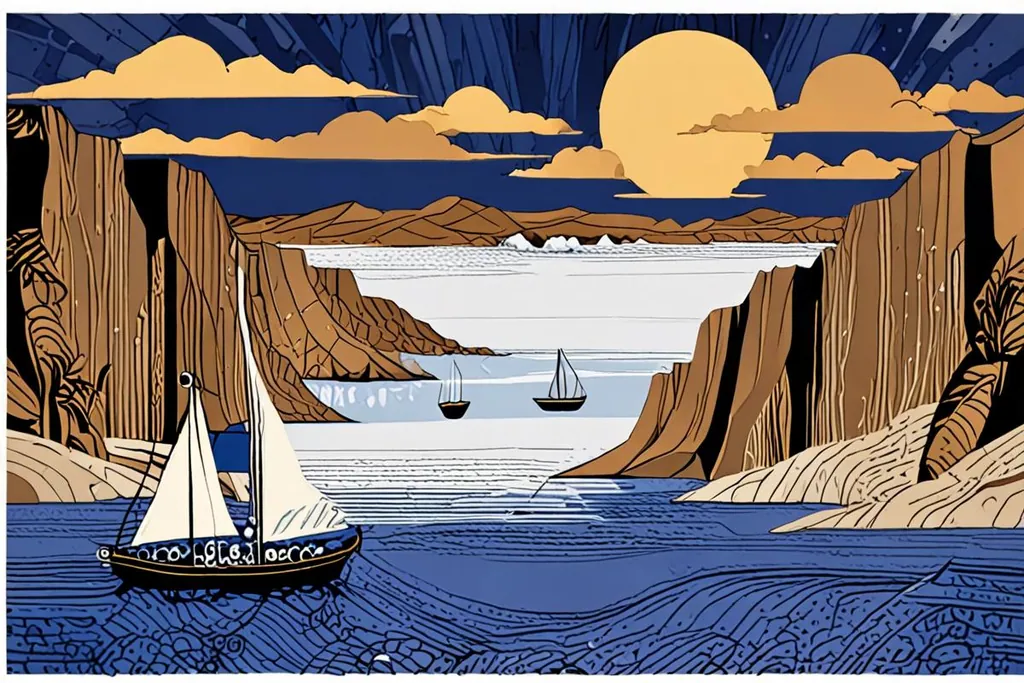
The west bank is where Aswan stops being a set of monuments and becomes a place people live. The tombs of Qubbet el-Hawa are cut into the ridge above the river, the Monastery of St Simeon stands in the desert beyond them and is reached on foot or by camel, and the villages below are Nubian, with painted doorways and courtyards open to the sky. The Aga Khan mausoleum sits on its own ridge further south, pink and unmistakable, and is the landmark every felucca trip drifts past at sunset.
Evenings in the city follow the corniche, which is where Aswan walks: the promenade along the water, the moored cruise boats, and the market just inland, which is calmer and cheaper than the tourist souks upriver and sells spices, hibiscus and baskets rather than souvenirs with a pharaoh on them. Dinner is fish, bread and grilled vegetables, and it is one of the few places in Egypt where the river is right in front of the table.
Getting there
Aswan has its own airport, with flights from Cairo and a few seasonal international routes, and a railway station on the main line from Cairo, which the sleeper train uses. Many people arrive by river from Luxor on a cruise boat, which is slow and pleasant and puts you in Aswan with nothing to arrange. Leaving, the same options reverse, plus the road north.
Inside the city, the ferry between the east bank and Elephantine is a few piastres and one of the small pleasures of the place; the public ferry to the west bank and the hotel boats handle the rest. Above the old dam, the Nile has been quietly falling in step with the seasons since the 1970s, and the water level in the first cataract is no longer the dramatic thing it was.
The heat, and the season
Aswan is one of the driest and hottest cities in Egypt: about two millimetres of rain a year, and average daily highs above forty degrees from June to August. That is why the winter season exists and why the town fills from October to April with people who want warm days and cool evenings. In summer the city works around the heat: mornings for monuments, afternoons indoors, evenings on the river.
Even in winter, the sun at midday is strong and the shade is scarce at Qubbet el-Hawa, the quarries and Philae. Water, a hat and a plan that finishes by early afternoon are the whole technique, and a light jacket is worth having for a felucca after dark, when the desert air comes down the valley.
How will you use the river?
Do you want a full day on the water?
Are you going to Abu Simbel while you are here?
A felucca, and a slow afternoon
Hire a felucca for a few hours and let it drift: the islands, the sand dunes on the west bank, the Aga Khan mausoleum on the ridge, the light going. Take food and water aboard, agree the price and the route before you leave the bank, and stay for sunset, which is the hour the river earns its reputation.
Across the river to a Nubian village
Cross to the west bank and spend the afternoon in Gharb Soheil: painted houses, a walled courtyard full of plants and cushions, tea, and a boat ride back under the stars. It is the most sociable thing to do in Aswan and the least like a monument, which is why people remember it.
Abu Simbel, and nothing else that day
The temples are 300 kilometres south and the trip eats the morning whichever way you do it, by convoy or by air. Book the day before, take cash, and keep the afternoon free for a rest and a slow dinner, because a two-colossi morning followed by anything ambitious is a mistake.
Elephantine, the museum and the obelisk
A day of the city itself: the Nubian Museum in the morning, which tells the story of the people the lake displaced, then Elephantine Island for the ancient town and the Nilometer, and the Unfinished Obelisk in the granite quarry, still attached to the bedrock where the masons left it.
Before the far south
0/8
Aswan is the part of Egypt that is less about the pharaohs and more about the river and the people who live along it: Nubian villages, feluccas, an island of temples that had to be moved, and the lake that changed the country. Give it two nights, take the boat at sunset, and let the pace of the place do the rest.