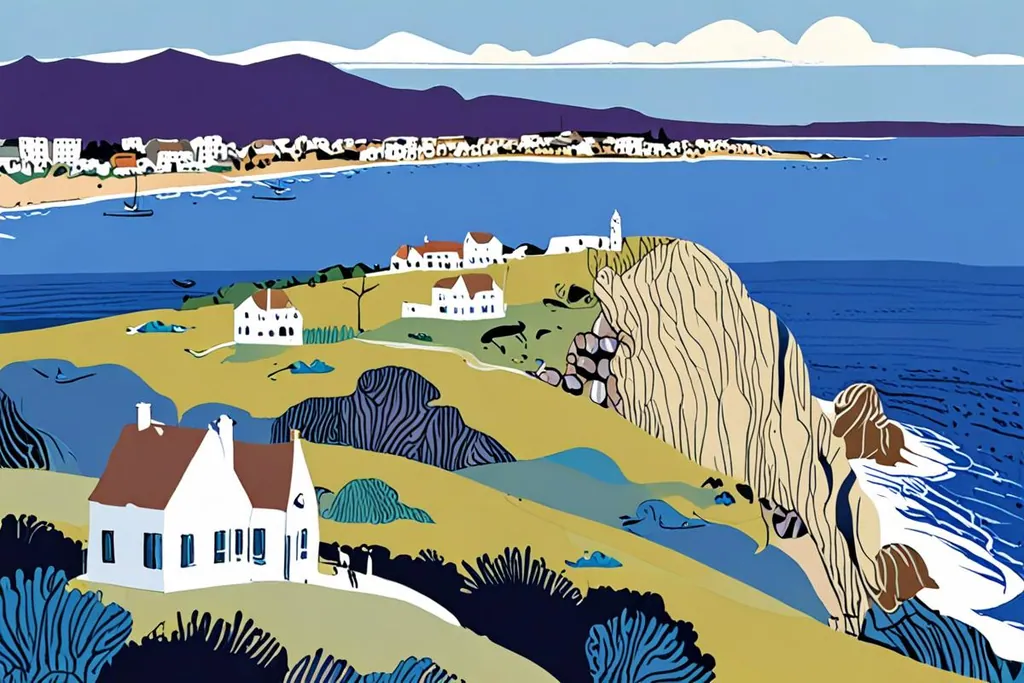
Hermanus is a town of about a hundred thousand people on the southern Cape coast, an hour and a half from Cape Town, and it has one clear reason to exist in the visitor economy: Walker Bay, immediately in front of it, is where southern right whales come to calve. They arrive from about June and stay until about November, and because the bay is shallow and sheltered near the shore, they come in close: close enough that the town built a footpath along the cliffs and called the whole thing an attraction.
The town was originally Hermanuspietersfontein, a name the postal service found too long, so it was shortened in 1902. It is also a well-known retirement town, which gives it an orderly, comfortable feel and a good supply of restaurants, guesthouses and coffee.
- The whale season
- June to Nov
- Length of the cliff path
- 12 km
- The name was shortened
- 1902
- From Cape Town
- 120 km
The whales, and why they come in
Southern right whales spend the summer feeding in the Southern Ocean and the winter months in warmer coastal waters, where the females give birth and the calves put on weight before the long trip south. Walker Bay is one of the places they choose, along with the coast either side of it, and the result is a spectacle that is visible from land: a whale with a calf, rolling, tail-slapping and holding its flipper in the air, sometimes sixty metres from the rocks.
The season peaks in September and October. Outside it, humpbacks and Bryde’s whales pass through and dolphins are common all year, so the bay is never empty, but the land-based whale watching that made Hermanus famous is a second-half-of-the-year activity.
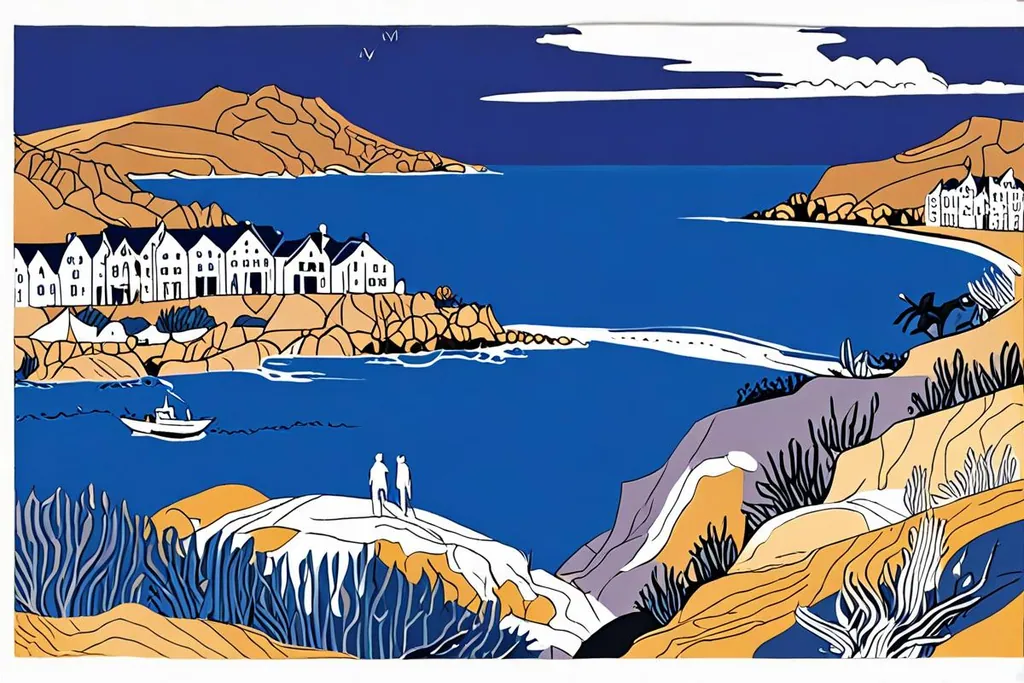
The cliff path, which is the whole attraction
The cliff path runs for about twelve kilometres along the shoreline, from the new harbour in the west to the lagoon in the east, and it is flat, free and open whenever you want it. Benches, steps down to viewpoints and a whale crier, who blows a kelp horn when a whale is spotted, are the infrastructure; the rest is rock, sea and the occasional whale.
If you have an hour, walk the central section between the old harbour and Gearings Point, which has the most viewpoints and the strongest chance of a sighting. If you have a morning, do the whole thing and stop for breakfast halfway. And take binoculars: the whales are often close, and often not, and the difference between a splash and a whale is a pair of lenses.
Whale watching, and the rest of the coast
Hermanus gets the attention, but the whales are in the whole bay and along the coast either side of it. The viewing points at De Kelders and Gansbaai, twenty minutes east, are quieter and just as productive, and the cliffs at Betty’s Bay and Rooi-Els to the west have their own paths and their own whales. The two coastal roads, the R44 and the R43, run through all of it.
Boat-based whale watching exists and needs a permit, and it puts you at water level rather than above it. It is the right choice if you want to be close, and the wrong one if you want to be sure: the boats have to keep their distance, and a whale that is curious about a cliff path will generally ignore an engine. The land-based viewing is the reason the town has a whale crier rather than a fleet.
The southern right is the species to know: a large, slow, surface-active whale that raises its tail, rolls, and sometimes comes within metres of the rocks with a calf alongside. That behaviour, rather than any film of it, is what people come back for.
What else is in Hermanus
The Old Harbour is a small museum and the historic centre of the fishing village. Grotto and Voëlklip are the swimming beaches, with Grotto holding a Blue Flag and a long curve of sand. Fernkloof, the nature reserve on the mountain behind the town, has fynbos walks with views over the bay, which is a good option on a windy day when the whales are hard to see.
Then there is the valley inland. Hemel-en-Aarde, heaven and earth, is a cool-climate wine ward making Pinot Noir and Chardonnay that people travel for, with tasting rooms twenty minutes from the seafront, and it is the reason to make Hermanus a night rather than a day.
Day trip or a night?
Do you want to be there at first light?
Is it the whale festival weekend?
Festival weekend, booked months ago
The last weekend of September fills every bed in the town and the whale crier gets an audience, which is either the whole point or exactly what you came to avoid. If you want it, book in the winter. If you have left it late, stay in Kleinmond or Betty’s Bay and drive in for the day.
Two nights, out of season but in season
A night or two in Hermanus, outside the festival, is the version most people prefer: the cliff path to yourself at seven in the morning, whales in the bay, a long lunch in the Hemel-en-Aarde valley and a sunset from the rocks. Weekdays in September and October are the sweet spot.
A day trip from Cape Town
Leave early, take the coastal R44 rather than the N2 if you have the time, walk the central stretch of the cliff path between the old harbour and Gearings Point, eat fish by the water, and drive back before the evening traffic builds on the N2. It is a long day and a good one, and it needs no booking at all.
Getting there, and the timing
The drive from Cape Town is about 120 kilometres. The quick way is the N2 and then the R43; the good way is the coastal R44 through Gordon’s Bay, Betty’s Bay, where there is a penguin colony at Stony Point, and Kleinmond, which adds time and scenery in equal measure. There is no useful train, and no reason to try.
The whale festival at the end of September fills the town and has done for years. Book months ahead if you want to be there for it, and if you do not, avoid that weekend and come on a weekday: the whales do not know about the festival and the cliff path is empty at seven in the morning in October.
Before the cliff path
0/8
Hermanus is the easiest wildlife experience in South Africa: no gate, no ticket, no guide, no boat, just a path along a cliff and whales in the bay below it. Go between September and October if you can, take binoculars, and give it a night so the valley and the morning are part of the trip.