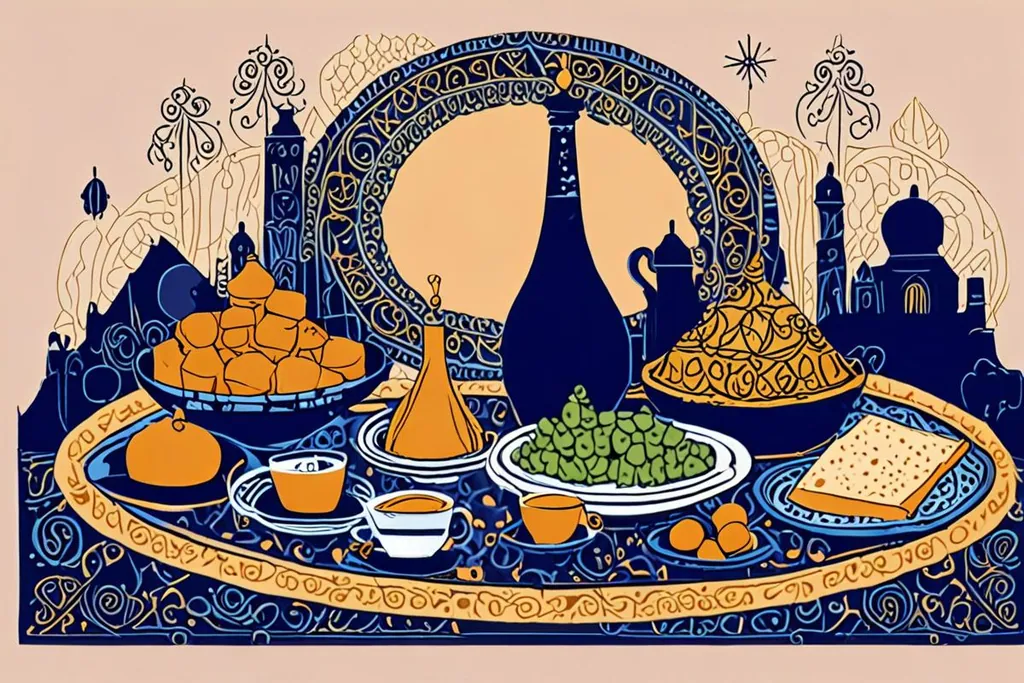
Ask someone in Morocco what they ate yesterday and the answer will be modest: bread, a salad, maybe a tagine, tea. The cooking that visitors read about is largely the cooking of a household with time and a market, and the dishes that made the reputation are festival food as much as everyday food.
What holds it together is a pantry shared across the country and a technique that is almost always the same: something in a pot, sealed, cooked slowly, and eaten with bread rather than a fork. Once you have understood that, the menu stops being a puzzle.
- Couscous được UNESCO ghi nhận
- 2020
- Nồi couscoussière tìm thấy ở Igiliz
- Thế kỷ 12
- Loại rau trong couscous thứ Sáu
- 7
- Bờ biển sardine và đồ nướng
- 3,000 km
Couscous, and the Friday rule
Couscous is the national dish in the sense that everyone eats it, and it is traditionally served on Friday after midday prayers. The classic is couscous with seven vegetables: carrots, turnips, pumpkin, courgette and cabbage, chickpeas, and a piece of lamb, beef or chicken in a broth, with the semolina steamed over the stew rather than boiled. A sweet and savoury version, couscous tfaya, tops the grain with caramelised onions, raisins, cinnamon and toasted almonds.
Two details are worth knowing before you order it. The first is that it comes on a wide clay platter, sometimes called a gsaa, and the whole table eats from it, so taking a mountain on your own plate is a foreign habit. The second is that the broth is the point: ask for it in a bowl, or the grain stays dry while the vegetables go soft.
The dish has a longer history than most restaurants will tell you. Couscoussiers have been found at Igiliz in the Sous valley and dated to the twelfth century, and in 2020 the knowledge and practices around making and eating couscous were added to UNESCO’s Representative List of the Intangible Cultural Heritage of Humanity, on a joint nomination by Algeria, Mauritania, Morocco and Tunisia.
Bốn mốc thời gian trong bếp Morocco
Thế kỷ 7 TCN
Dầu ô liu và rượu vang ven biển
Các thương cảng Phoenicia ven biển Morocco dần thành trung tâm sản xuất dầu ô liu và rượu, là lớp văn hóa ẩm thực xưa nhất còn thấy hiện nay.
Thế kỷ 1 CN
Nước mắm cá ở Lixus
Thời La Mã, Morocco có xưởng garum ở Cotta và Lixus, lên men cá thành nước mắm dùng khắp đế chế. Những con cá sardine để làm garum chính là loại hiện nay bán tại cảng.
Thế kỷ 12
Couscous ở thung lũng Sous
Nồi couscoussière từng được khai quật ở Igiliz, vùng Sous, và các đầu bếp Maghreb thời đó đã nhồi semolina và hấp trên nồi hầm, giống hiện nay.
2020
Couscous được UNESCO ghi tên
Algeria, Mauritania, Morocco và Tunisia cùng đề cử tri thức và kỹ thuật về couscous, và món này được ghi vào Danh sách Di sản văn hóa phi vật thể đại diện của nhân loại.
Tagine, tanjia, and the words on the menu
A tagine is the pot and the dish, and the pot explains the cooking. The base is shallow earthenware, the lid is a tall cone or dome, and because the lid catches the steam and returns it as condensation, the contents braise in almost no water at all. That is why the flavours concentrate and why a tagine can taste as if it had been roasted. The name is old: it comes from the Greek tágēnon, a shallow clay pan, by way of the Arabic ṭajīn.
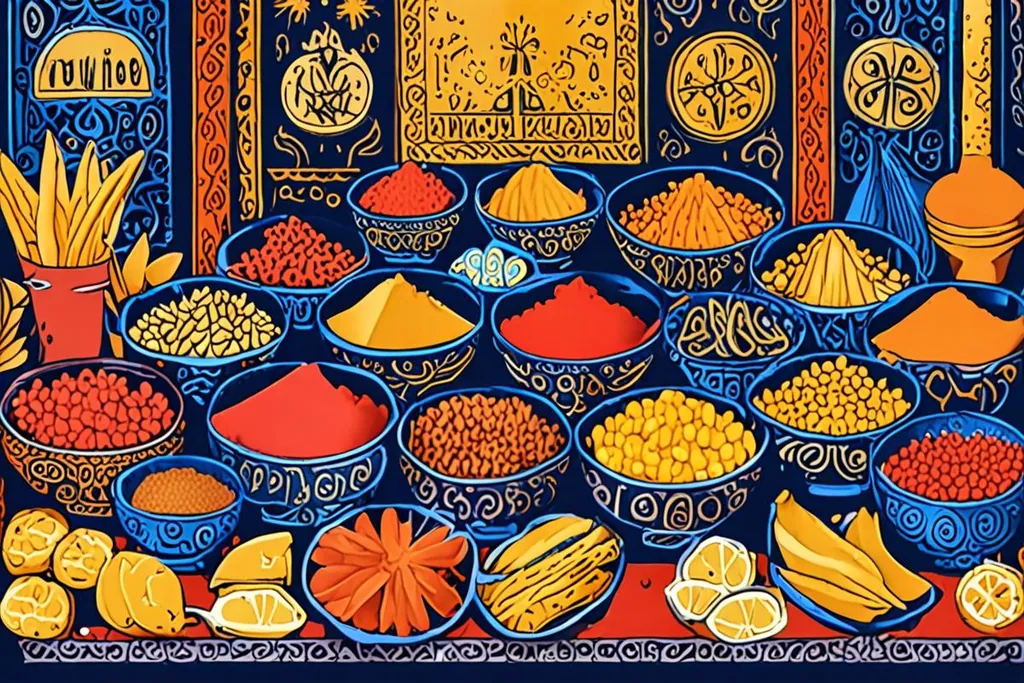
The Marrakesh cousin of the tagine is the tangia, which is an urn rather than a dish, sealed with parchment and lowered into embers. Lamb shank, preserved lemon, whole cumin, garlic, saffron and olive oil go in, and it comes out hours later as something dark, sour and slightly sticky. Traditionally it cooked overnight in the ashes of a hammam, which is a very Marrakesh way of using a building twice.
Around those two sit the rest of the lexicon. Pastilla is a pigeon or chicken pie in paper-thin pastry, dusted with cinnamon and sugar, sweet and savoury in the same mouthful. Rfissa is chicken and lentils over shredded flatbread, a dish with a reputation as food for new mothers. Méchoui is a whole lamb roasted over coals. Khlea is preserved meat, kept in fat, and it turns up in a fried egg or a folded pancake. Harira, a tomato and lentil soup, is winter food and the thing the fast is broken with in Ramadan, usually with dates.
Nên gọi món gì trước?
Đây có phải bữa Morocco thực sự đầu tiên của bạn không?
Hôm nay là thứ Sáu phải không?
Bạn có ăn thịt cừu không?
Bạn có vài tiếng rảnh, hoặc gần nhà tắm hơi (hammam) không?
Couscous
Món thứ Sáu, cũng là món cho thấy bếp này nấu ra sao: semolina hấp trên nước dùng thơm, 7 loại rau, đậu gà và miếng thịt cừu mềm tơi. Hỏi xin thêm bát nước dùng riêng để tự chan đều.
Tagine
Món dễ tiếp cận và khó thất bại: cừu hầm mận và hạnh nhân, gà với chanh muối và ô liu, hoặc viên thịt kefta với trứng. Ăn cùng bánh mì, hãy giữ nắp đến khi đặt lên bàn để hương thơm quyện vào món.
Tanjia
Đặc sản Marrakesh cần lên kế hoạch trước. Sườn cừu, chanh muối, hạt thìa là, tỏi, nghệ tây và giấy bọc kín, hầm lâu trong tro, thường qua đêm ở lò hammam. Món này đậm, hơi chua và khác biệt hoàn toàn với phần còn lại.
Salad và rau củ
Bắt đầu bằng zaalouk, taktouka, đĩa ô liu, sau đó chọn tagine rau hoặc rau nướng. Bissara, súp đậu tằm với dầu ô liu và thìa là, là bữa sáng mùa đông giá rẻ.
How to order without a menu
Most menus you will meet are short, and the words that look unfamiliar are almost all cooking instructions rather than ingredients. Brochettes are skewers, usually beef or chicken, grilled to order. Kefta is minced meat, often with egg, in a tagine or as small sausages. Mrouzia is lamb with raisins and almonds. Tanjia, tagine and pastilla you already know.
The easiest ordering trick is to start with the salads. Almost every kitchen has zaalouk, aubergine cooked down with tomato, and taktouka, tomatoes with smoked green pepper and garlic, and both arrive with bread. Bread here is khobz, a round flatbread made from durum wheat semolina and bought fresh every day; it is the fork, the spoon and the mopping-up device, and nobody will bring you cutlery to replace it unless you ask.
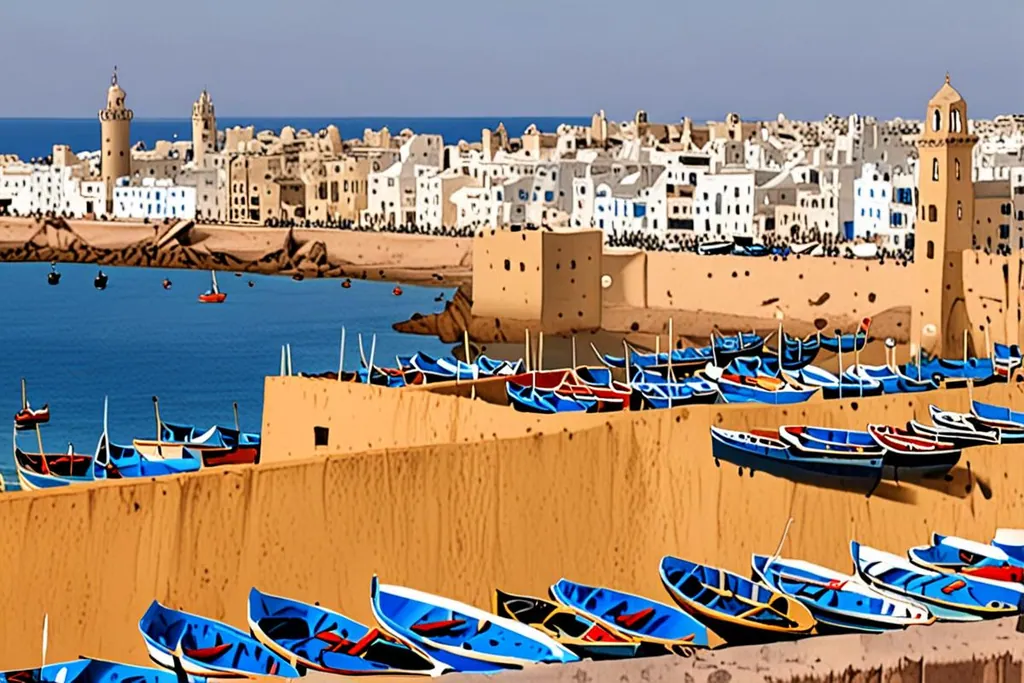
For fish, the rule is simple and worth following: choose from what is in front of you, have it weighed, agree the price and then let it go on the grill. Ports like Essaouira and Agadir do this well and cheaply, with sardines and a squeeze of lemon as the standard breakfast of the working harbour.
Street food, bread and tea
Street food in Morocco is not a compromise. Msemmen and harcha are flat breads folded or fried to order, sfenj are doughnuts pulled out of hot oil and dipped in sugar, and in Fes maquda is a potato fritter eaten on the way to work. In the north, a bocadillo full of tuna and olives is a sandwich with Spanish ancestry, and the dairy shops called mhlaba sell yoghurt, juice and smoothies alongside it. In winter, bissara, a thick broad bean soup with cumin and olive oil, is breakfast for a few dirhams.
Then there is tea. Atay is green tea with mint and a startling amount of sugar, poured from a height into small glasses to aerate it, and the pouring is the performance. Orange juice is squeezed in front of you and is cheap enough to drink twice a day. Alcohol is uncommon because of religious restrictions, served only in licensed hotels and restaurants, and the country drinks about a litre of wine per person a year.
Where to eat, and what it costs
The price of the same tagine can vary by a factor of five, and the variable is the chair you are sitting on rather than the cooking. A stall inside a food market, a local restaurant on a side street and a courtyard restaurant with candles on the tables are three different businesses, and the food in the second can be better than the food in the third. Look at who else is eating there; that tells you more than the sign does.
Service is not always included, and a small tip is normal in a restaurant and unnecessary at a bakery counter. Bread and olives put on the table unasked are sometimes charged and sometimes not, which is a matter of house style rather than trickery. If the bill seems high, ask for it to be itemised, which is a request nobody takes badly.
What to be careful about
Tap water is the usual source of trouble rather than the food, so drink bottled or boiled water and treat ice, unpeeled fruit and salads in quiet places with a little scepticism. The British advisory service lists waterborne and foodborne illness among the ordinary health risks in Morocco, and the practical version of that advice is: eat where the food is moving, and drink where the bottles are sealed.
Two smaller warnings. Sweet things here are genuinely sweet, so the tea and the pastries will out-sugar anything you are used to. And during Ramadan, many restaurants close in the daytime, the ones that open are aimed at visitors, and the mood of the country changes for a month, which is worth knowing before you plan a food trip around it.
Lưu ý trước khi ngồi vào bàn
0/8
Moroccan food rewards curiosity more than caution. Order the dish you cannot pronounce, eat it with bread, ask what the spices are, and finish with a glass of tea poured from a height by somebody who has done it ten thousand times. That is the whole experience, and it costs less than the flight.