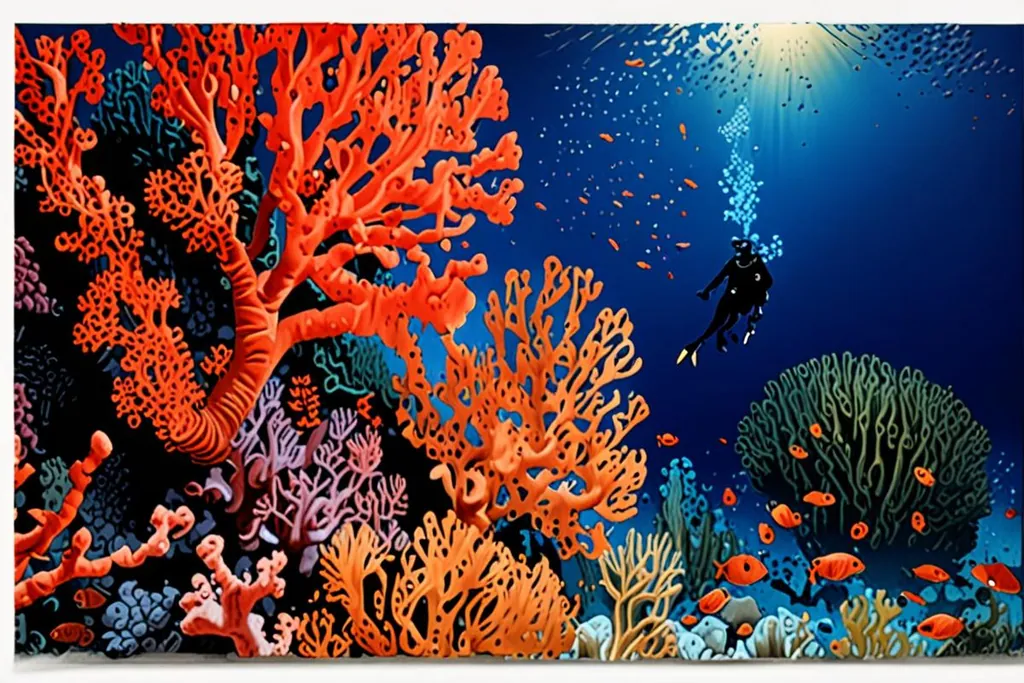
The Egyptian Red Sea is a diving destination because of a set of accidents of geography: it is warm, it is deep close to the shore, almost no river runs into it to cloud the water, and the reef begins within a short swim of the beach in places. Visibility commonly runs between twenty and thirty metres, the coral is shallow enough to snorkel over, and the coastline has enough sites that a diver can spend a fortnight moving between them.
It is also organised. Egypt has been taking recreational divers since the 1970s, agencies and dive centres are everywhere along the coast, and the standard is high enough that a nervous beginner is looked after and an experienced diver can be disappointed only by their own planning.
- Ordinary visibility
- 20 to 30 m
- Diving season
- Year round
- An open water course
- 3 to 4 days
- No flying after the last dive
- 24 hours
Where the sites are
Three coasts, three characters. On the Sinai side, Sharm El Sheikh is the boat-diving base: Ras Mohammed at the southern tip, the reefs of the Strait of Tiran, and the Thistlegorm, a wartime supply ship sitting upright with its cargo still in the holds. Dahab, further north, is the shore-diving town: reefs at the end of the beach road, the Canyon and the Blue Hole, and the calmest place in the country to learn.
On the mainland, Hurghada is the biggest and the easiest to reach from the Nile, with the Giftun islands and a chain of reefs a short boat ride away. South of it, Safaga and Marsa Alam lead to the offshore marine parks: the Brothers, Daedalus and Elphinstone, which is where the liveaboards go, along with the dugong and the dolphins of the far southern bays.
Marsa Alam is the quietest of the bases and the one closest to the long southern reefs: Elphinstone, with its wall dropping far out of sight and its reef sharks, sits a short boat ride from the shore, and the bays to the south hold seagrass where dugongs graze and dolphins pass through. Further still, the Fury Shoals and the reefs off St John’s are almost exclusively liveaboard territory, which is why the week-long boats run south in the winter and north to the wrecks in the summer.
When to go
Diving runs all year, and the season you want depends on what you want: the clearest water is generally in spring and autumn, the warmest in late summer, and the least expensive in the middle of the southern summer when the air is punishing and the hotels are quiet. Winter in the north of the Red Sea is cooler than people expect at depth, which means a proper wetsuit rather than a rash vest, and it is why the liveaboard fleet moves south for the winter.
Learning, and the ladder of levels
An open water course takes three or four days, starts in shallow water, and ends with a licence that lets you dive to eighteen metres with a buddy anywhere. Almost every resort has several schools, which keeps prices down and makes it easy to compare teaching, and the shore-entry sites at Dahab and Hurghada are the friendliest places to learn in the region.
From there the ladder is straightforward: advanced certification for the deeper sites and the wreck, then specialities for the things you find you like, then technical training if the deep walls and the arch at the Blue Hole appeal. That last step is where divers get into trouble, because the sites look achievable, so the advice is the one every honest instructor gives: train for it before you dive it, not after.
What suits which level
Try dive
One morning, no licence
A supervised dive from a beach or a boat with an instructor holding on, usually in shallow water over a sandy bottom with a reef nearby. It is the least expensive way to find out whether the whole thing appeals, and Dahab and Hurghada both make it easy because the entry is off the shore.
Open water
Three or four days, and a licence
The entry qualification, done over a few days with confined sessions first and open water dives afterwards. After it you can dive with a buddy to eighteen metres anywhere in the world, which covers most of the shore reefs and the shallower boat sites along the coast.
Advanced
The walls, the deeper sites and the wreck
The second course opens the sites people come for: the Thistlegorm with its cargo in the holds, the drop-offs at Ras Mohammed, the reefs of the Strait of Tiran. It also covers navigation and deep diving, which is what a liveaboard will ask about when you book.
Technical
The arch and the deep walls
Beyond recreational limits is a different sport with different equipment, and the Blue Hole arch at Dahab is the example everyone knows: a fifty-five metre swim-through that has killed experienced divers who went past their training. If it appeals, train for it properly, with an agency and an instructor who specialise in it.
What it costs, and what is not included
Egyptian diving is inexpensive by European standards, which is why people take their courses here rather than at home. The price of a day generally covers the boat, the guide, tanks and weights, food and water; equipment hire, marine park fees, nitrox and the crew tip are usually extra, and the extras are what a budget forgets. Liveaboards cost far more and include almost everything for a week, including the fuel that makes the offshore parks reachable.
Ask what is included before you book, ask whether the boat has oxygen and a first aid kit aboard, and check the insurance. Travel policies frequently exclude diving below a stated depth, and a decompression accident is the most expensive thing that can happen on a holiday.
Resort or liveaboard?
Have you dived before?
Do you have advanced certification and a full logbook?
Start in Dahab or Hurghada
Take the course where the entry is a shore, the mornings are calm and the competition keeps the teaching honest. Dahab for the beach and the size of the dive community, Hurghada for the islands and the bigger schools. Four days of your holiday, and you leave with a licence you will use for the rest of your life.
A resort week, with boats
Sharm El Sheikh is the classic: a hotel with a house reef, a marina with day boats, and Ras Mohammed, the Strait of Tiran and the Thistlegorm within range. Two dives a day with lunch between them, back for the afternoon, which is the comfortable way to dive a lot without sleeping on a boat.
A week offshore
For the Brothers, Daedalus and Elphinstone, book a liveaboard out of Hurghada or Marsa Alam: seven days of diving, three or four a day, with the reef to yourself before the day boats arrive. Take your certification and your logbook, be honest about your experience, and expect the diving you came for.
The rules that matter
The reef is the asset. It is protected in the marine parks, it is fragile, and a fin kick or a hand on the coral can undo decades of growth, so buoyancy control is the skill worth learning properly, and reef-safe sunscreen is not a marketing detail. The other rules are the personal ones: dive within your training, do the safety stop, never fly for twenty-four hours after your last dive, drink water, and cover up more than you think you need to.
Before you get wet
0/8
Diving is the reason a lot of people come to Egypt for the second time, and the Red Sea is the reason they come back for a third. Start on a shore reef, take the course, work up to the wreck and the walls, and leave the deep sites until you can do them well.