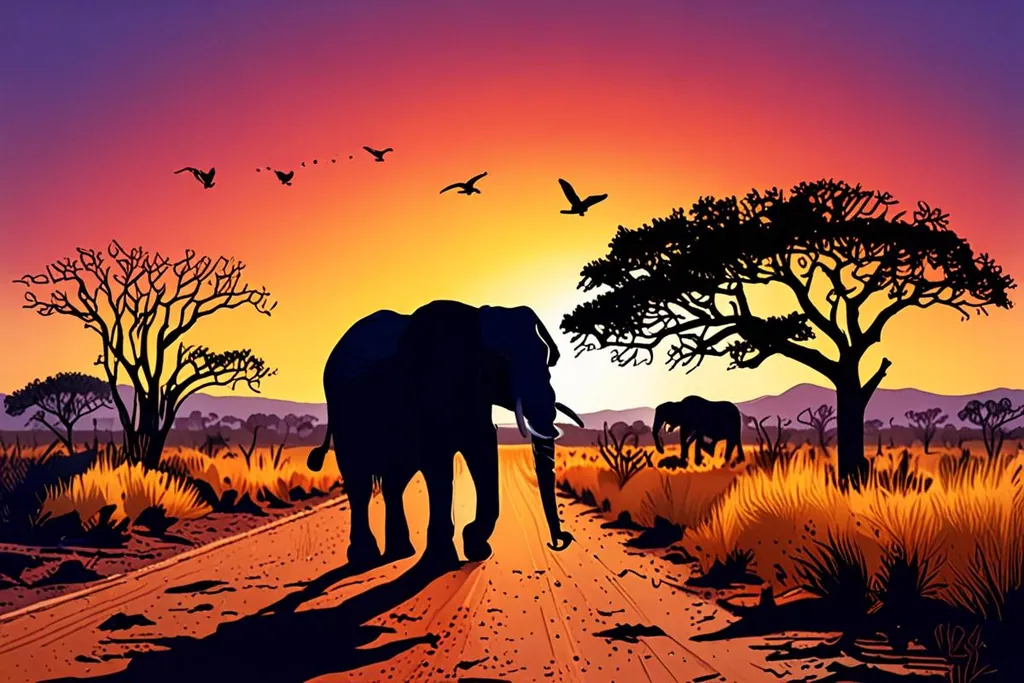
Malaria is the one medical question that shapes a South African itinerary, and the good news is that it shapes it in your favour: most of the country has no risk at all, and the parts that do are specific and known. That means a family with young children, or anyone who would rather not take medication, can build a trip with elephants and lions in it and never enter a risk area.
The risk is in two regions. The first is the Lowveld of Limpopo and Mpumalanga in the north east: Kruger National Park, the private reserves along its western boundary, and the wet low ground around them. The second is the far north of KwaZulu-Natal along the Mozambique border, which includes the Maputaland reserves and the iSimangaliso wetlands. Everywhere else, including Cape Town, the Garden Route, the Winelands, Johannesburg, Durban, the Drakensberg and the Eastern Cape reserves, is regarded as malaria free.
- Where the risk is
- 2 areas
- The higher-risk season
- Oct to May
- In the dry winter months
- Low risk
- Cape Town, Eastern Cape, Madikwe
- Malaria free
The season, which matters as much as the place
Malaria in South Africa is seasonal, because it depends on mosquitoes breeding, which depends on rain and warmth. The risk is highest during and just after the rainy season, from about October to May, and at its lowest in the dry winter months, when the mosquito population drops sharply and the game viewing is also at its easiest. That coincidence is why a winter safari in the Lowveld is the standard advice: the animals are easy to see and the medical question is at its smallest.
The risk also varies within the risk areas. It is higher near water, in the wetter northern parts of the park and along the river valleys, and lower on the higher ground and in the south. This is why the answer to whether you should take tablets is a conversation about your specific itinerary rather than a general rule.
Region by region, for a real itinerary
The Lowveld is the first area, and it is the one most visitors meet. It runs along the low ground of Limpopo and Mpumalanga: the whole of Kruger from Malelane in the south to Pafuri in the far north, the private reserves on the western boundary, and the towns at the foot of the escarpment. The risk is lowest in the dry winter and in the higher, southern parts of the park, and higher in the wet north near the rivers and the Mozambique border.
Northern KwaZulu-Natal is the second. The coastal plain up to the Mozambique border, including the Maputaland reserves and the wetlands of iSimangaliso, carries a seasonal risk, and the holiday town of St Lucia sits inside it while the hills inland around Eshowe and the Midlands do not. Much of the rest of the province, including Durban and the Drakensberg, is considered risk free.
Everything else on a normal South African itinerary is clear: Cape Town and the whole Western Cape, the Garden Route, the Eastern Cape including Addo, Port Elizabeth and East London, the Free State, the Northern Cape, and the Gauteng cities of Johannesburg and Pretoria. The malaria-free private reserves, at Madikwe, Pilanesberg, Addo, Shamwari and Kwandwe, exist precisely for travellers who would rather not think about any of this.
The standard advice comes in four parts, and only one of them needs a doctor. Be aware of where the risk is and when the mosquitoes bite, which is mainly between dusk and dawn. Prevent bites with repellent, long sleeves and trousers in the evening, and a room with a net, screens or air conditioning. Take medication if it is appropriate for you, decided with a travel clinic on the basis of your health and your itinerary. And if you get a fever afterwards, get tested without delay.
Bite prevention is the part people skip and the part that works regardless of the medication decision. It is also the part that protects you against dengue, chikungunya and a night of scratching, none of which are on any prophylaxis list.
The decision, in the right order
Six weeks before
Check the map against your itinerary
Write down every place you are sleeping, not every place you are visiting. The Lowveld of Limpopo and Mpumalanga, Kruger and its neighbouring reserves, and northern KwaZulu-Natal are the risk areas; Cape Town, the Garden Route, Johannesburg, Durban, the Drakensberg and the Eastern Cape are not. A trip can have both, which is a planning problem rather than a medical one.
Four to six weeks before
Speak to a travel clinic
Prophylaxis is a medical decision, and the options differ in how long they must be started before travel, whether they can be taken with other medicines, and what side effects you might expect. Bring the dates and the exact destinations, because the advice changes with the season as well as with the place.
Packing
Bite prevention, which works regardless
Long sleeves and trousers for the evening, repellent with a decent concentration of the active ingredient, a room with air conditioning or a net, and screens on the windows. This part of the advice protects you against malaria and against everything else that bites, and it costs almost nothing.
During the trip
Dusk is the danger hour
The mosquitoes that transmit malaria bite mainly between dusk and dawn, which is also when the game drives and the dinners happen. Take the repellent on the drive, cover your ankles, and do not leave a window open at night because the room is warm.
Afterwards
Any fever, mention the travel
If you develop a fever, chills, headache or aching muscles from about a week after leaving a risk area, and for months afterwards, see a doctor and say where you have been. Request a malaria test rather than accepting a diagnosis of flu, because the treatment is easy when it is early and serious when it is not.
If you get a fever afterwards
This is the section worth reading twice. Malaria can present as nothing more than a fever with a headache and aching muscles, which is also what flu presents as, and the species that causes severe disease in Africa can deteriorate within a day or two of the first symptoms. If you develop a fever from about a week after entering a risk area, or in the weeks and months after you get home, go to a doctor and say clearly where you have been and ask for a malaria test.
The reason for the emphasis is that the treatment is straightforward when it is early and dangerous when it is late, and the diagnosis is missed most often when the patient does not mention the travel. Being examined for flu and sent home is the failure mode, and it is entirely avoidable.
The malaria-free alternative
If any of this reads like more trouble than the safari is worth, take the other road, which is genuinely as good: Madikwe and Pilanesberg in the north west, Addo and the Eastern Cape reserves such as Shamwari and Kwandwe, and the Western Cape reserves within a few hours of Cape Town. They hold the same animals, they run the same dawn and dusk drives, and the only thing you give up is the Lowveld and the company of the Kruger crowds.
Before the risk area
0/8
Malaria in South Africa is a specific, seasonal, geographically limited risk, and it is entirely manageable: know where the risk is, go in the dry months if you can, take the bite precautions seriously whatever you decide about tablets, and treat a fever afterwards as an emergency rather than a cold.