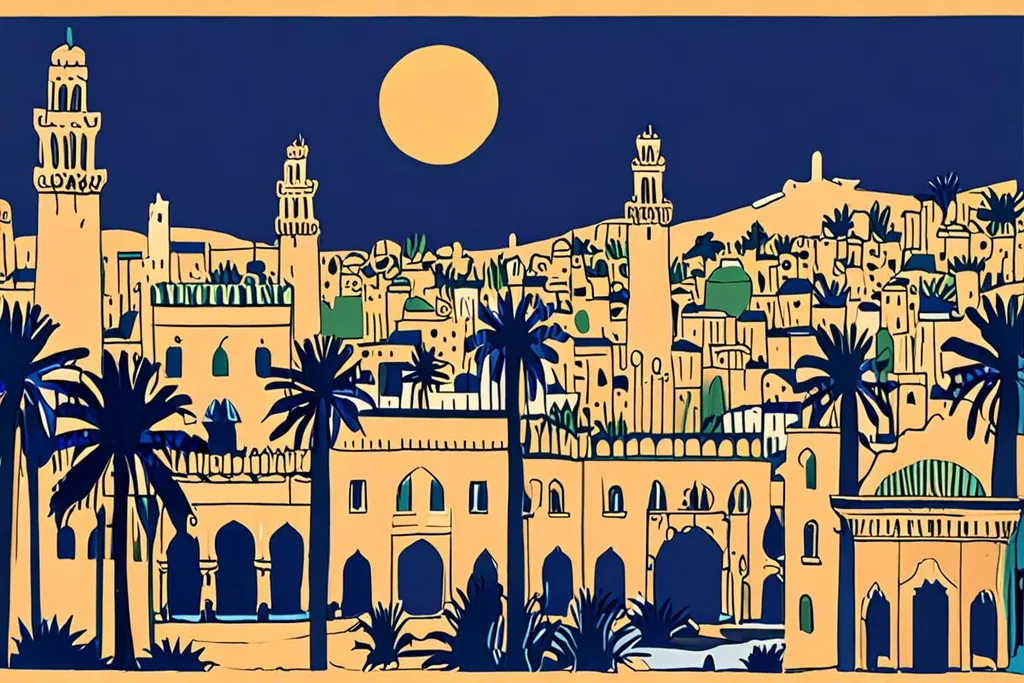
Fez is the city that explains Morocco to people who think Marrakech already did. It was founded in 789, it was the capital on and off for centuries, and it is still the intellectual centre of the country: the medina holds a university that opened in 857 and a library that is often called the oldest in the world still in use.
It is also the harder city to visit. The old town is a working place with no cars, no ring road and few street signs, so the first hour is disorienting and the second hour is wonderful. This guide is about getting past the first hour.
- Dân số, điều tra 2024
- 1,256,172
- Năm thành lập thành phố
- 789
- Năm thành lập Al-Qarawiyyin
- 857
- UNESCO công nhận phố cổ
- 1981
Two medinas, and a new town
Fez is three places stacked beside each other. Fes el-Bali is the old city, the one on the postcards, founded on both banks of the Fez river and united into a single walled town in the eleventh century. Fes Jdid, the new Fez, was laid out in 1276 as an administrative and military quarter and still contains the royal palace, whose gates are the only part visitors see. And the Ville Nouvelle is the French-built city from after 1912, with wide avenues, banks, cafes and the railway station.
The old city was listed by UNESCO in 1981, the first site in Morocco to be given that status, and it is one of the largest and oldest car-free places in the world. That is not nostalgia, it is engineering: the lanes are too narrow for vehicles in most of the quarter, so goods still move by handcart and by donkey.
Walking the medina
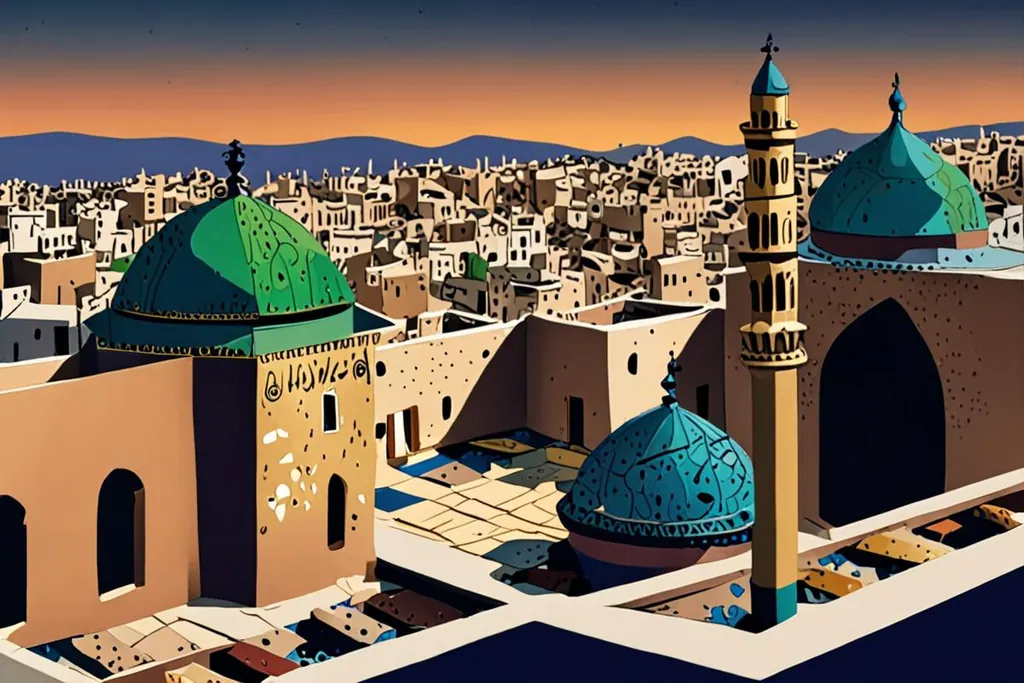
The medina is not a museum with a route through it. It is roughly a quarter of a million people living and working in lanes that were laid out for water, shade and defence rather than for visitors, and the fastest way to hate it is to treat it as a grid.
Two things make it work. The first is a licensed guide for half a day, early on. The second is an offline map on the phone, with the riad’s position saved before you set out, because the signal in the deepest streets is thin and the walls all look the same at eye level. Follow the main street, Tala’a Kebira, to get your bearings, and use the gates as landmarks: Bab Bou Jeloud in the west, Bab Mahrouk, Bab Guissa, Bab Ftouh.
Anyone who offers to walk you somewhere is selling something, and the phrase you need is a firm no followed by walking on. If you do want a guide, ask the riad or the tourist office, and agree the price and the hours first. Shoes matter more than you think: the lanes are cobbled, stepped and slippery, and the walk is longer than the map suggests.
The tanneries and the crafts
The tanneries are the sight everyone comes for, and they are genuinely strange: open stone wells filled with dye and with white liquids for softening hides, worked by hand in the open air. Chouara, beside the Saffarin madrasa, is the largest of the three in the city and dates from the eleventh century. You view it from the terraces of the shops around it, which is free of charge on condition that you walk through the leather shop afterwards; a small tip is normal and nobody minds.
The leather is one industry among many. Fez is still the country’s main centre for zellij, the cut tile mosaic, and for carved plaster and painted wood. The madrasas show the craft at its peak: the Bou Inania, the al-Attarine and the Saffarin, all of them small, ornate and open to visitors. So do the funduqs, the old merchant inns, of which the medina has more than a hundred; the one at Nejjarine is a museum of wooden arts now. The hammams are also working buildings rather than exhibits, and the fourteenth century ones at Saffarin and al-Mokhfiya are still used by local people. Go in the evening with a towel and you will see the city doing something it never does for tourists.
Arriving: the airport and the train
Fes-Saiss airport sits about thirteen kilometres from the centre, with a new terminal that opened in 2017 and lifted its capacity to about two and a half million passengers a year. Bus 16 connects the terminal with the bus and railway stations for a few dirhams and takes about forty minutes to the station. Taxis wait outside with a fixed rate of about 150 dirhams into the city, agreed before you get in.
The railway station is in the Ville Nouvelle, a short walk from the hotels and about a twenty minute ride from the gates of the medina. Trains run east to Oujda and west to Meknes, Rabat, Casablanca and Tangier, which makes Fez a sensible stop on a rail trip rather than a detour to be driven to. If you are arriving from Marrakech, the train is the comfortable way and the drive is not.
When to go
Fez is inland and 414 metres up, so it behaves like the interior rather than like the coast. Summer is genuinely hot, winter is cold, and the middle seasons are the reason people come in spring and autumn.
The records from the airport show daily highs of 16 degrees in January and 35.1 in July and August, with an annual average of 24.7. Rain, about 488 millimetres a year, falls mostly between November and March, and snow is not unheard of: it settles once every few years, and there is usually some on the hills. The city gets 3,100 hours of sunshine, which is more than most of Europe manages in a good year.
The practical result is that mornings and evenings carry the day for much of the summer, and a winter visit is a coat trip: cold lanes in the shade, warm terraces in the sun. Spring and autumn let you walk all day, which is the only way to see this city properly.
Staying online
Data is not a luxury in Fez, it is navigation. The medina rewards a phone that works: the offline map that shows you which way the lane bends, the translation for a shop sign, the message to the riad to say you are lost five minutes away.
Morocco has good coverage in the cities, and Fez is well served, including most of the old town. The question is how you get the data, and the choices are the same three as everywhere in the country: your own operator’s roaming pass, a local SIM with a registration process, or a travel eSIM installed before you fly. For a short stay in a maze, the last of those is worth the small trouble.
Bạn sẽ dùng Internet thế nào?
Bạn có cần gọi và nhắn tin bằng số của mình khi ở Morocco không?
Gói chuyển vùng của bạn có rẻ hơn khoảng năm đô mỗi ngày không?
eSIM du lịch dùng dữ liệu
Cài eSIM tại nhà và chuyển dữ liệu sang eSIM ngay khi đến. Bản đồ offline của phố cổ, app dịch và tin nhắn từ riad đều dùng được từ sân bay, còn số điện thoại của bạn giữ nguyên.
Số chính của bạn, mở chuyển vùng
Nếu gói rẻ và chuyến ngắn, đây là lựa chọn ít phải chuẩn bị. Hãy tắt chuyển vùng dữ liệu cho các ứng dụng không cần thiết, vì máy sẽ tìm sóng ở các ngõ sâu làm hao pin nhanh hơn tìm được trạm phát.
Where to stay, and what to eat
The choice that shapes a stay is inside the walls or outside them. A riad in the medina gives you the city at dawn, when it is quiet and the bread ovens are working, at the cost of a walk with your luggage and the possibility of getting lost on the way back at night. A hotel in the Ville Nouvelle gives you a taxi, a car park and a normal street address, at the cost of the atmosphere.
Fez eats well and is proud of it. The local dish is tanjia, meat cooked slowly in a clay urn taken to the hammam’s fire, and there is a plain, rich cooking here that the tourist restaurants in other cities often smooth away. Eat where the menu is short.
Days out
Meknes is half an hour by train and is the quiet imperial city, with a wall and gates out of proportion to its size. Volubilis, the Roman site, is beyond it and better with a car or a shared taxi. Chefchaouen, the blue town in the Rif, is a few hours north and worth a night rather than a dash. Closer in, Sefrou and the Middle Atlas hills are where the city goes when it wants cool air, and Sidi Harazem is the old spa spring on the road out.
One note from the Foreign, Commonwealth and Development Office advice for Morocco, which applies to the hills and the coast as much as to the streets: adventure activities are not always covered by travel insurance, so read the policy before you book one.
Trước khi hạ cánh
0/8
Fez rewards the second walk. On the first one you are lost, on the second you recognise a corner and turn the right way without thinking, and by the third you are having tea where the men are playing cards and nobody is selling you anything. Give it two days and it will be the city you talk about afterwards.