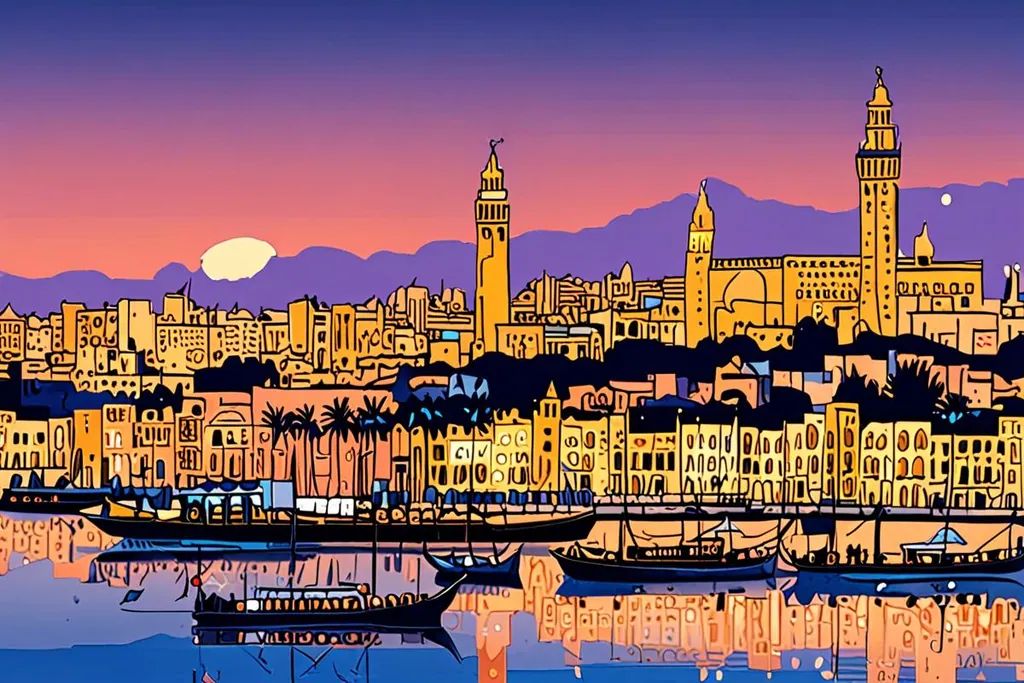
Casablanca is the city the film never visited. The 1942 picture was shot in California, and the dialogue everyone still quotes was written by people who had never seen the Atlantic here. What is actually here is more interesting: Morocco’s largest city, its financial capital, and the place where almost every long-haul visitor to the country first touches the ground.
About 3.2 million people live in the commune, and the wider metropolitan area holds more than four million. That size shapes the trip: this is a working city with a tram network, a stock exchange and real traffic, not a medina with a hotel in it. Two things decide the first day, the way in from the airport and whether your phone works.
- Dân số, điều tra 2024
- 3,218,036
- Chiều cao tháp minaret
- 210 m
- Sức chứa tín đồ
- 105,000
- Chiều dài mạng tàu điện, bốn tuyến
- 74 km
Anfa, Casa Branca, ad-Dar al-Bayda
The city has been renamed more often than most. Berber settlers were here by the seventh century BC and the medieval town was called Anfa. The Portuguese bombarded it into ruins in 1468 and built a small port they called Casa Branca, the white house. The earthquake of 1755 finished that, and Sultan Mohammed ben Abdallah rebuilt the place between 1756 and 1790 as ad-Dar al-Bayda, which is still the name Moroccans use. Casa is what everyone says in conversation.
The modern city is a French creation. Henri Prost laid out a European new town beside the old medina under the protectorate, and Casablanca became the economic capital while Rabat took the administration. American troops came ashore in 1942, the conference that settled the doctrine of unconditional surrender was held above the city in 1943, and independence followed in 1956 while the port kept growing.
Today Casablanca is a financial centre, ranked 54th in the world in the September 2023 Global Financial Centres Index, and its stock exchange is the third largest in Africa by market value. UNESCO added the city to its Creative Cities Network in 2023. For a visitor that means hotels, offices and fast internet are everywhere.
The Hassan II Mosque
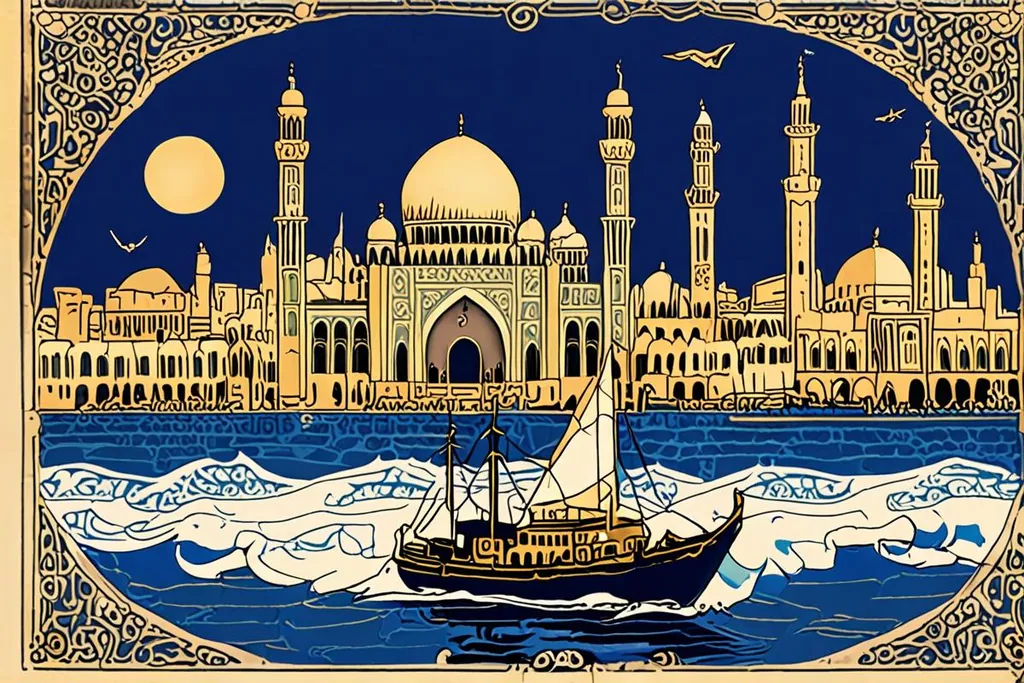
If you see one thing in Casablanca, this is it, and it is worth building the day around. The mosque was commissioned by King Hassan II and designed by the French architect Michel Pinseau. Work began on 12 July 1986 and it was inaugurated on 30 August 1993, after seven years with 10,000 craftsmen involved. It stands partly over the ocean on a platform reclaimed from the sea, so the prayer hall looks out across the water through its windows.
The minaret is 210 metres tall, which made it the tallest in the world when it was finished and leaves it the second tallest today. A laser mounted at the top points at Mecca and is visible for around 30 kilometres on a clear night. The hall holds 25,000 worshippers and another 80,000 can gather on the plaza around it. The cedar came from the Middle Atlas, the marble from Agadir, and the retractable roof weighs 1,100 tonnes and opens in about five minutes.
Between 400 and 700 million dollars went into the building, much of it from public subscription: twelve million people gave, the smallest donation was five dirhams, and every donor was given a receipt. Non-Muslim visitors can see it on a guided tour outside prayer times, usually in the morning and early afternoon. Cover your shoulders and knees, and check the times at the door on the day, because they move with the prayer calendar.
Arriving from the airport
Mohammed V International sits in Nouaceur Province well outside the city. It is the busiest airport in Morocco and among the ten busiest in Africa, with about 7.6 million passengers in 2022, and the hub for Royal Air Maroc, so a great many people land here on their way somewhere else.
The train is the trick most visitors miss. The Al Bidaoui service runs roughly hourly from about four in the morning until eleven at night, straight from the airport station to Casa-Port and Casa-Voyageurs, the two main stations in the city. There is no bus ride to a station first; you walk out of the terminal and down to the platform. A taxi is quicker when the roads are clear and considerably slower when they are not, and the fare should be agreed before the wheels move.
Traffic is the reason to prefer the train: the airport sits on the far side of a city of three million people. A new terminal is under construction, an H-shaped building with a budget around 1.6 billion dollars that should lift capacity from roughly 15 million passengers a year to 35 million and add a high-speed rail station by 2029.
Getting around the city
Casablanca is the one Moroccan city where public transport carries the day: four tram lines, 74 kilometres of track and 110 stops. Line T1 opened in December 2012 and runs from Sidi Moumen to Lissasfa. Line T2 followed in January 2019 from Ain Diab to Sidi Bernoussi. Lines T3, which reaches Casa-Port, and T4, which runs to the Arab League Park, opened in September 2024.
A single journey is a flat fare, in the region of eight dirhams, paid with a paper smart card at the turnstiles on the platform, and there are weekly and monthly season tickets. Trams run about every five minutes in peak hours, from half past six in the morning until ten at night on weekdays and later at weekends, at an average speed close to nineteen kilometres an hour. That beats a car through the centre comfortably.
There is a busway with two lines as well, and the small red petit taxis, which use meters inside the city. Walking works in the centre, in the Habous quarter and along the corniche; what does not work is walking between districts, because the city covers 380 square kilometres and addresses that look close on a map can be twenty minutes apart.
When to go
Casablanca has a Mediterranean climate with an Atlantic correction. The cool Canary Current offshore keeps the range narrow, so the city is milder than inland Morocco in summer and rarely cold in winter, and the shape of the year is closer to coastal California than to Marrakech.
The records from the airport station show daily highs from 17.6 degrees in January to 26.7 in August, with an annual average of 22.2 degrees. Rain is the thing to plan around rather than heat: about 408 millimetres a year, most of it between November and March, while July and August are effectively dry. The city sees 3,030 hours of sunshine, and sea fog can sit over the coast in the morning even in spring.
The sightseeing day changes less with the season here than it does inland: spring and autumn are comfortable all day, midsummer belongs to the corniche or a museum, and a wet winter day is a cue for the Habous quarter rather than a cancellation.
Staying online
Data pays for itself within an hour here. The tram map, the ride-hailing app, the translation at a counter: all of it needs a connection, and the arrivals hall is not the place to sort that out with your bags on the floor.
Morocco has good mobile coverage in the cities and the network here is fast. The question is only how you buy it, and there are three answers: your own operator’s roaming pass, a local SIM bought after a registration process, or a travel eSIM installed before you fly and switched on when you land. For a few days in a city this busy, the last of those is the least trouble.
Bạn sẽ lên mạng bằng cách nào?
Bạn có cần gọi điện và nhắn tin bằng số riêng khi ở Maroc không?
Bạn có gói cước roaming nào rẻ hơn khoảng năm đô một ngày không?
eSIM du lịch dùng dữ liệu
Cài eSIM trước khi bay và chuyển dữ liệu sang dòng eSIM ngay khi hạ cánh. Bản đồ tàu điện, app đặt xe và dịch thuật đều dùng được ngay từ khi tới nơi, và số riêng của bạn vẫn giữ nguyên.
Dùng số riêng, roaming bật
Nếu gói roaming rẻ và đi ngắn ngày, bạn không cần phải chuẩn bị thêm gì. Hãy tắt dữ liệu di động cho những ứng dụng không cần thiết, vì điện thoại tự đồng bộ ảnh trên wifi khách sạn kém chất lượng sẽ chuyển qua mạng di động rất nhanh.
What to see, and where to sleep
Beyond the mosque, the city’s pleasures are architectural and domestic. The Habous quarter is a French-built medina from the 1920s with arcades and a palace gate, and it is where local families shop. The medina itself is small: a few hundred metres of lanes holding the Ould el-Hamra mosque, the Ettedgui synagogue and the Church of San Buenaventura within a short walk of each other, which is the city’s whole history in one square. The Arab League Park and the Church of the Sacred Heart face each other across the centre, and the corniche at Ain Diab runs along the Atlantic past the El Hank lighthouse.
Rick’s Cafe, which opened in 2004, takes its name and its piano from a film shot in California: it borrows the myth and gets on with its own life. The central market and the streets behind it are where Casablanca eats.
For a base, the centre near the tram is the practical choice. Casa-Port, Place des Nations Unies and the boulevard between them put the mosque, the Habous quarter and both stations within a couple of stops. Ain Diab suits anyone who wants the sea. The same standard of room costs less here than in Marrakech.
Days out
Rabat is the obvious one, about an hour by train from Casa-Port or Casa-Voyageurs, and the capital is a different kind of city: a kasbah above the river, the Hassan Tower, the mausoleum and a tram of its own. Marrakech is about two and a half hours by rail, which is long for a day and comfortable for a night. El Jadida, with its Portuguese cistern and ramparts, is down the coast to the south, and Mohammedia and Bouznika are beach towns within half an hour of the centre.
One caution from the Foreign, Commonwealth and Development Office: adventure activities and quad bikes are not always covered by travel insurance, so read the policy before booking rather than after.
Trước khi hạ cánh
0/8
Casablanca does not perform for visitors the way Marrakech does. It works, it builds, it trades, and it goes to the beach on Sunday. Give it a full day rather than a transit stop, ride the tram, and see the mosque at the hour when the light comes off the water.